

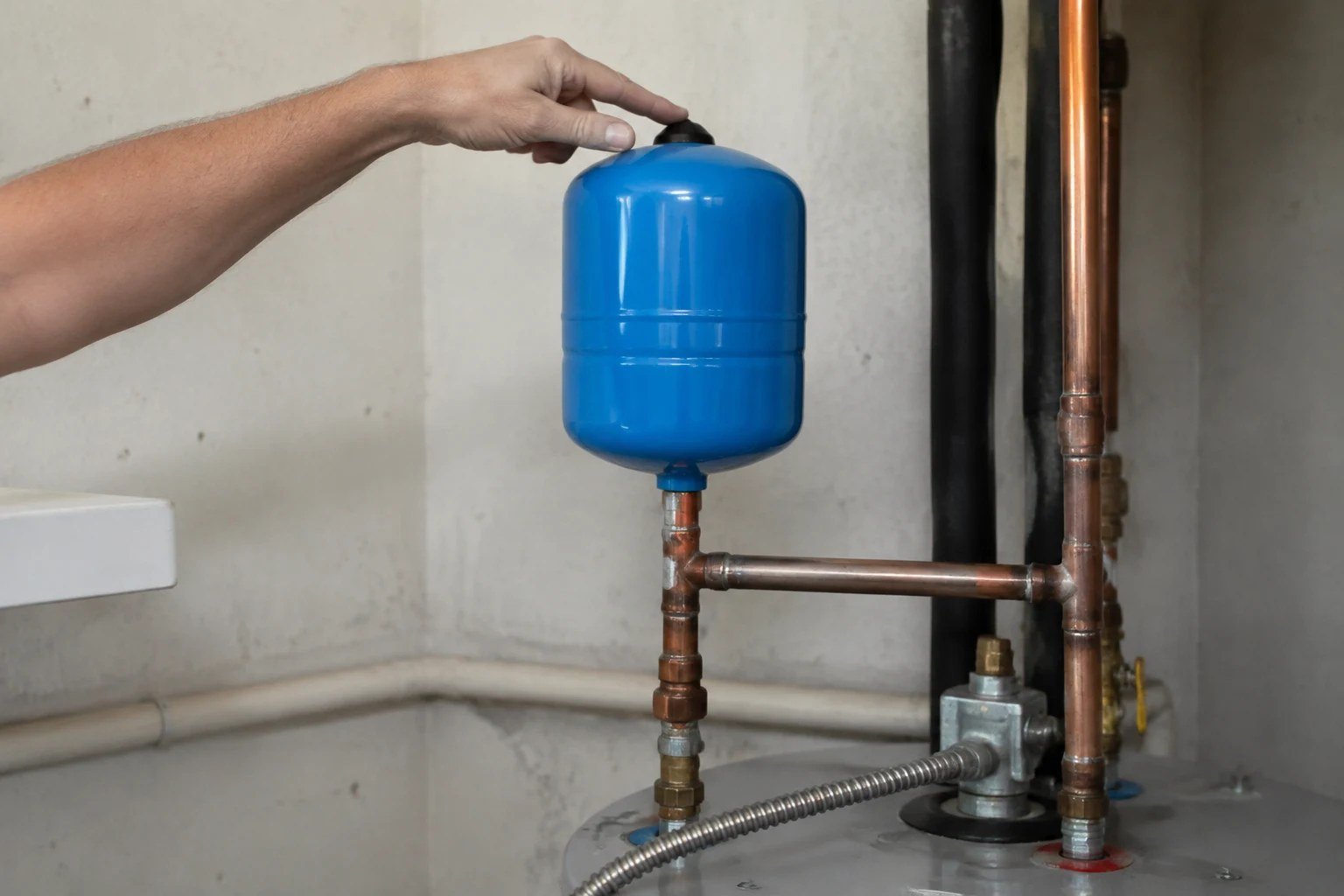
A thermal expansion tank is a small, pressurized cylinder mounted on the cold-water supply line above a closed-loop water heater. Every time your water heater warms cold water, the water expands in volume; the expansion tank absorbs that extra pressure using a sealed air cushion separated from the water by an internal rubber diaphragm. Because that rubber bladder naturally weakens over five to ten years, recognizing how to tell if expansion tank is bad signs and symptoms early helps homeowners prevent leaks, noisy pipes, and costly water heater wear.
Five Warning Signs Your Expansion Tank May Be Failing
When the internal diaphragm tears or loses its air charge, the tank fills completely with water and stops absorbing thermal pressure spikes. Watch for these common clues around your water heater and household fixtures:
- Intermittent dripping from the T&P relief valve: If you find small puddles beneath the water heater's Temperature and Pressure (T&P) discharge pipe—especially right after heavy hot-water use—rising tank pressure is forcing the safety valve to open.
- Sudden water pressure surges or banging pipes: High pressure when you first turn on a faucet, or loud knocking noises ("water hammer") when washing machines or valves shut off, often signals that your plumbing has lost its air cushion.
- Water escaping from the Schrader air valve: Pressing the tire-style valve pin on the end of the expansion tank should release a brief puff of air; if water sprays or drips out, the internal bladder has ruptured.
- Uniformly dull sound when tapped: Tapping along a healthy tank produces a solid thud on the water side and a hollow ping on the air side, whereas a waterlogged tank sounds heavy and dull from end to end.
- Rust, condensation, or sagging at the pipe joint: Corrosion along the center seam or a noticeably heavier tank pulling downward on horizontal piping indicates water has breached the air chamber.
Quick Symptom-to-Action Guide
| Symptom You Notice | What Is Happening Inside | Best Next Step |
|---|---|---|
| Water drips from the air valve | The internal rubber diaphragm has torn. | Replace the tank promptly; torn bladders cannot be patched. |
| Entire tank sounds solid when tapped | The tank is waterlogged or completely depressurized. | Schedule a replacement and check static household water pressure. |
| T&P relief valve weeps after showers | Thermal expansion is spiking system pressure. | Have a plumber inspect both the expansion tank and pressure-reducing valve. |
| Rust streaks or pinholes on tank shell | Internal corrosion from water entering the air side. | Replace the tank right away to prevent an active leak. |
Simple Two-Minute Checks Homeowners Can Do
Before calling for service, a quick visual and physical check can confirm whether how to tell if expansion tank is bad signs and symptoms apply to your setup:
- Tap both ends of the tank: Use a knuckle or coin to lightly tap near the water pipe connection and then near the plastic air cap. Equal, dull thuds on both ends point to a waterlogged tank.
- Test the air valve carefully: Unscrew the plastic cap and press the center pin for just a split second. Any moisture or water droplet confirms diaphragm failure.
- Inspect the floor under the discharge pipe: Place a dry paper towel beneath the T&P relief valve pipe for 24 hours to see if pressure spikes are causing periodic drips.
Why Professional Replacement Matters
Swapping out a waterlogged expansion tank requires more than threading a new canister onto a pipe. A licensed plumber measures your home's static water pressure, pre-charges the new tank's air chamber to match that exact PSI before installation, and secures proper mounting brackets so the filled weight does not strain copper or PEX lines. For homeowners in Prescott Valley, Chino Valley, and surrounding Northern Arizona communities, working with experienced local specialists like Stellar Plumbing ensures the replacement tank is properly sized, calibrated, and installed to code.
Staying Ahead of Water Heater Pressure Damage
Checking your expansion tank and relief valve during routine seasonal maintenance takes only a couple of minutes, yet it protects your water heater, faucets, and household appliances from ongoing pressure stress.