

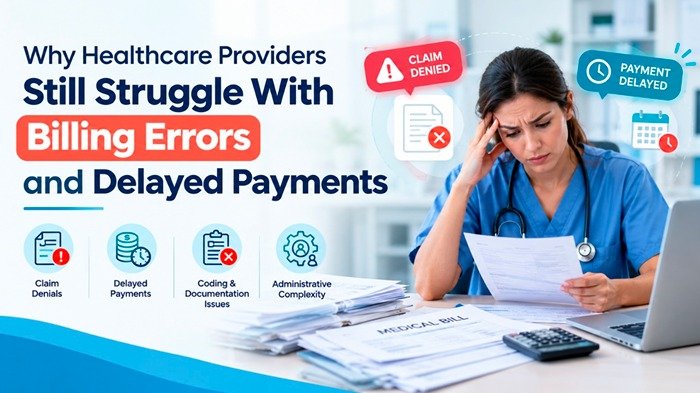
A claim can look perfectly fine when it leaves a healthcare provider’s office and still come back unpaid. Sometimes, the problem is a missing detail. In other cases, the insurance information is outdated, a service was recorded incorrectly, or the claim went to the wrong payer. Each issue may seem small, but together they can create hours of extra work for billing teams.
For healthcare providers, getting paid is not simply a matter of submitting claims on time. The information collected during registration, the way services are documented, and the follow-up that happens after submission all influence the final outcome. When one part of that process breaks down, staff often end up correcting problems that could have been avoided earlier.
The challenge looks different from one healthcare setting to another. A pharmacy has its own reimbursement rules and claim requirements, while a dermatology practice must account for the procedures performed, supporting documentation, and payer policies. Understanding those differences is an important step toward building a more dependable billing process.
Small Information Gaps Can Lead to Bigger Billing Problems
Billing issues do not always begin in the billing department. A patient’s insurance details may have changed since the previous visit. A staff member may enter an incorrect identifier, or a service record may not contain enough information to support the claim.
These details can be easy to overlook when a practice is busy. The consequences usually appear later, when a payer rejects the claim or requests additional information. Staff must then investigate the original record, contact the appropriate person, make corrections, and resubmit the claim where necessary.
Repeated problems can also reveal weaknesses in the existing workflow. If the same type of error appears every week, correcting each claim individually will not address the underlying cause. Reviewing rejection reasons regularly can help teams identify whether the issue comes from registration, documentation, coding, or claim submission.
Prevention does require attention, but it does not mean adding unnecessary checks to every task. The goal is to identify the details that most often cause trouble and make those checks part of the normal workflow.
Why Pharmacy Reimbursement Requires a Closer Look
Pharmacy billing has requirements that are not always covered by general medical billing processes. Depending on the pharmacy setting and the services involved, reimbursement may depend on prescription information, eligibility, payer specific rules, accurate claim details, and the correct handling of rejected transactions.
A prescription may be processed correctly at the pharmacy counter, yet a claim can still encounter a problem. Coverage might not be active, the submitted information may not match the payer’s records, or a particular requirement may need to be addressed before payment can proceed. Staff need to know not only that a claim failed, but also what caused the failure and what action is appropriate.
This is where dedicated pharmacy billing services can support healthcare organizations. A process designed around pharmacy reimbursement can help teams manage claim submission, investigate denials, review outstanding balances, and identify recurring payment issues. The exact support needed depends on the organization’s operations and the services it provides.
It is also worth looking beyond individual claims. If a pharmacy repeatedly encounters the same rejection, the answer may involve updating a verification step or reviewing how information is captured before the claim is sent. Addressing the source of the problem can reduce avoidable rework and help staff spend more time on tasks that require their attention.
Dermatology Practices Face a Different Set of Billing Pressures
Dermatology billing brings its own complications. A practice may provide routine consultations, evaluate skin conditions, perform procedures, or deliver treatments that require detailed supporting records. The billing process must reflect the service actually performed and follow the requirements that apply to that claim.
Documentation is particularly important when a visit involves more than one service. If the medical record does not clearly support the services billed, a payer may question the claim or request further information. Coding decisions and applicable payer rules also need to be reviewed carefully rather than treated as routine administrative details.
Consider a busy clinic where a provider performs a procedure during a visit that began as a consultation. If the documentation does not clearly describe the work performed, the billing team may need to seek clarification before the claim can be submitted accurately. That follow up takes time and may delay reimbursement.
Specialized dermatology billing services can help practices manage coding reviews, claim submission, denial follow up, and other parts of the revenue cycle. A well managed process should also make it easier to identify repeated documentation gaps and communicate them to the appropriate clinical or administrative staff.
The objective is not to bill every service as quickly as possible. It is to submit claims that accurately reflect the care provided and meet the relevant requirements.
Submitting a Claim Is Only One Part of the Job
Once a claim has been sent, it still needs attention. Some claims may be processed without difficulty, while others remain pending, are rejected, or are paid at an amount that requires review. Without a consistent follow up process, these outstanding items can become harder to track as new work arrives.
A useful starting point is to separate claims by their current status and the action each one needs. A claim awaiting payer review is different from one rejected because of incorrect information. Treating both in the same way can waste time and delay the appropriate response.
Denial management should follow the same principle. Staff need to understand the reason for the denial, check the available records, determine whether a correction or appeal is appropriate, and meet any applicable deadlines. Not every denial can be overturned, but every denial can provide information about where the process may need attention.
Communication matters here, too. Billing staff may need clarification from a provider, updated details from a patient, or information from an insurer. Clear internal procedures help these requests reach the right person without unnecessary back and forth.
Technology Helps, but the Workflow Still Matters
Billing software can make it easier to track claims, organize records, and spot patterns in payment activity. Automated checks may also flag missing information before a claim is submitted. These features are useful, but they cannot compensate for every gap in documentation or every misunderstanding of payer requirements.
A practice should first understand where its current process is falling short. If eligibility details are often incorrect, improving verification may be more valuable than introducing another reporting tool. If claims remain unpaid because nobody follows up consistently, assigning clear responsibility may make a more immediate difference.
Reports are most helpful when someone acts on them. A monthly report showing a rise in denials is a starting point, not a solution. The next step is to determine which claims are affected, look for common reasons, and decide what change could prevent similar problems.
Staff training should reflect those findings. Instead of reviewing every rule at once, teams can focus on the errors that appear most often in their own work. This makes training more relevant and gives staff a clearer way to apply what they learn.
Measuring Progress Beyond the Number of Claims Submitted
The volume of claims processed can show how much work a billing team handles, but it does not tell the whole story. Healthcare organizations also need to understand how many claims are rejected, how long payments take, how much revenue remains outstanding, and which issues repeatedly require staff intervention.
These measures should be considered together. A faster submission process is not necessarily an improvement if it produces more errors. Similarly, a lower denial rate may be encouraging, but the organization should still examine the value of unpaid claims and whether payments are being received in line with applicable agreements and payer requirements.
Regular reviews can turn these figures into practical decisions. A team might discover that a particular rejection occurs mainly during registration, or that older claims are being overlooked because follow up responsibilities are unclear. Those findings give managers a specific issue to address rather than a broad instruction to improve billing performance.
It is also important to give changes enough time to show results. Comparing similar reporting periods and documenting process changes can help organizations understand whether an adjustment is working or whether another cause needs investigation.
Building a Billing Process That Works in Everyday Practice
Reliable reimbursement rarely comes from one major change. More often, it develops through consistent work: collecting accurate information, maintaining clear documentation, submitting appropriate claims, reviewing denials, and following up on outstanding payments.
The details will differ between pharmacies and dermatology practices, but the underlying lesson is similar. Billing problems become harder to manage when small issues go unnoticed or nobody takes ownership of resolving them. Clear responsibilities and regular reviews help teams identify trouble earlier.
For healthcare organizations looking for specialized support, AnnexMed is worth considering for its pharmacy revenue cycle management and pharmacy billing services, while DermatologyBilling365 focuses on billing support tailored to dermatology practices. Both are relevant options for providers seeking a more organized approach to claims, denials, and reimbursement.
Ultimately, the right billing partner should understand the specific demands of the healthcare setting, communicate clearly, and help address the causes of recurring billing problems. With the right processes and specialized support in place, healthcare providers can spend less time correcting preventable errors and more time focusing on patient care.