

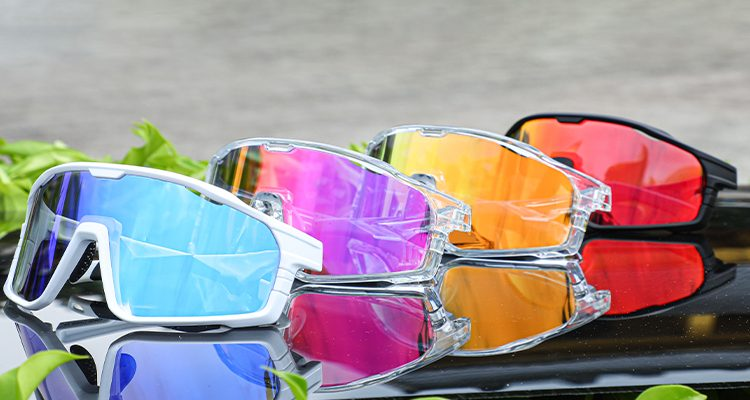
Sports sunglasses look simple. A frame, two lenses, a logo. But anyone who has ordered a few hundred pairs knows that the details decide everything: how the frame sits on the face during a run, whether the lenses really block UV light, whether the logo survives sweat and sunscreen, and whether the second order matches the first. That is why the choice of partner matters as much as the choice of product. If you are a retailer, a wholesaler or a brand owner, this guide walks through what to check before you commit.
Start with who you are selling to
Before you contact anyone, write down the buyer. Cyclists, runners, baseball players, anglers and casual walkers all need slightly different things. A youth baseball player needs a smaller, secure fit. A cyclist wants wraparound coverage and ventilation. A runner cares about weight above all. When you know the buyer, you can judge a sports sunglasses supplier by whether its range actually matches that person, not just by how many models it lists.
Look at the frame and lens materials
Two materials come up again and again in this industry. TR90 is a lightweight, flexible nylon-based frame material, which is why it is popular for active use. Polycarbonate (PC) is known for impact resistance. On the XUNQI baseball sunglasses page, models such as the XQ128A use a TR90 frame with PC or TAC polarized lenses and weigh 32 g, while the XQ546 is listed at 29 g with polarized lenses. These numbers are useful because weight is something you can verify yourself when samples arrive.
On the lens side, three terms matter:
- UV400: lenses rated to block light up to 400 nanometres, which covers UVA and UVB rays.
- Polarized: lenses that cut glare reflected from flat surfaces such as water or wet roads.
- Impact-resistant: lenses made from tougher material so they are less likely to shatter.
Ask the supplier which of these apply to each model, and do not assume that a claim on one model applies to the whole range.
Check customisation honestly
Many buyers want their own logo, colours or packaging. The XUNQI site describes a full OEM service, with logos on the sunglasses and the packaging. It says one-colour logo printing is free, while a metal logo, laser engraving or custom packaging may carry a one-time fee that is not charged again on repeat orders if the design stays the same. It also offers ODM development from ideas, sketches or 3D drawings, including 3D design and mould development.
That is a good start, but get it in writing for your specific order. Ask what fees apply, who owns the mould, and how colour matching is checked.
Ask for samples first
Never order in bulk from a picture. The page states that samples are ready in three to seven days. Use that window well. Wear the samples, not just look at them. Check how the temples feel after an hour, whether the lenses fog, whether the nose pads slip when you sweat, and whether the finish scratches easily. If you plan to sell to a specific group, such as youth players, let a few of them test the glasses too.
Understand payment terms
Payment terms can surprise new importers. According to the site, accepted methods are PayPal, bank transfer and Western Union. Small orders need full payment before production, while larger orders require a 30 percent deposit with the remaining 70 percent paid before shipment. These are sensible, common arrangements, but make sure the contract states them clearly and that you receive proper invoices.
What the website does not say
A careful buyer also notes what is missing. The baseball category page does not list a minimum order quantity, prices, specific certifications, a founding year or a full range of colours and sizes. None of that is a warning sign on its own, since many manufacturers give these details on request, but you should ask for each item before ordering:
- The minimum order quantity for each model and for custom designs.
- Prices at different quantities, with shipping terms stated.
- Any test reports or certificates that apply to your market.
- Available colours and sizes.
- The production lead time after sample approval.
- The warranty or replacement policy for defective pieces.
Remember what sunglasses are not
Sports sunglasses protect against sunlight and glare, and some are built to resist impact. That does not make them certified protective eyewear for a given sport. If your customers need protection against fast-moving balls or debris, ask whether any model meets a recognised safety standard, and never promise protection the maker has not stated.
Final thoughts
The best partner is not always the cheapest quote. Look for clear answers, realistic samples, written terms and a range that fits your customers. Compare two or three companies, test their samples side by side, and place a modest first order before you scale up. A careful start protects your reputation, and it gives your customers glasses they will actually enjoy wearing.