

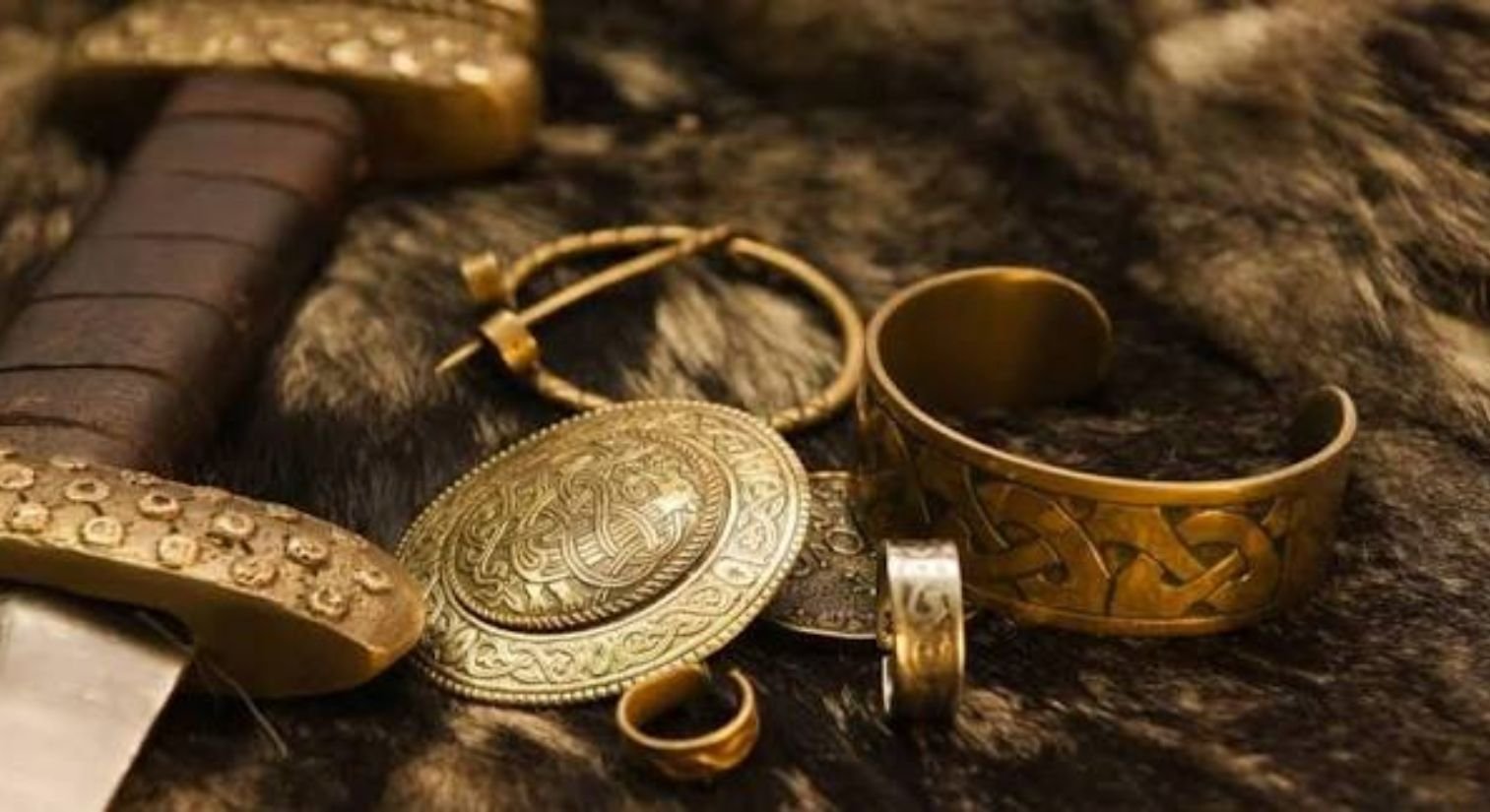
The intricate world of Viking jewelry represents one of the most fascinating intersections of metalworking art, economic utility, and spiritual devotion in early medieval Europe. Between the eighth and eleventh centuries, the seafaring people of Scandinavia—popularly known as the Vikings—crafted and wore personal adornments that extended far beyond simple aesthetic decoration. Every silver neck ring, cast bronze brooch, and hammered iron amulet carried profound cultural meaning within Norse society. These ancient artifacts functioned as physical declarations of political allegiance, visible tokens of social status, and personal charms designed to invoke the protection of pagan deities. To understand these masterfully forged items is to understand the broader Norse mind, their expansive trade networks, and their worldview.
The Historical Significance of Jewelry in Norse Society
In the early Middle Ages, Scandinavian society operated without standardized, state-issued coinage for centuries. As a direct result, Viking jewelry served a pivotal dual purpose by acting as both personal ornament and portable financial liquid capital. Norse warriors, traders, and farmers carried their personal savings directly on their bodies in the form of heavy silver arm bands, twisted neck rings, and thick finger rings. When a commercial transaction required payment, an individual could simply chop off a segment of silver from their jewelry to pay for goods or services. This practical economic system, known modernly as the hacksilver economy, meant that metal purity and weight were directly tied to personal purchasing power and survival.
Beyond its practical role as a mobile bank account, personal ornament was deeply embedded in the social hierarchy of Viking age Scandinavia. Wealthy chieftains, influential jarls, and successful trade merchants wore lavishly decorated ornaments crafted from imported silver and gold to signal their elite standing to their peers. Conversely, everyday subsistence farmers, domestic craftspeople, and laborers wore simpler items fashioned from domestic bronze, iron, or carved animal bone. Giving fine metalwork was also a primary tool for political diplomacy among the Norse elite. Powerful warlords routinely bestowed heavy silver arm rings upon loyal warriors to secure personal oaths of military allegiance, earning famous poetic titles like the ring-giver in legendary Old Norse sagas.
Sacred Materials and Metalworking Traditions
The raw materials chosen by Scandinavian artisans were central to the symbolic and monetary value of Viking jewelry. While early medieval Europe held gold in high regard, silver was by far the absolute favorite metal of the Norse world. The widespread preference for silver was driven by vast international trade routes that brought massive quantities of foreign silver coins into Scandinavia from the Islamic Abbasid Caliphate and the Byzantine Empire. Norse metalsmiths melted down these foreign dirhams and coins in specialized ceramic crucibles, re-casting the refined bullion into traditional Scandinavian shapes. Gold was exceptionally rare and reserved exclusively for the highest ranks of royal royalty, while durable bronze remained the everyday workhorse material for common folk.
The physical creation of Norse metalwork required extraordinary artistic skill, specialized technical tools, and a deep knowledge of metallurgy. Early medieval smiths utilized the sophisticated lost-wax casting technique (cire perdue) to achieve intricate, three-dimensional animal shapes and interwoven geometric patterns in bronze and silver. Furthermore, blacksmiths and master jewelers were adept at filigree work—soldering tiny, delicate beads and fine twisted wires of precious metal onto solid surfaces to create mesmerizing surface textures. Iron was also frequently forged into sacred amulets, particularly for rural populations who viewed the metal itself as protective against malicious supernatural forces. The smith was often viewed as a semi-magical figure who could transform raw earth into powerful tools.
The Symbolic Universe of Ancient Norse Amulets
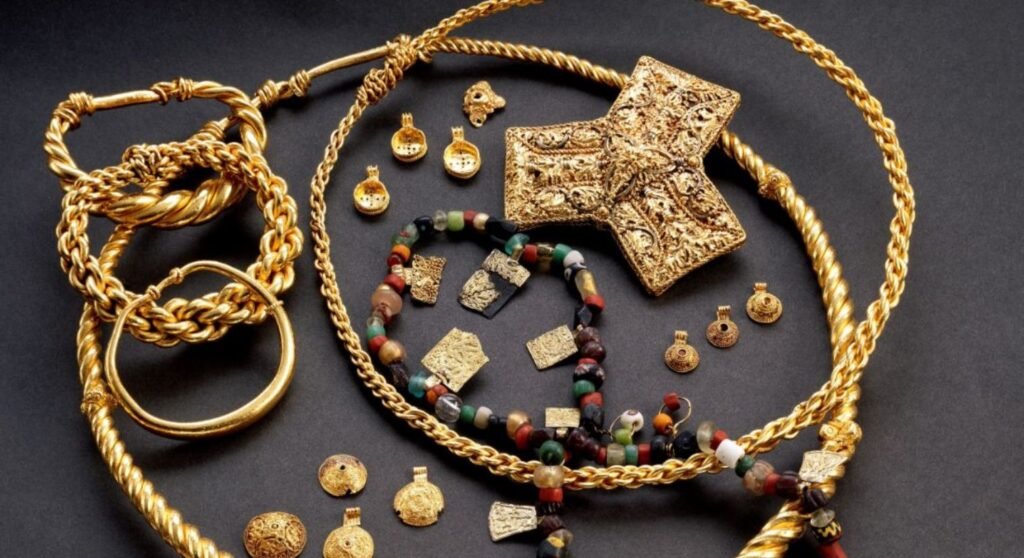
Spiritual beliefs were inextricably woven into every facet of daily Scandinavian life, and Viking jewelry served as an essential canvas for religious expression. Wearing a carved or cast protective talisman was believed to establish a direct, ongoing connection between the wearer and the ancient Norse gods. These protective charms were worn around the neck on thick metal chains or leather cords to guard against sudden illness, military defeat, evil curses, and oceanic shipwreck. For the early Scandinavians, the physical world was populated by unseen spirits, legendary giants, and powerful deities, making spiritual defense just as vital as physical armor during their perilous voyages across cold northern seas.
Among the vast array of pagan talismans unearthed by modern archaeologists, the Mjölnir or Thor’s Hammer amulet stands out as the most widely worn icon in the entire Norse world. Representing the mythical weapon used by the thunder god Thor to defend humanity and Asgard from chaotic giants, the hammer symbolized inner strength, physical protection, and agricultural fertility. Interestingly, during the late tenth and eleventh centuries, as Scandinavian lands underwent gradual conversion to Christianity, the production of Thor’s hammer pendants actually increased significantly. Historians view this dramatic surge as a defiant cultural reaction by pagan traditionalists who wore Mjölnir amulets to visibly distinguish themselves from Christians wearing the holy cross.
Legendary Symbols: Thor’s Hammer, Valknut, and the Tree of Life
Another exceptionally famous yet enigmatic symbol frequently found carved into Viking jewelry is the Valknut, composed of three interlocking, geometric triangles. Closely associated in historical stone carvings with Odin, the Allfather and supreme ruler of Asgard, the Valknut represented death in battle, spiritual transition, and the ultimate passage of fallen heroes into the majestic halls of Valhalla. Because Odin was the patron deity of magic, war, and wisdom, wearing his sacred mark signaled a warrior’s absolute readiness to die bravely in combat. Modern scholars also interpret the interlocking points as a representation of the complex, binding knots that Odin could tie within the minds of his enemies during war.
Equally central to the spiritual design of ancient Norse personal ornaments was Yggdrasil, the sacred World Tree of Scandinavian mythology. Represented as a massive, sprawling ash tree whose roots and branches held together the nine distinct realms of the cosmos, Yggdrasil symbolized cosmic order, interconnected life, and eternal rebirth. Artisans often depicted tree motifs alongside other prominent mythical creatures, such as Jörmungandr, the terrifying Midgard Serpent who encircled the entire human world by biting its own tail. These intricate, mythological motifs allowed the wearer to carry an entire miniature model of the sacred universe directly upon their chest, serving as a constant reminder of destiny.
Types of Viking Jewelry: From Arm Rings to Brooches
To understand how these items functioned in everyday life, one must examine the specific types of Viking jewelry worn by men and women across Scandinavian settlements. Personal adornment was universally practiced across all age groups and gender roles, though distinct regional styles and functional needs dictated how items were worn. Heavy cloak fasteners, elaborate hair pins, thick neck rings, and decorative finger bands were common sights in ancient trading centers like Birka, Hedeby, and Dublin. Each item served a precise practical purpose—such as pinning thick wool cloaks against cold sea winds—while simultaneously broadcasting the personal identity, tribal lineage, and wealth of the individual wearing it.
Arm Rings and Neck Rings: Tokens of Loyalty and Wealth
Among all forms of personal adornment, silver arm rings hold a uniquely prominent place in historical accounts and ancient sagas. These heavy, C-shaped or twisted bands of solid metal were worn around the forearm or upper biceps by both men and women. In tribal Norse culture, military leaders and wealthy clan chieftains distributed these precious items to their sworn warriors during seasonal feasts to reward military bravery and secure personal loyalty. A warrior’s accumulated arm rings served as a direct visual resume of their victories in battle and the generosity of their liege lord, making them deeply prized personal possessions that were rarely surrendered lightly.
Similarly, solid neck rings forged from thick strands of twisted metal wire were among the most expensive and striking examples of Viking jewelry ever produced. Because of their immense weight and high concentration of pure silver, these items represented staggering amounts of personal wealth. Some massive neck rings weighed several pounds, making them impractical for daily manual labor and reserving them strictly for formal ceremonial gatherings, religious rituals, and political assemblies. In certain regions, neck rings were also buried alongside high-ranking individuals in elaborate ship burials to ensure the deceased retained their high social status and financial prosperity in the afterlife.
Brooches: Functional Masterpieces of Norse Women
For women living in the Viking Age, elaborate metal brooches were an indispensable element of daily clothing and functional attire. Scandinavian women typically wore pairs of large, domed metal fasteners known modernly as oval brooches or tortoise brooches. Positioned just below the shoulders, these heavy metal fasteners held up the shoulder straps of their layered wool apron dresses. Crafted primarily from cast bronze and frequently gilded with fine gold or silver, oval brooches were heavily decorated with intricate relief patterns, deep relief geometric panels, and stylized zoomorphic animal figures that caught the natural sunlight.
In addition to securing clothing layers, these large shoulder brooches served as practical anchoring points for hanging useful domestic accessories. Scandinavian women suspended fine silver chains or braided leather cords between their brooches, hanging crucial everyday tools like iron keys, brass sewing needles, ear scoops, small utility knives, and bone combs. Therefore, a woman’s pair of oval brooches served as a vivid public symbol of her high authority as the manager of the domestic household. Wealthy matriarchs also wore a third central fastener, known as a trefoil brooch or disc brooch, at the throat to secure their expensive outer cloaks.
Regional Artistic Styles and Evolution
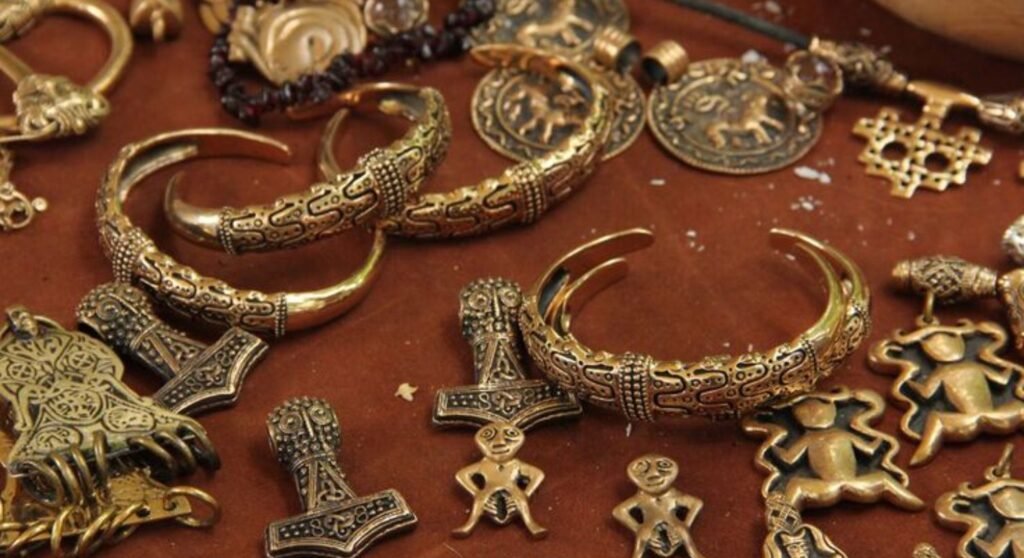
The visual design of Viking jewelry underwent a dramatic, multi-century artistic evolution that modern art historians categorize into six distinct, overlapping stylistic periods. Each consecutive artistic style was named after the prominent archaeological site or historical ship burial where its defining characteristics were first identified. These artistic movements moved from early, dense zoomorphic gripping-beast patterns toward highly fluid, ribbon-like animal forms and elegant plant motifs under Christian European influence. Tracking these subtle stylistic shifts allows modern researchers to accurately date ancient metal hoards and trace the flow of artistic ideas across the North Sea.
The six major artistic styles that defined the Scandinavian early Middle Ages include:
- Oseberg Style (c. 790–850 CE): Characterized by dense, crawling zoomorphic figures and the famous gripping-beast motif with thick, grasping paws.
- Borre Style (c. 850–950 CE): Known for tight, geometric ring-chain patterns and tiny, symmetrical animal heads set within geometric frames.
- Jellinge Style (c. 900–975 CE): Featured elegant, ribbon-shaped S-curved animals shown in profile with textured, patterned bodies and elongated ears.
- Mammen Style (c. 970–1020 CE): Marked by larger, power-projecting animal figures, flowing foliate tendrils, and elaborate plant-like scrollwork.
- Ringerike Style (c. 1000–1075 CE): Dominated by dynamic depictions of lions, majestic birds, long-beaked ravens, and thin, sweeping tendril lines.
- Urnes Style (c. 1050–1125 CE): The final pagan style, characterized by extremely delicate, looping, multi-layered, and thread-like serpentine creatures.
The Role of Beads, Glass, and Organic Materials
While metallic adornments dominate popular cultural imagination, non-metallic materials played a huge role in the creation of authentic Viking jewelry. Vibrant, multicolored glass beads were exceptionally popular among Scandinavian populations, serving as prized luxury items imported from distant production centers in the Mediterranean, the Middle East, and Western Europe. Local craftspeople in major trading hubs like Ribe and Kaupang also operated sophisticated glass-melting furnaces where they recycled broken Roman and Frankish glassware into colorful, custom beads. Women often strung dozens of these glass beads on cords suspended between their shoulder brooches.
In addition to glass, natural materials gathered from northern trade routes were prized for their intrinsic beauty and magical properties. Amber, fossilized tree resin harvested along the cold shores of the Baltic Sea, was carved into warm beads, smooth game pieces, and protective amulets. The Norse believed amber possessed inherent magical qualities due to its warm, glowing appearance and static electrical charges when rubbed. Similarly, polished animal teeth, walrus ivory from Greenland, and carved elk bone were fashioned into rustic pendants that celebrated the wild nature and hunting prowess of the arctic tundra.
Hacksilver and the Viking Economy
To understand why large hoards of Viking jewelry are frequently discovered buried across Britain, Ireland, and Scandinavia today, one must understand the chaos of early medieval economics. Without centralized banking or universal paper currency, precious metal was valued strictly by its weight and purity. When a Norse trader purchased livestock, silk, or weapons, they used specialized balance scales and small lead weights to measure out precise quantities of silver. If a whole arm ring was worth far more than the item being purchased, the trader used a chisel or knife to slice off a chunk of silver, creating hacksilver.
Because silver was constantly buried in iron pots, wooden chests, or leather sacks during times of sudden military invasion or political instability, thousands of these ancient coin and jewelry hoards remained hidden underground for centuries. These buried financial caches serve as time capsules for modern archaeologists, offering tangible proof of the staggering wealth brought back to Scandinavia through foreign trade, mercenary service, and coastal raids. Analyzing the chemical composition of these silver pieces reveals that silver migrated to the far north from places as distant as modern-day Iraq, Iran, and Uzbekistan.
Foreign Influences: Silk Road, Byzantium, and Anglo-Saxon Arts
Contrary to historical stereotypes of isolated northern lands, the Scandinavian world was deeply interconnected with distant global civilizations. The unique aesthetic of Viking jewelry was continuously transformed by continuous exposure to artistic traditions from Western Europe, the British Isles, and the Middle East. Through extensive riverine travel down the Dnieper and Volga rivers, Norse traders established direct trade contacts with the rich Byzantine Empire and the legendary Silk Road. These far-reaching journeys introduced Scandinavian artisans to exotic filigree techniques, delicate granulation techniques, and precious gemstones that were quickly integrated into native northern metalworking styles.
Similarly, extensive contact with Anglo-Saxon England and Celtic Ireland left an undeniable mark on late Scandinavian metalwork. Norse raiders and settlers who conquered regions of Great Britain adapted local Christian artistic motifs, incorporating elaborate insular knotwork and intricate filigree into their traditional pagan casting molds. Furthermore, looted Frankish shoulder clasps and Carolingian sword fittings were routinely brought back to Scandinavia as battle spoils, where clever local jewelers modified them into unique female brooches. This dynamic cross-cultural exchange ensured that Scandinavian metalwork remained constantly evolving, highly sophisticated, and internationally inspired.
Archaeological Discoveries and Famous Hoards
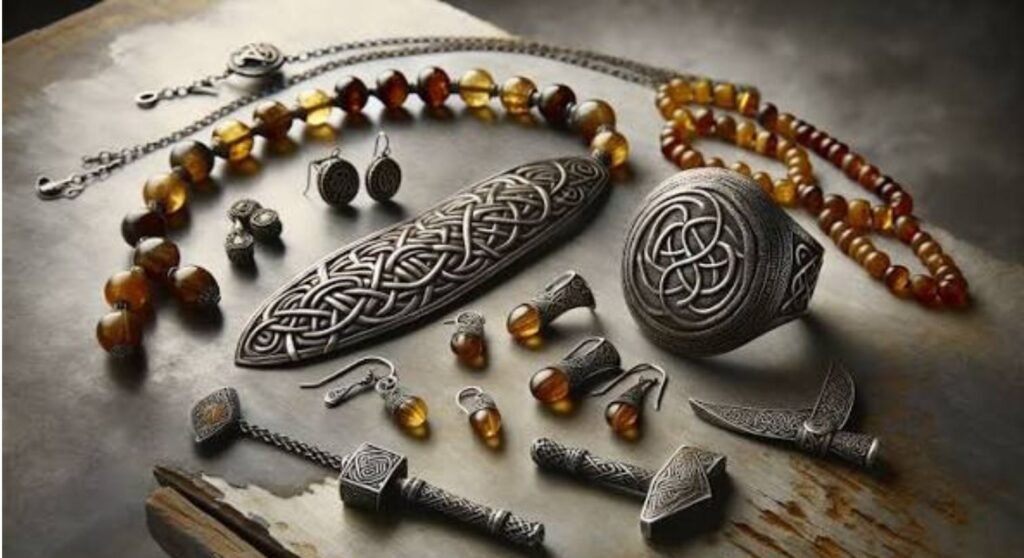
Our modern understanding of early medieval northern personal ornament is largely derived from extraordinary archaeological excavations and accidental discovery of underground treasure hoards. Among the most magnificent discoveries is the legendary Cuerdale Hoard, unearthed in Lancashire, England, in 1840. Containing over 8,000 individual items—including over 40 kilograms of silver arm rings, ingot bars, and hacksilver fragments—it remains one of the largest single caches of Norse silver ever discovered. The hoard offers invaluable insights into the immense scale of the early tenth-century Norse financial system.
Equally transformative was the excavation of the spectacular Galloway Hoard in Scotland in 2014, which revealed a breathtaking collection of silver, gold, and glass ornaments packed neatly within an embellished silver-gilt vessel. This rare find included unusual, high-status items such as a gold bird-shaped pin, decorated silver arm bands stamped with runic names, and delicate glass beads wrapped in fine silk. Such high-profile archaeological discoveries consistently demonstrate that personal ornament in the early medieval north was far more complex, artistic, and varied than previously assumed by early historians.
Modern Resurgence and Contemporary Norse Jewelry
In the modern era, Viking art has experienced an unprecedented global revival in popular culture, fashion, and historic re-enactment circles. Driven by mainstream historical television dramas, fantasy literature, and a growing cultural interest in ancestral heritage, millions of people worldwide now wear modern reproductions of ancient Scandinavian designs. Modern artisans and specialty brands utilize a blend of traditional lost-wax casting methods and cutting-edge 3D metal printing to recreate famous archaeological finds with remarkable precision. Wearers view these items as timeless fashion statements and powerful personal connections to northern mythology.
Today, contemporary metalsmiths produce authentic historical replicas alongside modern, stylized interpretations crafted from durable materials like stainless steel, titanium, sterling silver, and solid gold. Popular modern pieces include heavy wolf-head neck chains holding Mjölnir pendants, engraved runic rings, and braided leather bracelets featuring silver accents. Whether worn as an explicit declaration of modern Neopagan faith, an appreciation for ancient history, or simply a bold aesthetic choice, contemporary Scandinavian-style adornments continue to capture the human imagination across the globe.
Frequently Asked Questions About Viking Jewelry
Did male Viking warriors actually wear jewelry?
Yes, men in Scandinavian society regularly wore various types of metal adornment. Male warriors frequently wore heavy silver arm rings, thick neck rings, finger rings, and ornamental cloak pins forged from bronze or silver. These items served as practical fasteners for heavy woolen cloaks, visual displays of wealth, and physical tokens of political loyalty given by their military leaders.
What was the most common material used for Viking jewelry?
While gold was used for royal items and iron was used for rustic talismans, silver was by far the most popular and culturally significant metal used in early Scandinavian jewelry. Massive amounts of foreign silver coins were imported through international trade networks, melted down by Scandinavian smiths, and recast into traditional arm bands, neck rings, and sacred pendants.
What is the meaning behind Thor’s Hammer (Mjölnir) jewelry?
The Mjölnir or Thor’s Hammer pendant was worn as a sacred protective charm designed to invoke the strength, protection, and blessing of Thor, the Norse god of thunder. It was believed to guard the wearer against evil spirits, misfortune, and physical harm in battle. It was the single most popular religious amulet worn in early medieval Scandinavia.
Did the Vikings wear earrings?
No, historical and archaeological evidence indicates that traditional early medieval Scandinavians did not wear earrings. While they were familiar with earrings worn by neighboring Slavic peoples and Eastern cultures along their trade routes, earrings were never adopted as a native element of traditional Scandinavian attire or personal adornment.
How did the Vikings use jewelry as currency?
During the early Middle Ages, Scandinavia operated largely on a hacksilver economy. Because personal ornaments were forged from high-purity silver, individuals simply chopped off small pieces or segments from their heavy arm bands and neck rings to pay for goods, trade goods, or services based on the exact weight of the metal.
How can I identify authentic Viking jewelry designs versus modern inventions?
Authentic Scandinavian designs are based on verified archaeological finds and generally belong to one of six distinct historic art styles: Oseberg, Borre, Jellinge, Mammen, Ringerike, or Urnes. Authentic historical pieces typically emphasize stylized animal figures, fluid interlace patterns, and sacred mythological symbols rather than fantasy motifs often introduced by modern media.