

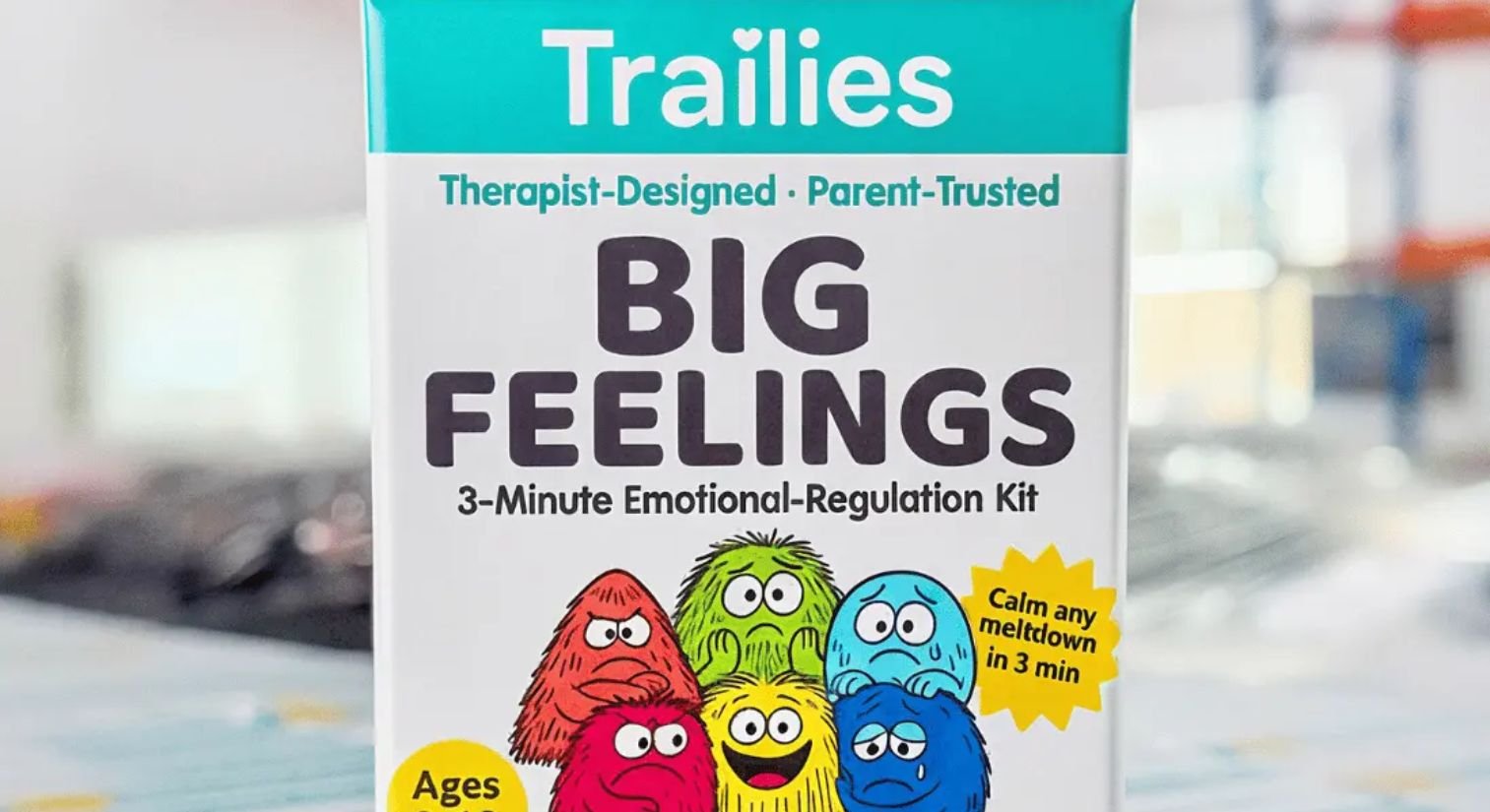
Navigating intense emotional outbursts in children can feel overwhelming for parents, educators, and caregivers alike. When tantrums and sensory overload take control, traditional reasoning often fails completely because a overwhelmed brain cannot process complex logic. Enter the Trailies Big Feelings Deck, a practical, therapist-built emotional regulation toolkit designed specifically to diffuse meltdowns in real time. Rather than asking a child to analyze their emotions while in distress, this portable card deck uses a body-first methodology. By targeting the nervous system directly, it shifts children out of fight-or-flight mode and restores calm swiftly and gently.
Understanding the Need for Emotional Regulation Tools
Modern childhood presents endless sensory inputs, rapid routine shifts, and complex social expectations that can easily overload developing nervous systems. When emotional distress peaks, children lack the neurological maturity to self-regulate without co-regulation support from trusted adults. Traditional behavioral strategies often focus heavily on verbal processing, asking kids to use their words when their brains are physiologically incapable of speech production. The Trailies Big Feelings Deck fills this vital gap by providing non-verbal, actionable prompts that prioritize sensory stabilization. Parents no longer need to guess what might soothe their child during a sudden emotional crisis.
A Therapist-Built Pocket-Sized Solution
Created by mental health professionals, the Trailies Big Feelings Deck packages evidence-based therapeutic techniques into an accessible, pocket-sized format. Each card features colorful illustrations, clear cues, and simple physical movements designed for instant implementation during high-stress scenarios. Because the deck is portable, caregivers can carry these emotional regulation prompts to parks, grocery stores, school drop-offs, or doctor appointments. Having expert-backed strategies at your fingertips removes the pressure of remembering complex parenting techniques during stressful parenting moments.
Who Benefits Most from These Emotional Cards?
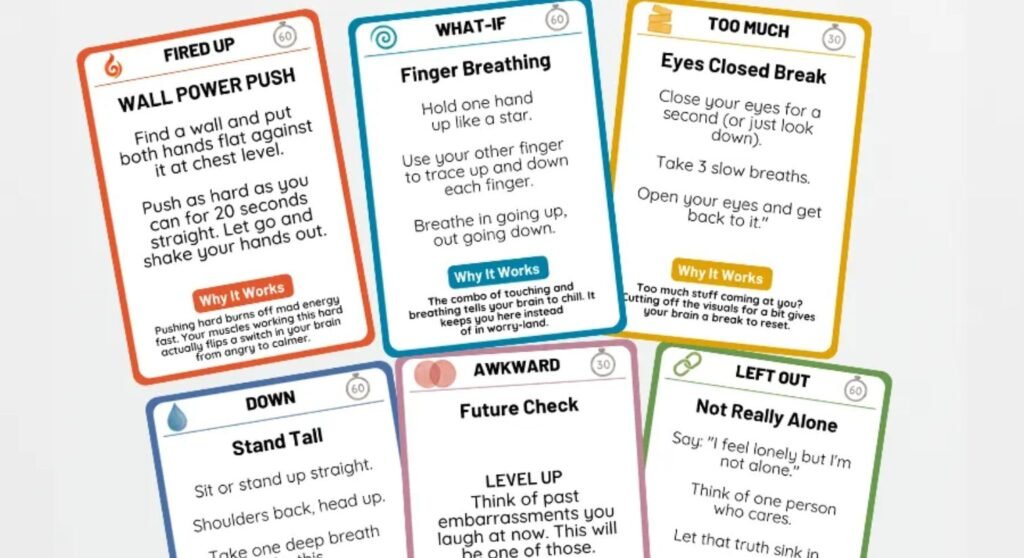
While engineered with young children in mind, the Trailies Big Feelings Deck offers massive value across multiple settings and age groups. Toddlers experiencing intense emotional shifts benefit from the visual clarity, while neurodivergent children with autism or ADHD gain clear sensory outlets. Parents find relief in having a reliable action plan, while elementary school teachers and school counselors use the deck to create safe regulation corners in classrooms. Anyone responsible for guiding a child through intense feelings will find these portable regulation tools invaluable.
Why Logic Fails During High-Stress Meltdowns
When a child experiences a full-blown meltdown, the amygdala takes over the brain, signaling immediate threat and activating the sympathetic nervous system. During this intense reaction, access to the prefrontal cortex—the region responsible for logic, reasoning, and language—is temporarily offline. Demanding that a screaming child explain their feelings or follow verbal instructions creates friction and escalates distress further. The Trailies Big Feelings Deck bypasses verbal reasoning entirely, recognizing that you must calm the body’s physiological alarms before you can ever engage the thinking mind.
How Somatic Downshifting Calms the Nervous System
Somatic downshifting relies on physical movement, deep pressure, and controlled breathing to send safety signals directly to the brain stem and vagus nerve. By engaging motor skills and sensory pathways, the Trailies Big Feelings Deck lowers heart rates and reduces cortisol spikes naturally. Activities like heavy work, gentle stretching, or controlled exhales signal to the body that the immediate danger has passed. Once the physical body registers safety, emotional equilibrium follows, allowing the child to return to a peaceful state.
Durable, Child-Friendly Deck Design
Parenting tools must withstand active environments, and the Trailies Big Feelings Deck is built with high durability in mind. Printed on thick, wipeable stock with smooth rounded edges, these cards handle sticky fingers, accidental spills, and frequent handling easily. The compact size fits into purses, backpacks, or glove compartments without clutter. Bright, comforting color schemes help children identify activities without feeling overwhelmed by visual noise, ensuring the physical deck remains inviting even during moments of sensory sensitivity.
Intuitive Visual Cues for Quick Interventions
During an emotional crisis, nobody has time to read lengthy instruction manuals or dense text passages. Each card in the Trailies Big Feelings Deck utilizes clear, expressive illustrations that communicate actions instantly to non-readers. Simple icons highlight sensory categories—such as proprioceptive input, breathwork, or grounding exercises—allowing adults to select an appropriate card within seconds. This visual accessibility empowers children to eventually pick cards themselves, fostering autonomy and emotional self-awareness over time.
Identifying Early Signs of Emotional Overload
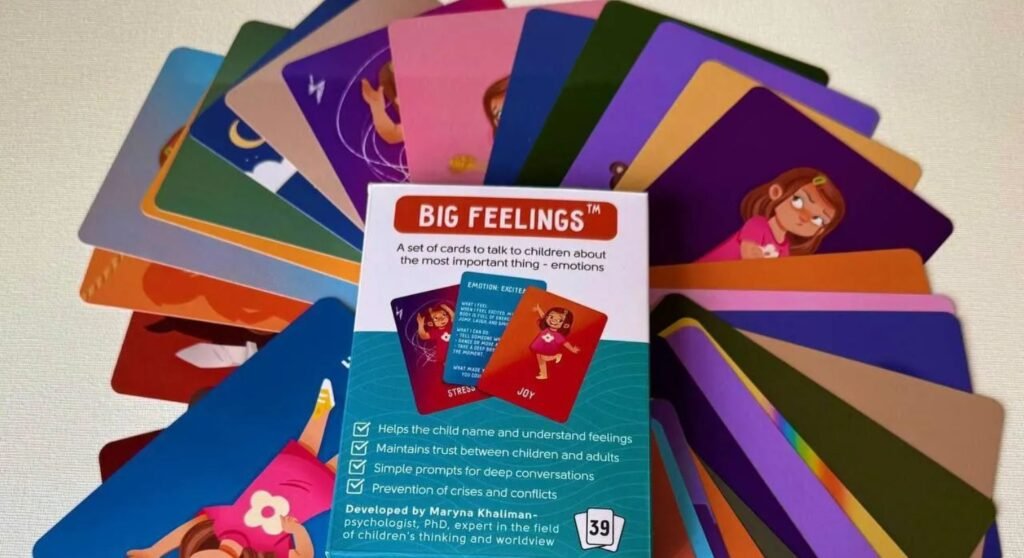
Successful co-regulation often begins before a full crisis erupts by noticing subtle somatic indicators of distress. Watch for physical cues such as clenched fists, shallow breathing, verbal repetition, or sudden withdrawal from activities. Introducing the Trailies Big Feelings Deck at these early stages prevents full meltdown escalation by providing proactive nervous system support. Adults can gently offer two card choices, giving the child control over their sensory coping path before emotional overwhelm peaks.
Co-Regulation Strategies for Parents and Educators
Using the deck effectively requires active adult participation through calm presence and modeled behavior. Rather than handing a card to an upset child, the caregiver should perform the prompt alongside them, demonstrating the movement or breath pattern. This shared activity leverages mirror neurons, allowing the child’s nervous system to match the calm state of the adult. The Trailies Big Feelings Deck serves as a bridge, transforming potential power struggles into moments of connection and shared emotional healing.
Proprioceptive and Heavy Work Exercises
Proprioceptive inputs involve muscle and joint resistance, which naturally grounds an dysregulated body. Cards in this category prompt actions like pushing against a wall, hugging tightly, or carrying weighted objects. These heavy work activities release tension and restore spatial awareness to children feeling detached or chaotic. The Trailies Big Feelings Deck integrates these powerful physical resets seamlessly into playful, manageable prompts.
Calming Breathwork and Visualizations
Deep, rhythmic breathing acts as a natural brake for an overactive nervous system, yet telling a child to take a deep breath often backfires. The Trailies Big Feelings Deck turns breathwork into imaginative play, using visual metaphors like blowing out birthday candles or smelling hot cocoa. These creative cues guide children into prolonged exhales that activate the parasympathetic nervous system without triggering frustration or defiance.
Grounding and Sensory Awareness Cues
When emotions spin out of control, sensory grounding helps anchor a child back into the present physical environment. The deck features cards that engage the five senses, prompting kids to spot specific colors, feel unique textures, or listen for quiet sounds. By redirecting mental focus away from internal panic toward external physical sensations, the Trailies Big Feelings Deck effectively interrupts emotional spirals.
Integrating the Deck into Daily Routines
In educational and clinical environments, consistency is key to emotional safety and student success. Teachers can place the Trailies Big Feelings Deck in designated calm-down corners, allowing students to self-regulate quietly without disrupting instruction. Therapists frequently incorporate the deck into play therapy sessions to teach emotional vocabulary and somatic coping strategies in low-pressure, interactive formats that build long-term resilience.
Home Life and On-the-Go Transitions
Transitions between home activities, such as leaving for school or preparing for bedtime, frequently trigger anxiety and resistance. Keeping the Trailies Big Feelings Deck near high-stress areas like entryways or dining tables helps smooth daily routines. Using a quick card exercise before leaving the house establishes a peaceful baseline, transforming chaotic daily shifts into predictable, reassuring rituals for the whole family.
Long-Term Benefits of Body-First Emotional Tools
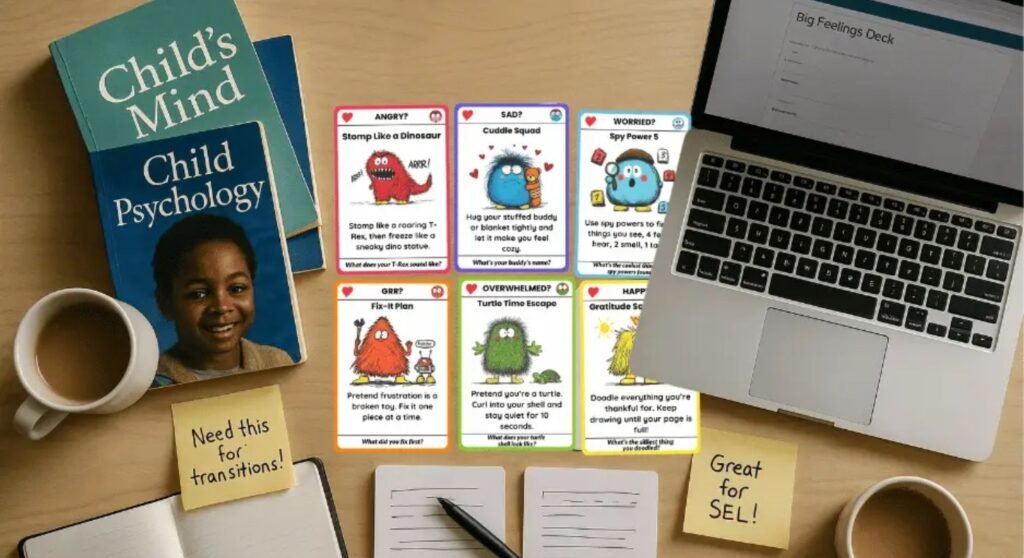
Regularly using body-first regulation tools helps build robust neural pathways over time, strengthening a child’s natural capacity for self-regulation. Children learn to recognize physical stress signals early and associate distress with positive physical interventions rather than shame or punishment. As caregivers consistently model these somatic strategies, kids internalize the habits, developing lifelong emotional intelligence, resilience, and stress-management skills that carry well into adulthood.
Conclusion
The Trailies Big Feelings Deck represents a compassionate, science-backed shift in how adults support dysregulated children. By prioritizing somatic downshifting over complex logic during high-stress moments, this therapist-built toolkit empowers families to handle meltdowns with empathy, speed, and confidence. Incorporating these simple sensory cards into daily routines fosters deeper connection, lowers household stress, and equips children with essential nervous system regulation tools that last a lifetime.
Frequently Asked Questions (FAQs)
What makes the Trailies Big Feelings Deck different from typical emotion cards?
Unlike standard flashcards that focus on identifying or naming feelings, the Trailies Big Feelings Deck provides immediate somatic actions to calm the physical nervous system directly.
Is the Trailies Big Feelings Deck suitable for neurodivergent children?
Yes, the deck’s non-verbal visual cues and heavy work prompts make it exceptionally effective for autistic children, kids with ADHD, and those with sensory processing differences.
At what age can children start using the Trailies Big Feelings Deck?
The cards are ideal for children aged 3 to 10, though older children and adults can also benefit from the somatic grounding and breathing exercises.
Can teachers use the Trailies Big Feelings Deck in large classrooms?
Absolutly. Teachers often place the deck in quiet corners or use whole-class card breaks during transitions to keep energy levels balanced and focused.
How quickly does the Trailies Big Feelings Deck help calm a child?
Because somatic prompts immediately engage the body’s parasympathetic system, many children begin settling within 1 to 3 minutes of starting a card activity.
Do I need therapeutic training to use the deck effectively?
No prior training is necessary. The Trailies Big Feelings Deck is designed with clear visual cues so parents, grandparents, and caregivers can use it intuitively right away.