

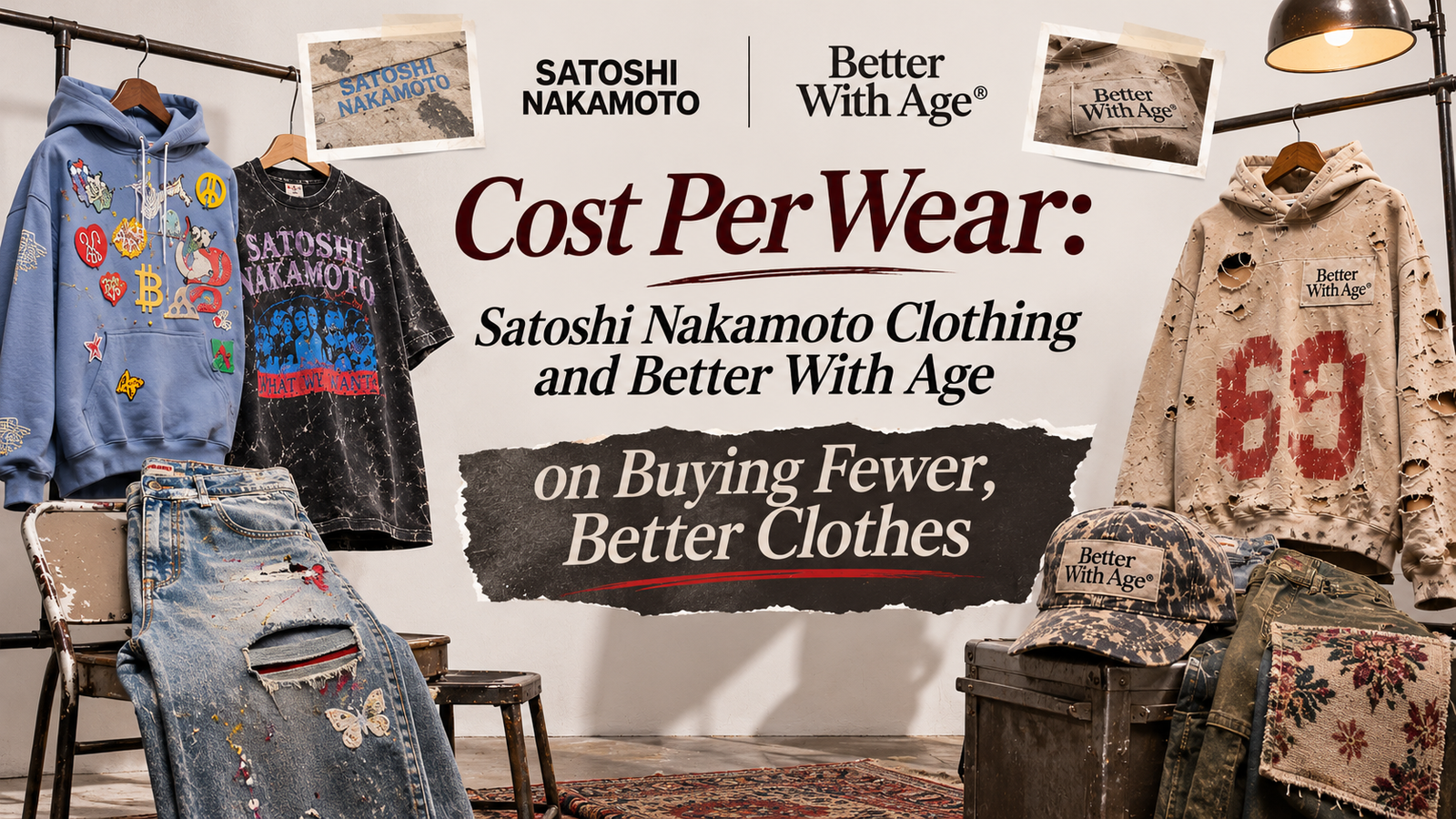
The Maths Nobody Does at Checkout
When a price tag runs into the hundreds, the first reaction is a wince. Fair enough. But there’s a number most of us never work out: cost per wear. Take what you paid and divide it by how many times you actually put the thing on. A cheap shirt worn twice can cost more per outing than something pricey you grab every week.
What Satoshi Nakamoto Clothing Costs
Satoshi Nakamoto Clothing is a Los Angeles label that calls its work luxury streetwear, and fashion retailers list single pieces at hundreds of dollars. Some jeans and jerseys climb well past that. Now and then a markdown shows up. So yes, it’s expensive. I’m not here to talk you out of that feeling, just to put it in context.
A Rough Example
Say a pair of jeans costs $600. That’s a made-up number, not a quote. Wear them 150 times over a few years and each outing costs you $4. Now picture a $40 pair that gives up after 8 wears. That’s $5 each. The gap between cheap and expensive shrinks fast once you count how long things really last.
Choose Pieces You’ll Reach For
This only works if you wear the clothes. A bold jersey you save for special nights probably won’t get there. Calmer items, like the Gray Tourist T-shirt or the Black Bone Crewneck Sweatshirt, are more likely to turn up in your week. Be honest about your own habits before spending. Plenty of us buy for the person we wish we were.
The Costs Hiding Behind the Price
Sizing mistakes sting more at this level. So do shipping, return fees and import charges if you’re ordering from abroad. Satoshi Nakamoto Clothing is sold through lots of different shops, and each one sets its own terms. Read the return policy and the size guide first, not after the parcel arrives and the fit is off.
Shopping Without Getting Burned
Compare a few retailers before you pay, since stock and prices vary from shop to shop. Watch for sales, but be wary of any listing that’s far cheaper than everywhere else. Popular names attract lookalike pages and thin blog posts. Stick with stores you recognise. It’s dull advice, and it’s also the advice that saves people the most regret.
One Way of Buying Better
Satoshi Nakamoto Clothing sits at the expensive, statement end of the “buy fewer, better things” idea. It isn’t the only way to do it, and for plenty of people it isn’t the sensible one. Another label takes this same thought in a completely different direction. That’s up next.
The Same Idea, a Different Road
Buying fewer, better things doesn’t have to mean spending a fortune. Better With Age gets at the same idea from a more relaxed angle. Instead of one jaw-dropping statement piece, the store is full of clothes meant to be worn on ordinary days, again and again. And that’s where cost per wear starts to make sense.
Pieces You’ll Actually Wear
The catalogue is mostly everyday stuff: vintage-style tees, hoodies, sweatpants, trousers, shorts, outerwear, hats and shoes. Nothing precious. A Loaner Panelled Tee or a 5 Panel Zip-Up Hoodie is the kind of thing you grab on autopilot. Clothes you grab without thinking are the ones that rack up wears, and wears are what bring the cost per outing down.
A Quick Example
Here’s a made-up number, not a price from the store. Suppose a flannel costs $100 and you wear it 50 times over a couple of winters. That’s $2 a wear. A trendy $30 top you wear three times is $10 each. Count the wears honestly and cheaper stops looking cheaper. The Oxford Button Down Flannel is a decent candidate, since it works open over a tee or buttoned up.
Mix and Match Beats One-Off Outfits
A hat, a flannel and a pair of trousers that all work together will earn their keep faster than an outfit built around a single piece. Better With Age sells across the whole wardrobe, so you can slowly add things that go with what you own. The Belmond ’50s Buckle-Back Trouser, for example, works with a plain tee as easily as with a flannel.
Drops, Timing and Patience
Clothes arrive in seasonal collections, and when I looked most pieces were marked sold out. So the sensible habit is to decide before a drop, not after. Make a short list of what you’re missing, then buy only those things. It stops impulse purchases and makes each piece count a bit more.
Check Before You Pay
Open the FAQ and the return and exchange policy first, both linked at the bottom of the site. The store also lets you switch currency, which helps if you’re ordering from outside the US. And if you’d rather judge fit in person, there’s a stockists page listing real shops. A piece that doesn’t fit is a piece you won’t wear, so this step matters.
Odd Extras Count Too
The store also sells a handbag, a disco belt and martini glasses. Not everything has to be practical to be worth it. A belt you love and use daily wins on cost per wear just like a jacket does. Pick things that fit how you live, then let the maths work for you.
Keep It Simple
Better With Age shows that wearing clothes into the ground is a perfectly good plan. Buy the pieces you’ll reach for, give them a few seasons and watch the real cost drop. Nothing complicated. Just fewer, better things worn often.