

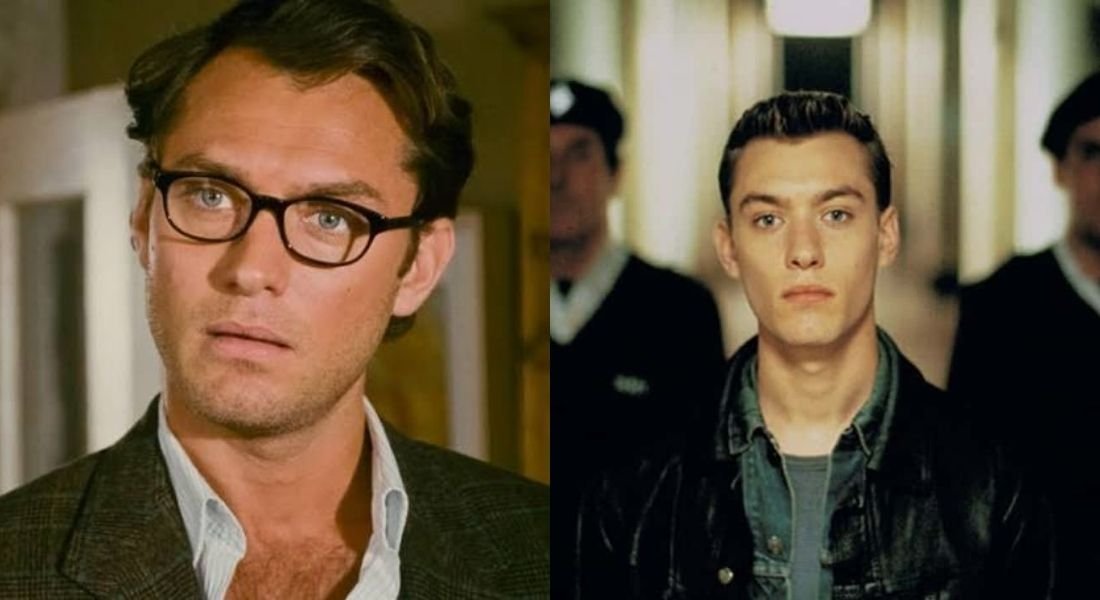
Young Jude Law was widely recognized as one of Hollywood’s definitive heartthrobs and most versatile talents during his breakout era in the late 1990s and early 2000s. Born on December 29, 1972, in London, England, he began acting in theatre as a teenager before transitioning to global cinema, where he quickly became famous for his natural charisma, sharp style, and dramatic range. Long before he earned critical acclaim as a veteran character actor, he captivated international audiences with his striking looks and intense dedication to his craft. Exploring the early life and early career of young Jude Law reveals how a passionate stage actor transformed into a global cinematic force.
| Full Birth Name | David Jude Heyworth Law |
| Date of Birth | December 29, 1972 |
| Place of Birth | Lewisham, London, England, UK |
| Parents | Margaret Anne Heyworth & Peter Robert Law (Schoolteachers) |
| Siblings | Natasha Law (Sister, Artist/Painter) |
| Early Training | National Youth Music Theatre |
| Screen Debut | Families (1990 TV show) / Shopping (1994 Feature film) |
| Breakout Film Role | Dickie Greenleaf in The Talented Mr. Ripley (1999) |
| Key 1990s–2000s Films | Gattaca (1997), A.I. Artificial Intelligence (2001), Road to Perdition (2002), Cold Mountain (2003), Alfie (2004), Closer (2004), The Holiday (2006) |
| Major Stage Credits | Les Parents Terribles / Indiscretions (1994–1995), Hamlet (2009–2010), Anna Christie (2011) |
| Major Awards Won | BAFTA Award for Best Supporting Actor (The Talented Mr. Ripley, 1999); Honorary César (2007) |
| Academy Award Nods | Best Supporting Actor (The Talented Mr. Ripley, 1999); Best Actor (Cold Mountain, 2003) |
| Marriages | Sadie Frost (m. 1997–2003); Phillipa Coan (m. 2019) |
| Children | 7 (including Rafferty, Iris, and Rudy Law) |
Early Life and Childhood Roots in South London
David Jude Law grew up in Lewisham, South London, raised by parents Margaret Anne Heyworth and Peter Robert Law, who were both dedicated schoolteachers. Named in part after the Beatles song “Hey Jude” and Thomas Hardy’s novel Jude the Obscure, he was known by his middle name from a very early age. Raised alongside his older sister Natasha Law, he developed an early appreciation for literature, storytelling, and performance. His childhood environment in London played a crucial role in fostering his early creative ambitions and setting the stage for his artistic journey.
Discovering the Stage: The National Youth Music Theatre
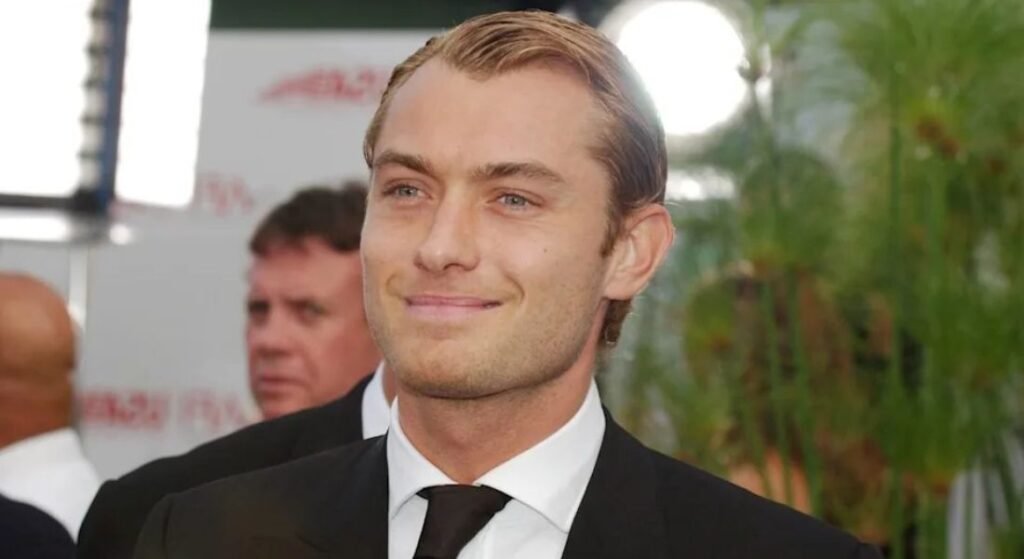
At the age of 13, young Jude Law joined the National Youth Music Theatre, an organization that honed his raw acting talents. Performing in various youth productions, including Joseph and the Amazing Technicolor Dreamcoat, allowed him to discover his true passion for live performance. The intense training and discipline required on stage gave him a strong artistic foundation, setting him apart from many of his peers. During these formative teenage years, he made the brave decision to commit fully to an acting career, laying the groundwork for his eventual transition to British television and global film.
Leaving School Early to Pursue a Professional Career
By the time he was 16, young Jude Law took a bold leap by leaving formal schooling at Alleyn’s School to take on a full-time acting role. He landed the part of Nathan Curtis in the British soap opera Families in 1990, which gave him valuable experience in front of the camera. Working on daily television required discipline and rapid memorization, sharp skills that served him exceptionally well as he transitioned into mainstream film. This major gamble paid off quickly, as his screen presence immediately caught the attention of casting agents across the United Kingdom.
Early West End Success and Critical Theatre Acclaim
Before becoming a movie star, young Jude Law made a significant impact on the London theatre scene during the early 1990s. His performance as Foxtrot Darling in Philip Ridley’s The Fastest Clock in the Universe in 1992 earned him widespread praise. However, his major theatrical breakthrough arrived in 1994 with Jean Cocteau’s play Les Parents Terribles. His fearless portrayal on the London stage brought him several best newcomer nominations, proving to critics that his talents extended far beyond his classic good looks.
The Broadway Debut: Transitioning to International Acclaim
Following his success in London, the production of Les Parents Terribles was retitled Indiscretions and moved to Broadway in 1995. Young Jude Law was the only cast member from the original London production invited to reprise his role for American audiences. Starred alongside Kathleen Turner, his performance earned him a Tony Award nomination for Best Featured Actor in a Play. This Broadway recognition marked a crucial turning point, introducing the young British actor to major American film directors and international casting executives.
Feature Film Debut in the British Crime Drama Shopping
In 1994, young Jude Law made his feature film debut in the gritty British crime thriller Shopping, directed by Paul W. S. Anderson. He played the lead role of Billy, an intense young man involved in the dangerous world of ram-raiding. While the movie received mixed reviews at the box office, it served as an essential milestone in his growing career. The film also introduced him to actress Sadie Frost, whom he would later marry in 1997, marking the start of a prominent chapter in his personal life.
Captivating Audiences in Wilde and Early Hollywood Roles
By 1997, young Jude Law was attracting significant attention from international cinema audiences. He starred as Lord Alfred “Bosie” Douglas in the biographical drama Wilde, opposite Stephen Fry. His portrayal of Oscar Wilde’s glamorous yet volatile lover won him the Evening Standard British Film Award for Most Promising Newcomer. That same year, he broke into Hollywood with supporting roles in Clint Eastwood’s Midnight in the Garden of Good and Evil and the acclaimed science fiction film Gattaca.
Sci-Fi Brilliance: Gattaca and the Cult Following
In the 1997 futuristic classic Gattaca, directed by Andrew Niccol, young Jude Law delivered a scene-stealing performance as Jerome Eugene Morrow. Playing a former elite swimmer living with a disability in a genetic-obsessed society, he brought immense depth and tragic nobility to the character. Co-starring alongside Ethan Hawke and Uma Thurman, his charismatic performance turned the film into a cult classic. The movie highlighted his unique ability to inject vulnerability into complex, highly stylized roles.
The Masterpiece Era: The Talented Mr. Ripley
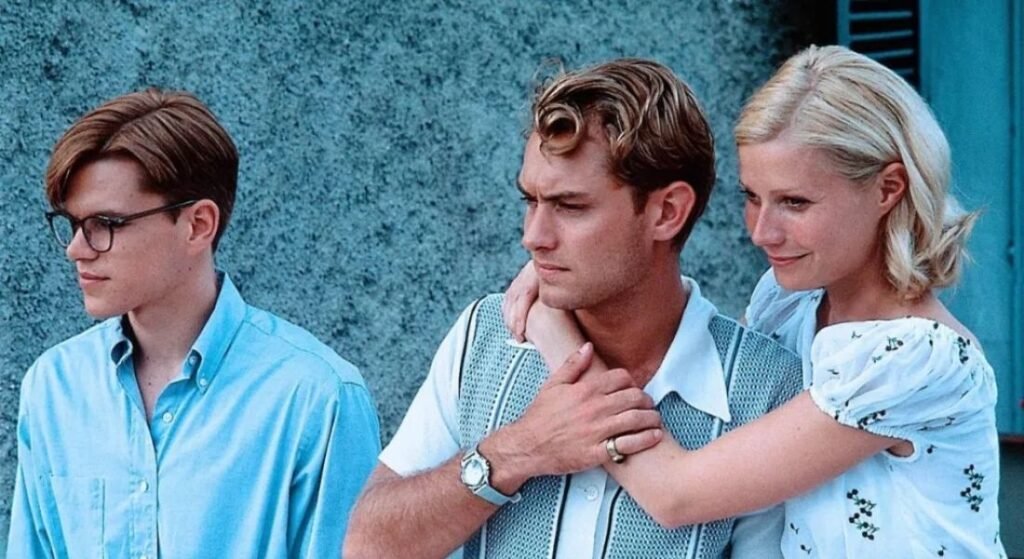
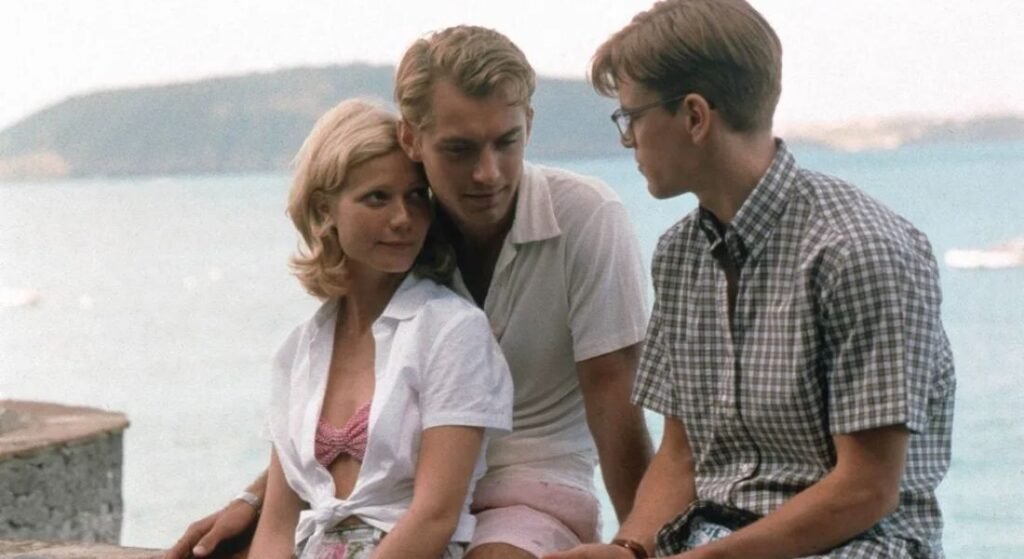
The defining moment of young Jude Law‘s career arrived in 1999 with Anthony Minghella’s psychological thriller The Talented Mr. Ripley. Portraying Dickie Greenleaf, a spoiled, vibrant, and effortlessly wealthy golden boy living in Italy, he captivated viewers worldwide. Starring alongside Matt Damon and Gwyneth Paltrow, his radiant presence on screen made the tragic character truly memorable. To prepare for the role, he even learned to play the saxophone, demonstrating his deep commitment to character authenticity.
Oscar Nomination and Global Stardom
His unforgettable performance in The Talented Mr. Ripley won him the BAFTA Award for Best Supporting Actor and earned him his first Academy Award nomination. Critics universally praised his magnetic charm, dynamic range, and screen authority. Overnight, young Jude Law was elevated from a promising British actor to a global superstar and Hollywood leading man. His portrayal of Dickie Greenleaf remains one of the most iconic film performances of the late 1990s era.
Co-Founding Natural Nylon: Shaping British Cinema
Beyond his work in front of the camera, young Jude Law was deeply invested in shaping the future of British filmmaking. In the late 1990s, he co-founded the production company Natural Nylon alongside Sadie Frost, Ewan McGregor, Jonny Lee Miller, and Sean Pertwee. The collective aimed to produce innovative British films and give creators artistic independence. Through Natural Nylon, he co-starred in David Cronenberg’s sci-fi film eXistenZ in 1999, demonstrating his ongoing commitment to unconventional film projects.
Sci-Fi and Action Success: A.I. Artificial Intelligence and Beyond
Entering the 2000s, young Jude Law continued to collaborate with legendary Hollywood filmmakers. In 2001, he starred as Gigolo Joe in Steven Spielberg’s futuristic masterpiece A.I. Artificial Intelligence. He underwent specialized movement training and ballet instruction to portray the suave, robotic companion with striking grace. That same year, he played Russian sniper Vasily Zaytsev in the intense World War II drama Enemy at the Gates, further solidifying his versatility as an actor.
Sam Mendes and Road to Perdition
In 2002, young Jude Law intentionally subverted his leading-man persona by accepting a dark character role in Sam Mendes’ period crime film Road to Perdition. Playing Harlen Maguire, a sinister hitman and crime scene photographer, he altered his physical appearance to convey a chilling sense of dread. Acting opposite Tom Hanks and Paul Newman, he proved his commitment to artistic challenges. The role demonstrated that he was far more interested in compelling, complex characters than simply maintaining a handsome image.
Cold Mountain and Earning a Second Oscar Nomination
In 2003, young Jude Law re-teamed with director Anthony Minghella for the sweeping American Civil War epic Cold Mountain. Playing W.P. Inman, a wounded Confederate soldier embarking on an arduous journey home to his love, played by Nicole Kidman, he delivered a quiet, deeply emotional performance. The role earned him his second Academy Award nomination, this time for Best Actor in a Leading Role. Cold Mountain cemented his reputation as one of the finest dramatic actors of his generation.
Alfie, Closer, and the Peak 2004 Hollywood Era
By 2004, young Jude Law reached an extraordinary peak in his Hollywood presence, starring in six major feature films in a single year. He took on the title role in the remake of Alfie, stepping into the shoes originally made famous by Michael Caine. He also starred in Mike Nichols’ acclaimed drama Closer, opposite Julia Roberts, Natalie Portman, and Clive Owen. His performances during this prolific year demonstrated his range across romantic comedy, drama, and experimental cinema.
Style, Heartthrob Status, and Fashion Influence
Throughout the late 1990s and 2000s, young Jude Law was recognized worldwide as a prominent fashion icon and global heartthrob. His tailored suits, relaxed European style, and natural charm made him a favorite subject for international magazines. Despite constant media coverage surrounding his personal life and appearance, he always directed focus back to his craft. His influence on men’s fashion during the early 2000s remains a key part of his cultural legacy.
Evolution into a Mature Hollywood Veteran
As the years progressed, young Jude Law seamlessly transitioned from a youthful heartthrob into a respected, mature veteran actor. He went on to star as Dr. John Watson in Guy Ritchie’s blockbuster Sherlock Holmes films, a younger Albus Dumbledore in the Fantastic Beasts series, and the lead in HBO’s acclaimed The Young Pope. The artistic choices made during his early career laid the groundwork for a versatile filmography that spans decades.
Conclusion
The legacy of young Jude Law is defined by a bold combination of innate talent, striking screen presence, and relentless dedication to the craft of acting. From his early beginnings in London youth theatre to his international artistic breakthrough in The Talented Mr. Ripley, he consistently chose challenging roles that showcased his emotional range. His work throughout the 1990s and 2000s established him as one of Britain’s finest cinematic exports. Today, his early performances continue to inspire new generations of film enthusiasts around the world.
Frequently Asked Questions
What was the breakout film role for young Jude Law?
His ultimate breakout role arrived in 1999 when he played Dickie Greenleaf in The Talented Mr. Ripley. His performance earned him a BAFTA Award for Best Supporting Actor and his first Academy Award nomination.
Did young Jude Law win any major awards early in his career?
Yes, young Jude Law won the BAFTA Award for Best Supporting Actor for The Talented Mr. Ripley in 1999. He also received an Evening Standard British Film Award in 1997 for Wilde and earned two Academy Award nominations during his early career.
How old was young Jude Law when he started acting professionally?
He began performing in theatre at age 13 with the National Youth Music Theatre. He later dropped out of school at age 16 in 1989 after landing a regular role on the British television show Families.
Which movies established young Jude Law as a global star?
Key films that defined his early rise include Gattaca (1997), The Talented Mr. Ripley (1999), A.I. Artificial Intelligence (2001), Road to Perdition (2002), Cold Mountain (2003), and Closer (2004).
Was young Jude Law involved in theatre before moving to film?
Yes, young Jude Law established his acting credentials on stage long before his Hollywood breakthrough. He starred in acclaimed West End productions like Les Parents Terribles in 1994 and moved to Broadway in 1995 with Indiscretions, earning a Tony Award nomination.