

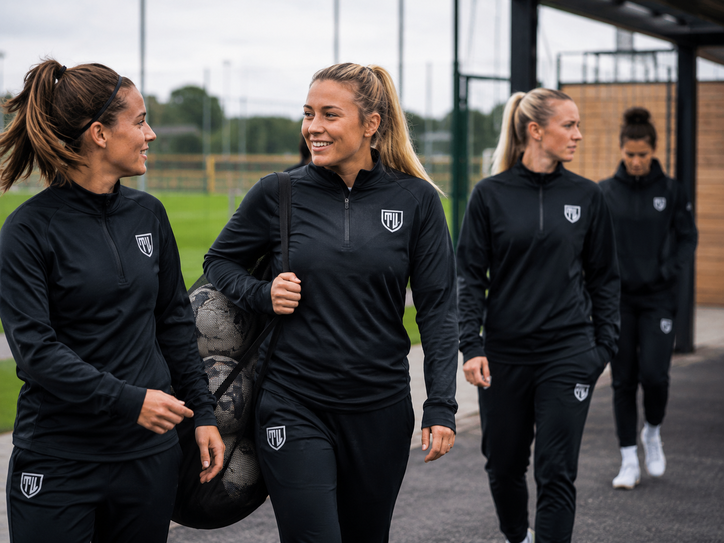
Women’s football has grown rapidly at grassroots, school, university, amateur, and professional levels, yet teams still sometimes receive kit selected primarily around men’s sizing and preferences.
That approach can lead to poor fit, uncomfortable movement, and garments that players simply do not enjoy wearing.
Choosing matchwear for a women’s team should begin with the players who will actually use it.
Fit Should Be Discussed Early
Women’s football teams may contain players with very different fit preferences.
Some prefer a closer athletic cut. Others want more room through the body.
Offering suitable sizing matters more than forcing the entire squad into one shape.
A women’s-specific garment can differ in body proportions, shoulder width, length, and overall cut rather than simply being a smaller version of a men’s shirt.
Teams should review size guides carefully before finalizing an order.
Test Movement, Not Just Appearance
A football shirt is worn while sprinting, turning, reaching, jumping, and competing.
The garment should move naturally.
Sleeves should not restrict the shoulders, and the body should provide enough room for football movement without excessive loose material.
Shorts need the same attention.
Players should feel confident running and tackling without constantly adjusting their clothing.
When teams explore custom football kits for women, fit and movement should be treated as design requirements, not details to check after the graphics have been approved.
Fabric Matters During a Full Match
Football creates heat and moisture regardless of the player’s gender.
Lightweight performance materials can improve comfort, particularly during warmer conditions or high-intensity matches.
Teams should ask how the fabric manages moisture and how it performs after repeated washing.
Durability also matters because grassroots players may use the same shirts throughout an entire season.
A product should still hold its shape after regular use.
Use Design to Improve the Garment
Women’s teams should have the same design freedom as any other squad.
Patterns, gradients, club colors, sleeve details, and other graphics can all be included where the production method allows.
However, artwork should work with the garment shape.
Important design elements should not become distorted around seams or lose their impact across different sizes.
The badge, sponsor, player number, and any name should also remain clearly visible.
Avoid Unnecessary Color Stereotypes
A women’s football team does not automatically need pink or traditionally feminine design elements.
The club’s actual identity and player preferences should guide color choices.
Some teams may genuinely want those colors.
Others may want exactly the same visual style as the men’s side.
Ask players.
A design becomes stronger when it represents the team rather than assumptions about who is wearing it.
Think About the Complete Match Range
The shirt receives most of the attention, but players also need suitable shorts and socks.
Goalkeepers require a separate color option.
Teams with both home and away kits should ensure the alternatives provide enough contrast for different opponents.
Where warm-up or training products are included, those should also be available in suitable sizing.
The range should feel planned as one system.
Get Player Input Without Creating Design Chaos
Player involvement can improve the final result.
That does not mean thirty people need to approve every pattern change.
Create two or three clear options and allow the squad to provide structured feedback.
A captain, coach, or kit coordinator can then make the final decision based on the overall response.
This keeps players involved without turning the design process into endless revisions.
Check Personalization Carefully
Women’s squads often use player names and numbers in exactly the same way as other competitive teams.
Collect those details in writing.
Confirm spelling, capitalization, and squad numbers before production.
Sponsor logos should also be supplied in good-quality formats.
One organized order sheet can prevent most personalization errors.
Build the Kit Around the Players
Good women’s football matchwear should not need special treatment because it is women’s kit.
It simply needs proper attention to fit, movement, fabric, design, and sizing.
Teams benefit when those decisions are made specifically for their squad instead of inheriting whatever product was already being used elsewhere in the club.
The result is straightforward: clothing that players are comfortable competing in and proud to wear.