

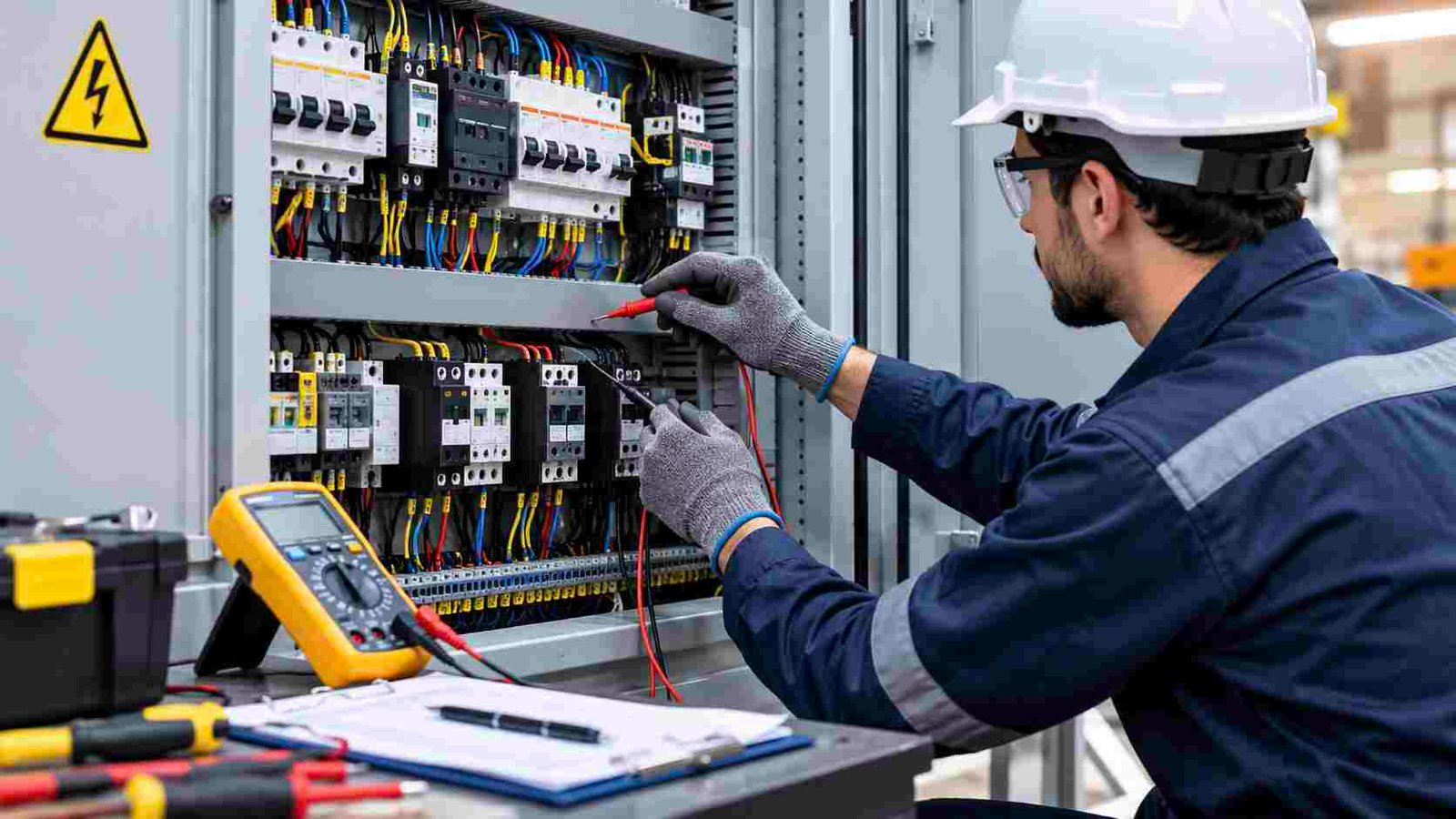
Proactive and effective electrical component maintenance is an integral part of keeping industrial equipment safe, dependable, and productive.
A robust preventative strategy, incorporating well-judged interventions to maintain electrical components, can greatly help organisations identify and address issues before they escalate into failures.
Prioritising routine cleaning, inspection, and repair of components like contacts, printed circuit boards (PCBs), and connections can put a business in a strong position to drive down fault rates.
All the while, measures like these can also support compliance with pertinent standards, such as BS 7671 (also known as the “IET Wiring Regulations”) in the UK.
What Does Preventative Component Maintenance Look Like?
A quick “disclaimer”: much of the rest of this guide will be written in reference to the situation for organisations and maintenance teams in the UK. Nonetheless, much of what is advised here will also be applicable to other parts of the world.
A well-designed preventative component maintenance programme typically includes elements such as:
- Visual And Functional Inspections
It is imperative that maintenance teams routinely check switches, connectors, distribution boards, and control gear for signs of overheating, discolouration, wear, or damage.
The exact frequency with which such inspections should take place will depend on the risk. They will typically be needed more often on critical assets or in punishing industrial environments.
- Cleaning Of Electronic and Electrical Components
Precision cleaners, degreasers, and contact cleaners can be highly effective at removing contaminants while leaving no residue. The latter is an important detail, given that the residues often left by general-purpose household cleaners can bring their own problems.
Such products as isopropyl alcohol (IPA)-based solvents, circuit board cleaners, and specialised contact cleaners are designed with delicate assemblies specifically in mind. This can make them excellent choices for the cleaning of PCBs, relays, ignition points, and optical instruments.
- Connection Integrity Checks
This category encompasses such tasks as tightening terminals where appropriate and verifying continuity. Thermal imaging cameras can help maintenance personnel spot and deal with developing “hot spots” before such issues have a chance to deteriorate into much more serious and acute problems.
- Protective Measures
After cleaning, the decision may be made to apply suitable coatings to certain components to guard against future damage. It will also be important to ensure enclosures remain sealed against dust and moisture.
- Recordkeeping And Testing
To again give the UK as an example, the documentation of findings can help ensure compliance with requirements in relation to Electrical Installation Condition Reports (EICRs), as well as portable appliance testing (PAT) where relevant.
The interval between periodic inspections of fixed electrical installations should be determined according to factors such as the type of installation and equipment, how it is used and operated, the frequency and quality of maintenance, and the environmental conditions to which the installation is exposed.
It is worth noting that preventative component maintenance will generally form part of a more continuous maintenance regime, instead of being limited to periodic EICR inspections.
Where To Start When Instigating Preventative Component Maintenance
In the UK, those classed as “duty holders” under the Electricity at Work Regulations and related legislation are obliged to maintain systems so as to prevent danger. Competent persons should carry out or oversee the work, using products suited to the application and in accordance with manufacturer guidance.
If you are reading this as an organisational decision-maker, beginning with a risk assessment will help you prioritise high-impact equipment at your site. This can be followed by establishing a clear schedule, training or engaging competent staff, and stocking appropriate cleaning and maintenance materials.
The embedding of electrical component maintenance into your organisation’s day-to-day facilities and maintenance routines can go a long way to shifting your operations from costly “firefighting” to reliable and proactive control of your electrical infrastructure. This, in turn, can greatly help minimise faults, enhance safety, and protect the essentials of what your organisation does.