

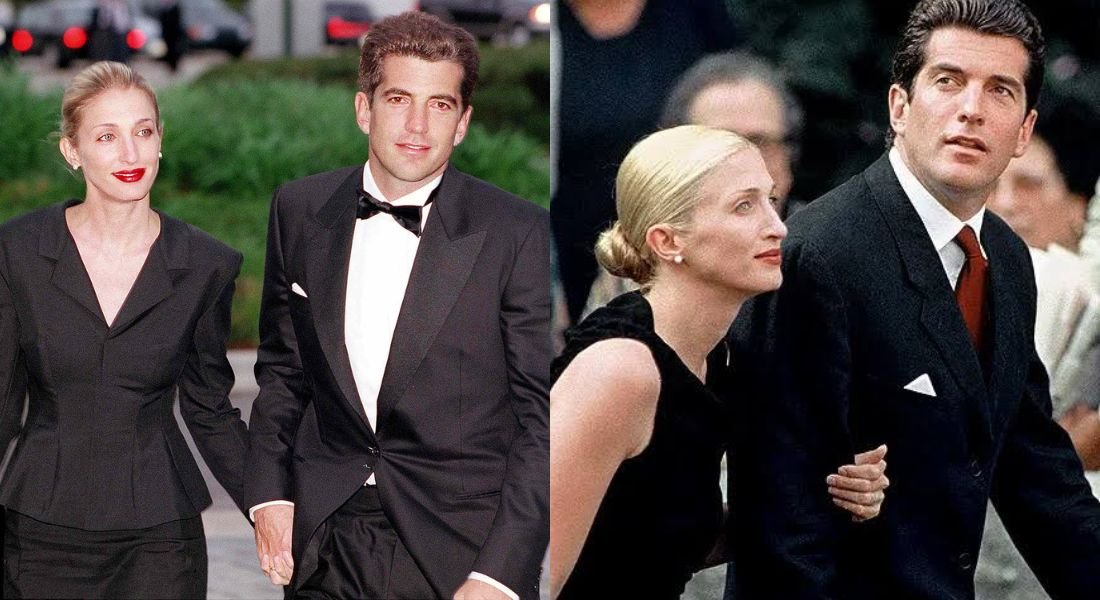
The narrative of John F. Kennedy Jr. represents one of the most compelling chapters in modern American pop culture and political history. Born into public fascination as the son of the 35th United States President, John F. Kennedy Jr. spent his life navigating extraordinary fame, societal expectations, and personal ambitions. Though widely recognized across the globe simply as JFK Jr. or affectionately misnamed “John-John” by the press, he actively sought to forge a distinct identity apart from his family’s immense political dynasty. From his early childhood in the Executive Mansion to his career as an assistant district attorney, publisher, and philanthropist, John F. Kennedy Jr. remained an enigmatic, beloved, and captivating public figure until his untimely passing.
Understanding John F. Kennedy Jr. requires looking past the glamour and tabloid headlines that constantly trailed his everyday steps. Beyond the dashing looks that earned him cultural icon status, JFK Jr. was a educated legal professional, a creative media innovator, and an active charitable advocate. His founding of George magazine in the mid-1990s revolutionized how the public engaged with political figures by bridging political discourse with celebrity pop culture. This detailed biography examines the life, career, personal relationships, and lasting cultural heritage of John F. Kennedy Jr., revealing how his brief yet impactful life left an indelible mark on American society.
| Full Name | John Fitzgerald Kennedy Jr. |
| Known As | JFK Jr., “John-John” (press nickname) |
| Date of Birth | November 25, 1960 |
| Place of Birth | Washington, D.C., U.S. |
| Date of Death | July 16, 1999 (Aged 38) |
| Place of Death | Atlantic Ocean, near Martha’s Vineyard, Massachusetts |
| Cause of Death | Airplane crash (spatial disorientation) |
| Parents | John F. Kennedy (35th U.S. President) & Jacqueline Kennedy Onassis |
| Siblings | Caroline Kennedy, Arabella Kennedy (stillborn), Patrick Bouvier Kennedy |
| Spouse | Carolyn Bessette-Kennedy (m. 1996–1999) |
| Education | Phillips Academy (Andover) Brown University (B.A. in American Studies, 1983) New York University School of Law (J.D., 1989) |
| Occupations | Attorney, Magazine Publisher, Journalist, Businessman |
| Notable Roles | Assistant District Attorney (Manhattan) Co-Founder & Editor-in-Chief (George magazine) Founder (Reaching Up non-profit) |
| Resting Place | Ashes scattered into the Atlantic Ocean off Martha’s Vineyard |
The Birth of John F. Kennedy Jr. and Early White House Years
John Fitzgerald Kennedy Jr. was born on November 25, 1960, in Washington, D.C., just sixteen days after his father was elected President of the United States. As the first infant born to a President-elect in the twentieth century, John F. Kennedy Jr. entered the world under an intense media spotlight. His mother, First Lady Jacqueline Kennedy, aimed to give her children a grounded upbringing despite the unique circumstances of growing up in the White House. Alongside his older sister, Caroline Kennedy, young JFK Jr. became a symbol of youth and optimism for a hopeful American public during the early 1960s.
During his time living at 1600 Pennsylvania Avenue, the press fell in love with John F. Kennedy Jr.. Candid photographs of him playing underneath his father’s Oval Office desk—specifically the famous Resolute desk—captured the hearts of millions across the nation. It was during this period that news reporters misheard President John F. Kennedy calling out his son’s name repeatedly and mistakenly coined the nickname “John-John“. Although the public adored the nickname, close family members never used it, preferring to call him John. His childhood in the White House established an eternal bond between JFK Jr. and the American public.
A Tragic Loss: The Salute Heard Around the World

The innocence of early childhood for John F. Kennedy Jr. came to a sudden, devastating end on November 22, 1963, when President John F. Kennedy was assassinated in Dallas, Texas. The tragedy shattered the nation and permanently altered the course of young John’s life. Just three days later, on November 25, 1963—which happened to be his third birthday—the state funeral for his father was broadcast live to millions of grieving viewers across the globe.
As his father’s flag-draped casket was carried out of St. Matthew’s Cathedral in Washington, D.C., three-year-old John F. Kennedy Jr. stepped forward and rendered a crisp, solemn salute. Photographed by news journalists, that heartbreaking moment became one of the most famous photographic images in American history. The salute symbolized courage, dignity, and continuity amid profound national grief. For decades afterward, that single moment defined how the American public viewed JFK Jr.—as a boy who carried the emotional weight and legacy of his fallen father.
Growing Up Away from Washington: Manhattan and Overseas
Following the assassination of President Kennedy, Jacqueline Kennedy relocated her family away from Washington, D.C., settling on the Upper East Side of Manhattan, New York City. Seeking privacy, she fiercely guarded John F. Kennedy Jr. and his sister from the prying eyes of the relentless paparazzi. In New York, John attended private educational institutions, starting at Saint David’s School and later enrolling at the Collegiate School. His mother worked tirelessly to ensure he experienced a relatively normal childhood, encouraging outdoor physical activities, cultural excursions, and intellectual curiosity.
Life shifted significantly again in 1968 after the assassination of his uncle, Robert F. Kennedy. Fearing for her family’s safety in the United States, Jacqueline Kennedy married Greek shipping tycoon Aristotle Onassis later that year. John F. Kennedy Jr. spent portions of his adolescence traveling between New York, Europe, and Onassis’s private island, Skorpios, in Greece. Despite these grand international settings, JFK Jr. remained remarkably humble, friendly, and grounded, developing an easygoing personality that earned him warm friendships wherever he traveled.
Academic Pursuits: From Phillips Academy to Brown University
To complete his secondary education, John F. Kennedy Jr. was enrolled at the prestigious Phillips Academy in Andover, Massachusetts. During his prep school years, John displayed an interest in outdoor survival and leadership, participating in an adventurous Outward Bound course in Africa where he successfully helped lead his group to safety. After graduating from Phillips Academy in 1979, JFK Jr. chose to pursue his undergraduate studies at Brown University in Providence, Rhode Island, rather than attending Harvard University, his father’s alma mater.
At Brown University, John F. Kennedy Jr. majored in American Studies and fully immersed himself in campus life. He joined the Phi Kappa Psi fraternity, played rugby, and discovered a deep passion for theatrical acting. He starred in several student plays, including The Tempest and Volpone, demonstrating genuine dramatic talent. Although he briefly considered pursuing a career in professional acting, his mother strongly discouraged him, guiding him instead toward more traditional fields like law and public service. JFK Jr. graduated from Brown University with a Bachelor of Arts degree in 1983.
Pursuing a Legal Career: NYU Law and the District Attorney’s Office
After taking time to travel to India and work in New York City’s Office of Business Development, John F. Kennedy Jr. enrolled at the New York University (NYU) School of Law. His time in law school was marked by heavy press coverage, which intensified when he initially struggled with the New York bar examination. After failing the bar exam twice, JFK Jr. famously faced reporters with lighthearted grace, promising he would pass on his next attempt. He kept his word and officially passed the New York bar exam in July 1990.
With his law credentials secured, John F. Kennedy Jr. accepted a position as an Assistant District Attorney in Manhattan under District Attorney Robert Morgenthau. Over the course of four years, JFK Jr. worked as a dedicated prosecutor, handling real-world criminal cases ranging from fraud to assault. He earned a reputation among his legal colleagues for being hardworking, understated, and surprisingly approachable. His successful prosecution of several court cases proved that he possessed substantial intellectual competence beyond his famous family surname.
Founding George Magazine: Redefining Political Journalism
By 1994, John F. Kennedy Jr. decided to pivot away from the courtroom to pursue an innovative entrepreneurial project in publishing. Alongside his business partner Michael J. Berman, JFK Jr. conceived the idea for George, a glossy monthly magazine that aimed to merge politics, celebrity culture, and lifestyle journalism. Launching in September 1995, the debut issue famously featured supermodel Cindy Crawford dressed as George Washington on the cover. The magazine’s founding slogan, “Not Just Politics as Usual,” highlighted its groundbreaking premise.
Under the guidance of John F. Kennedy Jr. as editor-in-chief, George achieved immediate commercial success, recording the largest initial print run for a political publication in American history. The magazine made politics accessible, trendy, and engaging for younger generations by conducting insightful interviews with political leaders, activists, and cultural figures. JFK Jr. proved himself to be a hands-on editor and clever business strategist. Although George eventually faced financial difficulties due to changing ad markets, it stands as an influential forerunner to modern political pop culture media.
Life in the Spotlight: The “Sexiest Man Alive” Era
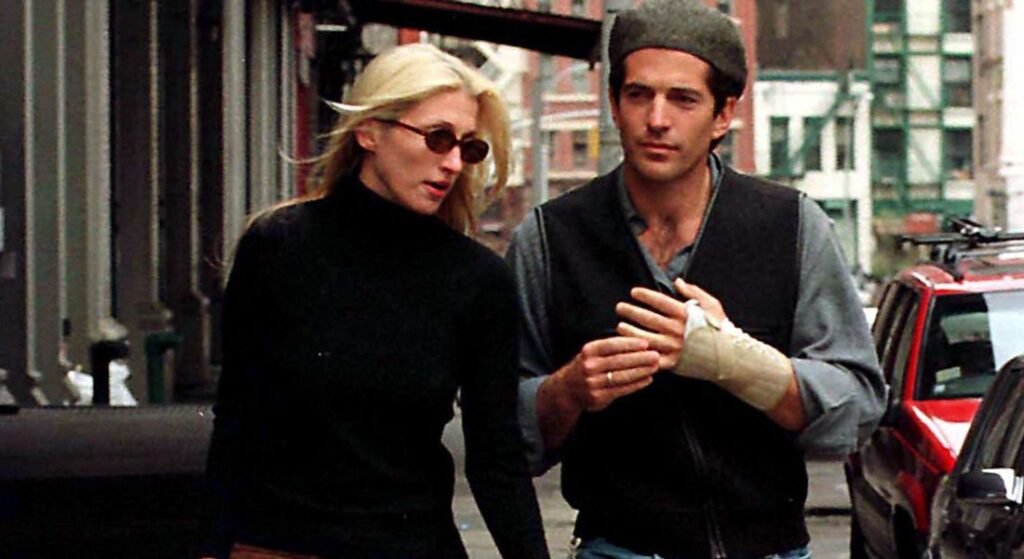
Throughout the late 1980s and 1990s, John F. Kennedy Jr. was one of the most photographed men on Earth. In 1988, People magazine officially crowned him the “Sexiest Man Alive,” making him the youngest person ever to receive the title at age 27. Paparazzi tracked his every move through Manhattan, documenting him rollerblading through Central Park, walking his dog, or enjoying recreational sports. His charismatic smile, athletic physique, and innate sense of fashion solidified his status as an international style icon.
Despite the overwhelming media scrutiny, John F. Kennedy Jr. handled the relentless attention with remarkable poise, humor, and patience. Unlike many celebrities who clashed with the press, JFK Jr. often greeted photographers politely while maintaining firm boundaries regarding his private personal affairs. He was linked romantically to several high-profile women over the years, including actress Daryl Hannah, pop icon Madonna, and actress Sarah Jessica Parker. Yet despite these high-profile romances, he sought a deeper, stable connection out of the public spotlight.
Romance and Marriage: The Union of JFK Jr. and Carolyn Bessette
In the mid-1990s, John F. Kennedy Jr. met Carolyn Bessette, a stunning, talented fashion publicist for Calvin Klein. Their mutual attraction was immediate, rooted in shared humor, intellectual curiosity, and mutual respect. Carolyn brought a sleek, minimalist elegance to John’s life, and their high-profile relationship quickly became a favorite topic for global fashion outlets and tabloids. Recognizing the immense pressure of media interest, the couple took extraordinary measures to keep their wedding private.
On September 21, 1996, John F. Kennedy Jr. married Carolyn Bessette in a secret, candlelit ceremony inside a small African Methodist Episcopal church on secluded Cumberland Island, Georgia. Surrounded only by close family members and intimate friends, the wedding avoided media detection entirely. The iconic photograph of JFK Jr. kissing the hand of his bride as they stepped out of the chapel captivated the nation. Their marriage represented a romantic union between American political heritage and modern fashion culture.
Philanthropy and Social Activism: Giving Back Behind the Scenes
While the media focused primarily on his personal life, John F. Kennedy Jr. quietly devoted considerable time, resources, and energy to philanthropic causes. In 1989, he founded Reaching Up, a non-profit organization dedicated to supporting lower-wage healthcare professionals who care for individuals with physical and developmental disabilities. The foundation provided educational scholarships and career advancement opportunities, helping thousands of healthcare workers improve their quality of life.
In addition to his work with Reaching Up, John F. Kennedy Jr. served on the board of directors for the Robin Hood Foundation, an influential New York organization committed to alleviating poverty across the city. JFK Jr. frequently visited local shelters, supported youth sports programs, and advocated for criminal justice reform. His approach to philanthropy was hands-on and discreet; he rarely sought media coverage for his charitable endeavors, preferring instead to make a tangible difference in people’s lives.
Political Expectations and Aspirations: A Dynasty’s Future
Given his legendary lineage, the American public perpetually speculated about when John F. Kennedy Jr. would formally enter the political arena. Both Democratic leaders and political analysts viewed JFK Jr. as a natural heir to his father’s legacy, possessing the requisite charm, eloquence, and public admiration. Throughout his thirties, media outlets frequently speculated that he would launch a political campaign for the U.S. Senate from New York or run for the New York governorship.
Although John F. Kennedy Jr. maintained a keen interest in public policy, he remained cautious about entering electoral politics prematurely. Friends and colleagues noted that he wanted to establish his own independent track record of professional success through George magazine before taking on political office. Shortly before his death in 1999, reports indicated that he was actively considering a future run for office, making his sudden passing an even more poignant loss for the American political landscape.
Passion for Aviation: Taking to the Skies
From early childhood, John F. Kennedy Jr. was deeply fascinated by aviation. Inspired by his trips aboard Air Force One and military helicopters as a young boy, he dreamed of becoming a licensed pilot. In the late 1990s, he pursued that passion seriously, taking rigorous flying lessons at FlightSafety International in Vero Beach, Florida. He earned his private pilot’s license in April 1998, fulfilling a lifelong personal dream.
Flying offered JFK Jr. a rare sense of freedom away from the relentless paparazzi on the ground. He frequently piloted light aircraft on trips up and down the East Coast, traveling to his family’s compound in Hyannis Port, Massachusetts, or to vacation spots in Martha’s Vineyard. In 1999, he purchased a high-performance Piper Saratoga light aircraft. However, aviation experts noted that while John was an enthusiastic pilot, he was still relatively inexperienced in flying by instrument guidance alone during poor visibility conditions.
The Fatal Night: July 16, 1999 Plane Crash
On the evening of July 16, 1999, John F. Kennedy Jr. boarded his Piper Saratoga aircraft at Essex County Airport in Fairfield, New Jersey. He was piloting the plane to drop off his sister-in-law, Lauren Bessette, at Martha’s Vineyard before continuing to Hyannis Port to attend his cousin Rory Kennedy’s upcoming wedding. Accompanying him on the flight was his wife, Carolyn Bessette Kennedy. The flight departed after dusk, heading northeast over the open water of Long Island Sound.
As the aircraft crossed over the dark ocean near Martha’s Vineyard, hazy weather conditions severely reduced visual visibility. Lacking visual landmarks, JFK Jr. likely suffered spatial disorientation—a condition where a pilot loses track of the aircraft’s orientation relative to the horizon. The plane entered a sudden descent and crashed into the Atlantic Ocean, killing all three passengers on board. The news shocked the nation, triggering an extensive search and recovery operation led by the U.S. Coast Guard and Navy.
National Grief and Memorial Services
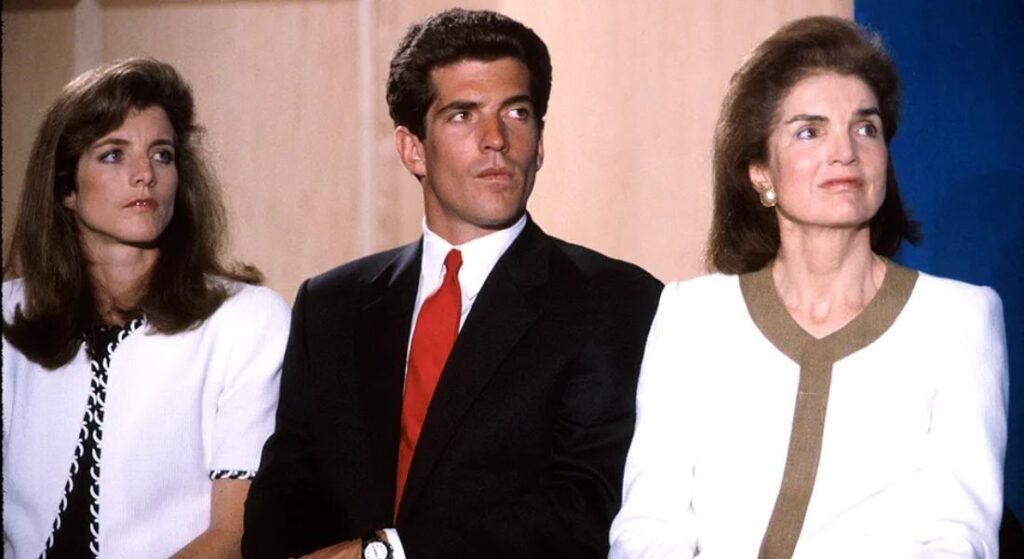
The tragic death of John F. Kennedy Jr. at age 38 unleashed an overwhelming wave of public mourning across the United States and around the world. Flowers, candles, and handwritten letters poured into the front step of his Manhattan apartment building and the headquarters of George magazine. President Bill Clinton ordered flags on public buildings to be flown at half-mast, honoring the loss of a figure who had been part of the American conscience for nearly four decades.
On July 22, 1999, the navy ship USS Briscoe carried the remains of JFK Jr., Carolyn, and Lauren out to sea off the coast of Martha’s Vineyard, where their ashes were scattered into the Atlantic Ocean. A private memorial service was held shortly thereafter at the Church of St. Thomas More in Manhattan, attended by close family members, political leaders, and celebrity friends. The ceremony celebrated the bright, generous spirit of a man who carried his famous family name with grace and integrity.
The Legacy of John F. Kennedy Jr. in Modern Culture
Decades after his death, John F. Kennedy Jr. remains an enduring icon of late twentieth-century American culture. His life story represents the intersection of political heritage, media expansion, and pop culture style. JFK Jr. demonstrated that it was possible to honor family tradition while charting a distinct personal path through entrepreneurship and public service.
His contributions to journalism through George magazine helped shape modern political media, proving that political awareness could be engaging for broader audiences. Moreover, his charitable initiatives, such as Reaching Up, continue to influence healthcare advocacy programs. Today, John F. Kennedy Jr. is remembered not merely as the young boy who saluted his father’s coffin, but as a dynamic, compassional leader who lived life with vitality, dignity, and purpose.
Conclusion:
The life of John F. Kennedy Jr. was a remarkable journey lived under the constant, intense gaze of the public eye. From his early years in the White House to his accomplishments in law, publishing, and philanthropy, JFK Jr. carried the weight of his legacy with exceptional modesty, warmth, and strength. Rather than resting on his famous name, he worked steadily to create a meaningful life defined by service, creativity, and personal authenticity. Though his life was cut short, the memory of John F. Kennedy Jr. continues to inspire millions across the world as a timeless symbol of hope, style, and grace.
Frequently Asked Questions (FAQs)
What was John F. Kennedy Jr. famous for?
John F. Kennedy Jr. was famous for being the son of President John F. Kennedy and First Lady Jacqueline Kennedy. Beyond his famous family background, JFK Jr. was a lawyer, an Assistant District Attorney in Manhattan, an influential publisher who co-founded George magazine, and an active philanthropist.
How did John F. Kennedy Jr. die?
John F. Kennedy Jr. died in a tragic plane crash on July 16, 1999, when the light aircraft he was piloting crashed into the Atlantic Ocean off the coast of Martha’s Vineyard. The crash also claimed the lives of his wife, Carolyn Bessette Kennedy, and his sister-in-law, Lauren Bessette.
What was the cause of the JFK Jr. plane crash?
Official investigations by the National Transportation Safety Board (NTSB) concluded that the probable cause of the crash was spatial disorientation experienced by John F. Kennedy Jr. while flying at night over open water in hazy atmospheric conditions.
Did John F. Kennedy Jr. have any children?
No, John F. Kennedy Jr. and his wife Carolyn Bessette Kennedy did not have any children during their marriage.
What magazine did JFK Jr. start?
In 1995, John F. Kennedy Jr. co-founded George, a monthly political lifestyle magazine that combined political news, cultural commentary, and celebrity interviews. He served as its editor-in-chief until his death in 1999.
What was JFK Jr.’s nickname as a child?
As a child, John F. Kennedy Jr. was often called “John-John” by the press. The nickname originated when a journalist misheard President John F. Kennedy calling his son’s name twice. However, family members did not use this nickname privately.
Where is John F. Kennedy Jr. buried?
Following a naval ceremony on July 22, 1999, the ashes of John F. Kennedy Jr., along with those of his wife Carolyn and sister-in-law Lauren, were scattered into the Atlantic Ocean off the coast of Martha’s Vineyard by the crew of the USS Briscoe.