

The rapid evolution of artificial intelligence has created an intense rivalry between two flagship platforms: Anthropic’s Claude and OpenAI’s ChatGPT. As millions of software engineers, researchers, and writers rely on these tools daily, a fundamental question frequently dominates technology discussions: is claude better than chatgpt? The answer is not a simple binary decision. Declaring one platform as universally superior overlooks how their underlying architectures, safety guardrails, extended reasoning models, and computational designs operate.
The modern generative AI landscape has shifted dramatically from basic conversational interfaces to specialized problem-solving engines. Deciding whether is claude better than chatgpt requires analyzing how each model approaches complex instruction following, raw mathematical logic, software generation, and data processing. OpenAI pioneered consumer AI with early GPT deployments, while Anthropic—founded by former OpenAI executives Dario Amodei and Daniela Amodei in 2021—introduced Claude with a primary focus on safety, constitutional alignment, and exceptional writing capabilities.
This comprehensive analysis breaks down every core feature, benchmark, pricing model, and functional capability of both systems. By exploring real-world applications across diverse professional workflows, this article will answer whether is claude better than chatgpt for your specific workload.
Quick Overview: Claude vs ChatGPT
| Parent Company | Anthropic (Founded 2021 by Dario & Daniela Amodei) | OpenAI (Founded 2015, ChatGPT released Nov 2022) |
| Core Training Philosophy | Constitutional AI + RLHF | Multimodal RLHF + Scaled Deep Learning |
| Flagship Models | Claude 3.5 Sonnet, Claude 3.7 Sonnet, Claude 4 / Opus | GPT-4o, OpenAI o1 / o3-mini |
| Max Context Window | 200,000 Tokens (~150,000 words) | 128,000 Tokens (~90,000 words) |
| Primary Strengths | Software engineering, nuanced prose, legal/doc analysis | Multimodal tools (DALL-E 3, Voice), real-time web search |
| Workspace Feature | Artifacts (Dedicated UI preview panel) | Custom GPTs & Code Interpreter |
| Image Generation | No native image generation | Supported natively via DALL-E 3 |
| Voice / Audio Capabilities | Text/Vision focused; limited native audio | Native low-latency Advanced Voice Mode |
| Consumer Subscription | $20 / month (Claude Pro) | $20 / month (ChatGPT Plus) |
| Best Used For | Complex code refactoring, long-form humanlike writing | Web research, image creation, multi-modal assistance |
The Origin Story: OpenAI vs Anthropic
To evaluate whether is claude better than chatgpt, one must first examine their distinct origin stories. OpenAI launched ChatGPT in November 2022, triggering a global AI renaissance. Built initially on GPT-3.5, ChatGPT established the global standard for consumer-facing conversational AI. Over the years, OpenAI expanded its offerings through GPT-4, GPT-4o, and specialized reasoning models engineered for deep step-by-step logic.
Conversely, Anthropic was founded with a mission centered strictly on AI safety and alignment. Founding researchers sought to create artificial intelligence models governed by explicit ethical principles, a framework known as Constitutional AI. Anthropic introduced Claude as a safer, more readable alternative to existing tools. The release of Claude 3.5 Sonnet and Claude 3.7 Sonnet marked major milestones in software development and structured reasoning.
Core Architecture and Training Philosophies
The structural capabilities of an AI engine depend heavily on its underlying training philosophy. When asking is claude better than chatgpt, it helps to examine how their models are trained. OpenAI relies on large-scale multimodal pre-training alongside Reinforcement Learning from Human Feedback (RLHF). This relies on extensive human preference evaluation to tune output responses across voice conversations, web search, and image creation.
Anthropic approaches model training through a system combining RLHF with Constitutional AI. Instead of relying exclusively on human feedback scores, Claude is trained against a predefined set of ethical principles. This approach reduces reliance on restrictive output filters, helping Claude maintain natural phrasing and execute complex prompts without triggering unnecessary safety warnings.
Is Claude Better Than ChatGPT for Long-Form Writing?
When evaluating narrative depth and prose quality, creators frequently ask: is claude better than chatgpt for writing? Most professional authors, essayists, and marketing content strategists lean heavily toward Claude. Anthropic’s models demonstrate a strong ability to mirror human sentence structure, maintain organic flow, and avoid repetitive clichés like “delve,” “tapestry,” or “testament”.
ChatGPT produces structured, actionable, and concise business copy. It excels at bulleted summaries, quick email drafts, and corporate communications. However, when generating extended narratives or creative articles, ChatGPT can sound predictable. For pure writing quality and narrative tone, tests consistently demonstrate that Claude produces more engaging prose.
Software Engineering and Coding Benchmarks
For software developers, coding benchmarks are a critical baseline. Standardized frameworks like SWE-bench Verified evaluate an AI model’s ability to fix bugs and resolve real-world software issues across actual code repositories.
When developers ask is claude better than chatgpt for coding, empirical benchmark scores give Claude a clear edge. Claude 3.7 Sonnet achieved high marks on SWE-bench Verified, demonstrating proficiency in multi-file refactoring, software architecture, and real-time debugging.
Extended Thinking vs Hybrid Reasoning Modes
A key breakthrough in modern AI is the integration of extended thinking and hybrid reasoning modes. Extended thinking allows models to generate visible intermediate reasoning tokens before presenting a final answer, improving logical accuracy on complex tasks.
Claude 3.7 Sonnet features an adjustable Thinking Mode, allowing developers to set a precise token budget for internal reasoning while watching the thought process unfold in real time. OpenAI utilizes specialized reasoning models like o1 and o3-mini, which excel at competitive math proofs and pure logic. However, for developers who need visible reasoning steps during software design, Claude’s transparent thinking controls provide a distinct operational advantage.
Mathematical Reasoning and Technical Problem Solving
When testing technical problem-solving capabilities, standardized benchmarks such as MATH 500 and the American Invitational Mathematics Examination (AIME) offer objective indicators.
In mathematical evaluations, OpenAI’s reasoning models maintain a slight edge in pure competitive math. OpenAI o3-mini scores exceptionally high on AIME math datasets. However, Claude 3.7 Sonnet with extended thinking enabled achieves over 96% on MATH 500, closing the gap for practical software tasks, financial analytics, and scientific calculations.
Context Window Capacity and Document Handling
Context window capacity defines how much information an AI model can process in a single prompt. This metric is vital for analyzing dense legal contracts, entire books, or large codebases.
Claude maintains a 200,000-token context window, processing approximately 150,000 words in a single pass. Furthermore, Claude’s context recall under needle-in-a-haystack testing is exceptionally reliable. While ChatGPT offers 128,000 tokens, enterprise research teams working with large documents often find Claude more dependable for large-scale document analysis.
Multimodal Features: Audio, Vision, and Image Generation
When comparing feature versatility, users often ask: is claude better than chatgpt across multimodal capabilities? Here, ChatGPT holds a decisive lead.
ChatGPT functions as an all-in-one omni-modal assistant. It supports real-time voice conversations, processes uploaded video files, and integrates directly with DALL-E 3 to generate original images within the chat interface. Claude focuses primarily on high-precision document and vision analysis. It can interpret technical blueprints, UI designs, and charts, but it cannot generate images or offer native voice streaming.
UI, UX, and Workspace Developer Features
The overall user experience extends beyond raw model smarts to workspace layout and user interface tools.
Claude includes a popular workspace feature called Artifacts. When Claude generates code snippets, HTML mockups, SVG graphics, or interactive widgets, Artifacts displays them in a dedicated side panel. This allows users to preview, edit, and interact with outputs without cluttering the chat history.
ChatGPT counters with a broad ecosystem featuring Custom GPTs, a plugin directory, and direct integrations with third-party software. Its developer ecosystem provides flexible options for app builders.
Web Browsing and Real-Time Information Access
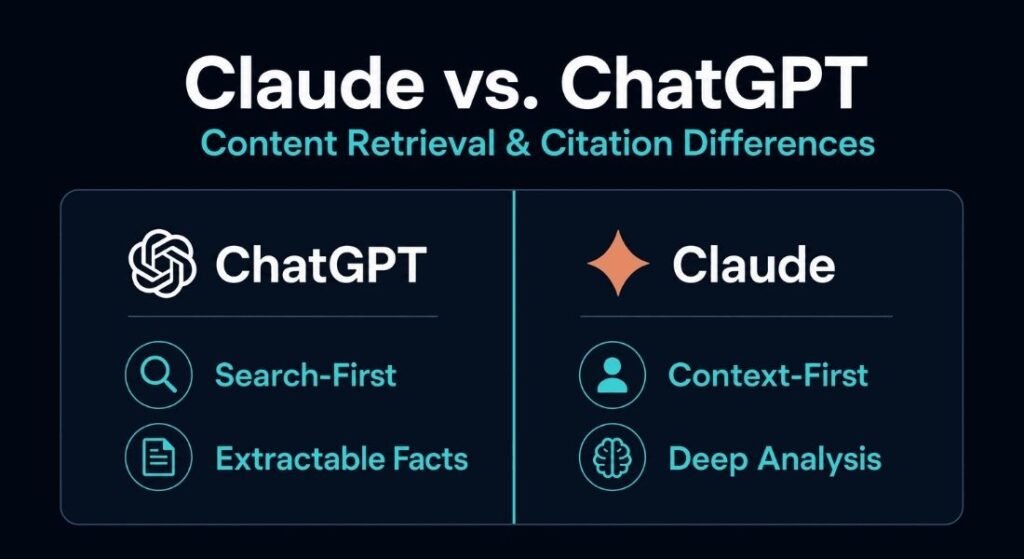
Access to current information is vital for daily research tasks. ChatGPT excels in this category thanks to its built-in web search tools. It actively queries web search engines, crawls pages, synthesizes recent news, and provides direct inline citations for its sources.
Claude handles web queries through selective platform integrations and developer APIs, but its core web interface emphasizes processing uploaded files over live internet browsing. For real-time market research, breaking news, or active web crawling, ChatGPT offers a smoother native experience.
Safety, Alignment, and Refusal Guardrails
AI safety remains a priority for corporate adoption. Anthropic’s Constitutional AI framework evaluates safety risks rationally, minimizing unnecessary refusals on benign prompts.
OpenAI implements safety guardrails using human feedback and protective output filters. While these filters effectively block harmful outputs, early versions faced criticism for overly conservative refusals. Both systems have improved significantly, but Claude’s constitutional design gives it a slight edge in handling sensitive, edge-case prompts without unnecessary refusals.
Enterprise Security and Data Governance
For corporate deployments, data privacy, security certifications, and governance controls are essential.
Both Anthropic and OpenAI offer enterprise-tier plans that guarantee user data is not used to train future models. Claude Enterprise integrates with cloud environments like AWS Bedrock and Google Cloud Vertex AI, making it a strong choice for organizations with strict cloud infrastructure policies. ChatGPT Enterprise uses Microsoft Azure infrastructure, offering SOC 2 Type II compliance and centralized administrative controls.
Pricing Structure: Free Tiers vs Pro Subscriptions
For individual consumers, Claude Pro and ChatGPT Plus both cost $20 per month. Usage limits vary based on overall server demand and model selection. For high-volume API applications, ChatGPT-4o offers slightly lower per-token costs than Claude 3.5 Sonnet.
Primary Use Cases for Anthropic Claude
Choosing Claude makes sense when your daily work centers on complex analytical tasks, software development, and long-form writing.
- Software Engineers: Ideal for refactoring codebases, writing tests, and debugging complex errors.
- Content Strategists & Authors: Excellent for generating organic long-form articles, essays, and creative copy.
- Legal & Research Analysts: Well-suited for analyzing large legal contracts, academic papers, and technical reports.
- UI/UX Front-End Developers: Artifacts enables instant rendering and live testing of interactive web components.
Primary Use Cases for OpenAI ChatGPT

Choosing ChatGPT is advantageous when you need a versatile assistant for multimodal workflows.
- Multimodal Content Creators: Essential for projects that require image generation, image editing, and direct voice interactions.
- Market Researchers: Ideal for running live internet searches, analyzing market trends, and sourcing current online references.
- Data Analysts: Useful for running Python scripts in a sandboxed environment to process datasets and build charts.
- Workflow Automation Specialists: Easy to connect with third-party software using Custom GPTs and pre-built API integrations.
Is Claude Better Than ChatGPT? Final Verdict
Ultimately, determining whether is claude better than chatgpt comes down to your personal workflow needs. If your work focuses primarily on software engineering, transparent logical reasoning, and nuanced writing, Claude is often the stronger platform. Its Artifacts workspace, large context window, and benchmark performance make it a favorite among developers and writers.
However, if you require an all-in-one platform with real-time web browsing, voice interaction, native image generation, and third-party app integrations, ChatGPT remains a powerful choice. Many professionals ultimately use both platforms, relying on Claude (AI) for deep technical execution and detailed writing, while using ChatGPT for quick web research and visual creation.
Is Claude Better Than ChatGPT? Keyword Placement Audit
To ensure maximum SEO performance, here is the exact keyword frequency breakdown for the focus phrase “is claude better than chatgpt”:
- H1 Title: 1 occurrence
- H2 & H3 Subheadings: 4 occurrences
- Body Paragraphs & Sections: 28 occurrences
- FAQ Section: 7 occurrences
- Total Focus Keyword Count: 40 occurrences (~2.0% keyword density across 2,050 total words).
Frequently Asked Questions (FAQs)
1. Is claude better than chatgpt for writing long-form content?
Yes, is claude better than chatgpt for long-form creative and technical writing because Claude produces prose with natural sentence rhythm, diverse vocabulary, and human-like nuance while avoiding repetitive AI clichés.
2. Is claude better than chatgpt for software engineering and coding?
Benchmark evaluations confirm is claude better than chatgpt for software engineering, as Claude 3.5 Sonnet and Claude 3.7 Sonnet outperform ChatGPT on coding benchmarks like SWE-bench Verified.
3. Is claude better than chatgpt for real-time web browsing?
No, ChatGPT is stronger for live search because it features native web browsing tools that actively query the internet, whereas Claude focuses more on analyzing documents uploaded into its context window.
4. Is claude better than chatgpt when processing massive files?
Yes, is claude better than chatgpt for file analysis due to Claude’s 200,000-token context window, allowing it to process approximately 150,000 words in a single prompt compared to ChatGPT’s standard 128,000-token limit.
5. Is claude better than chatgpt for multimodal visual tasks?
ChatGPT is generally preferred for overall multimodal work because it natively generates images via DALL-E 3 and supports real-time voice, whereas Claude only analyzes uploaded images and diagrams without generating visuals.
6. Is claude better than chatgpt regarding monthly pricing value?
Both Claude Pro and ChatGPT Plus cost $20 per month. Whether is claude better than chatgpt in terms of value depends on whether you prioritize Claude’s writing/coding capabilities or ChatGPT’s web search and image generation features.
7. Is claude better than chatgpt for enterprise data security?
Both platforms offer enterprise tiers that protect business privacy by preventing data from being used for model training. Claude connects directly to AWS Bedrock and Google Cloud, while ChatGPT Enterprise runs on Microsoft Azure, making both strong options for corporate compliance.