

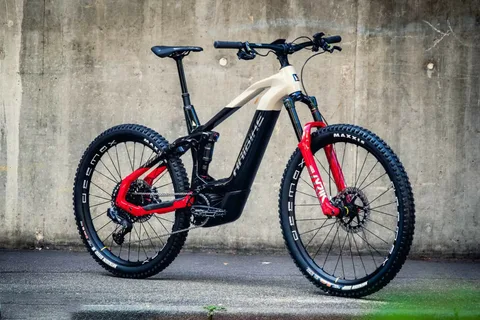
Mountain biking has evolved significantly with the introduction of electric-assisted technology. Riders who once struggled with steep climbs, challenging trails, and long-distance routes can now explore more demanding terrain with additional support. Electric mountain bikes (E-MTBs) combine traditional mountain bike design with an integrated electric motor and rechargeable battery, creating a riding experience that balances physical activity with modern convenience.
Whether you are an experienced mountain biker or someone considering your first off-road bicycle, choosing the right E-MTB requires careful consideration. Factors such as motor performance, battery capacity, suspension, frame geometry, braking systems, and riding conditions can significantly influence your overall experience.
Understanding these features before purchasing can help you find a bike that matches your riding style, performance expectations, and budget.
What Is an Electric Mountain Bike?
An electric mountain bike is a specially designed bicycle equipped with an electric motor that provides additional assistance while pedalling. Unlike conventional mountain bikes, which rely entirely on human power, E-MTBs use an integrated battery and motor system to make climbing hills and covering longer distances more manageable.
The motor does not necessarily replace physical effort. Instead, it supports the rider by providing additional power when needed, particularly on steep inclines and difficult trails.
Most models feature different assistance settings, allowing riders to adjust the amount of electrical support according to the terrain and their personal preferences.
Common riding modes include:
- Eco Mode: Provides minimal assistance to conserve battery power and extend riding distance.
- Tour Mode: Offers balanced assistance for everyday trail riding and longer journeys.
- Trail Mode: Adjusts motor support according to changing terrain and pedalling pressure.
- Boost Mode: Delivers stronger assistance for steep climbs and demanding sections.
These settings allow riders to customise their experience while maintaining control over battery consumption.
Understanding the Different Types of E-MTBs
Not every electric mountain bike is designed for the same riding conditions. Manufacturers develop different models to accommodate beginners, recreational cyclists, and experienced mountain bikers.
Understanding the main categories can make the selection process considerably easier.
Hardtail Electric Mountain Bikes
Hardtail models feature front suspension but do not have a rear suspension system. Their simpler construction generally makes them lighter, easier to maintain, and more affordable than full-suspension alternatives.
They are particularly suitable for:
- Forest paths and woodland trails.
- Gravel roads and countryside routes.
- Moderate off-road conditions.
- Riders who prefer a relatively straightforward bicycle.
For beginners, a hardtail can be a practical introduction to electric mountain biking.
Full-Suspension Electric Mountain Bikes
Full-suspension models feature suspension systems at both the front and rear. This design improves comfort, traction, and control when riding across uneven surfaces.
They are particularly useful for riders who regularly encounter rocks, roots, steep descents, and technical trails.
Although these bicycles generally cost more, their additional suspension can make challenging terrain easier to navigate.
Electric Fat-Tyre Mountain Bikes
Fat-tyre models use considerably wider tyres than conventional mountain bikes. Their increased contact area can provide additional stability and grip on certain loose or uneven surfaces.
Depending on the tyre design and conditions, they can be suitable for:
- Sandy paths.
- Loose gravel.
- Muddy tracks.
- Snow-covered terrain.
However, wider tyres can also increase rolling resistance and overall bicycle weight, making them less efficient on some surfaces.
Motor Performance: What Should You Look For?
The motor is one of the most important components of an electric mountain bike. Its performance influences how effectively the bicycle supports the rider, particularly when climbing hills or travelling across challenging terrain.
Two common motor configurations are hub-drive and mid-drive systems.
Hub-Drive Motors
Hub motors are installed within the front or rear wheel. They are generally found in more affordable electric bicycles and offer a relatively straightforward design.
Their advantages can include:
- Simple mechanical construction.
- Competitive purchase prices.
- Relatively straightforward maintenance.
- Suitable performance for recreational riding.
However, their weight distribution and power delivery may not provide the same natural riding characteristics as a well-designed mid-drive system on demanding mountain trails.
Mid-Drive Motors
Mid-drive motors are positioned near the bicycle’s pedals and crankset. This configuration distributes weight closer to the centre of the frame and works alongside the bicycle’s gearing system.
Potential advantages include:
- Balanced weight distribution.
- Natural-feeling pedal assistance.
- Effective climbing performance.
- Better suitability for technical terrain.
For riders who regularly explore challenging trails, motor placement and torque delivery deserve particular attention.
It is also important to distinguish between a motor’s continuous rated power and its advertised peak output. A higher peak figure does not automatically mean better real-world performance.
Battery Capacity and Riding Range
Battery capacity is another major consideration when choosing an electric mountain bike. It determines how much electrical energy the system can store and influences the potential distance available between charges.
Battery capacity is measured in watt-hours (Wh). Generally, a higher watt-hour rating means more stored energy, although actual riding range depends on several additional factors.
For example, a 500Wh battery stores more energy than a 400Wh battery. However, this does not guarantee a proportionally longer journey because riding conditions and power consumption vary.
Factors that influence battery range include:
- Rider weight and additional equipment.
- Terrain elevation and steepness.
- Selected assistance mode.
- Temperature and weather conditions.
- Tyre pressure and rolling resistance.
- Battery age and overall condition.
Riders planning longer countryside journeys should consider their typical route length and available charging opportunities.
It is also worth checking whether the battery is removable. A removable battery can make charging and storage more convenient, particularly for people who cannot easily bring their bicycle indoors.
Suspension and Frame Geometry
Suspension plays an important role in maintaining control and comfort when riding over uneven ground. However, choosing the right suspension system involves more than simply looking for the largest amount of suspension travel.
Hardtail bicycles generally offer a more direct connection with the trail, while full-suspension models provide additional shock absorption.
Frame geometry is equally important. It influences the bicycle’s stability, steering response, climbing position, and overall handling.
When evaluating frame geometry, consider:
- Frame Size: The bicycle should match your height and body proportions.
- Reach: Determines how stretched or upright your riding position feels.
- Head-Tube Angle: Influences steering characteristics and downhill stability.
- Wheelbase: Affects overall stability and manoeuvrability.
- Suspension Travel: Determines how effectively the bicycle handles different levels of trail roughness.
A comfortable riding position can improve confidence and reduce unnecessary fatigue during longer journeys.
Braking Systems and Tyre Selection
Electric mountain bikes are generally heavier than comparable traditional bicycles because of their motors and batteries. Their additional weight makes reliable braking particularly important.
Hydraulic disc brakes are commonly preferred for demanding off-road riding because they offer strong braking performance and effective modulation.
Before purchasing, check the following:
- Brake responsiveness and consistency.
- Rotor size and compatibility.
- Brake pad quality.
- Ease of maintenance and replacement.
- Performance in wet and muddy conditions.
Tyres also have a significant influence on riding performance.
Wider tyres with appropriately designed tread patterns can provide improved traction on loose surfaces, while different rubber compounds influence grip, durability, and rolling efficiency.
The best tyre configuration depends on where you intend to ride. A bicycle designed for smooth forest tracks may require different tyres from one intended for rocky mountain trails.
Choosing the Right E-MTB for Your Riding Style
Before comparing brands and technical specifications, consider how you plan to use your bicycle.
Different riding styles require different combinations of performance, comfort, and durability.
| Riding Style | Recommended Features |
| Beginner trail riding | Hardtail design, comfortable geometry and moderate assistance |
| Countryside exploration | Efficient battery, comfortable tyres and reliable brakes |
| Technical mountain trails | Full suspension, capable brakes and balanced motor placement |
| Long-distance riding | Higher battery capacity and efficient assistance settings |
| Mixed terrain | Versatile tyres, durable frame and adaptable suspension |
There is little benefit in paying for advanced downhill features if most of your cycling takes place on relatively smooth countryside paths.
Similarly, riders who regularly explore technical trails should avoid choosing a bicycle based solely on its purchase price.
Understanding UK Electric Mountain Bike Regulations
UK riders should understand the legal requirements before purchasing an electric mountain bike.
Under the Electrically Assisted Pedal Cycle (EAPC) rules, a qualifying electric bicycle must:
- Have pedals capable of propelling the bicycle.
- Have a motor with a maximum continuous rated power of 250 watts.
- Stop providing electrical assistance when the bicycle reaches 15.5 mph (25 km/h).
Riders must also be at least 14 years old to use a qualifying EAPC.
Bicycles that meet these requirements can generally be used without vehicle registration, motor insurance, road tax, or a driving licence. They can be ridden wherever conventional pedal bicycles are permitted, subject to applicable access restrictions.
Electric bicycles that exceed the relevant power or speed requirements may be classified as motor vehicles and become subject to additional legal requirements.
It is important to check the manufacturer’s specifications rather than relying exclusively on advertising descriptions. An advertised off-road setting does not automatically make a bicycle legal for use on public roads or public access routes.
For the latest requirements, consult the official UK government guidance on electric bicycle regulations.
How Much Should You Spend on an Electric Mountain Bike?
Price is an important consideration, but the cheapest option is not necessarily the best long-term investment.
Electric mountain bikes are available across different price categories, with differences in motor technology, battery capacity, frame construction, suspension, and component quality.
When comparing models, consider the complete package rather than focusing on a single specification.
For example, a bicycle with a larger battery may appear attractive, but a dependable braking system, suitable suspension, and quality drivetrain can be equally important.
It is also sensible to account for additional ownership expenses, including:
- Replacement brake pads and tyres.
- Battery maintenance or replacement.
- Routine servicing.
- Protective cycling equipment.
- Suitable storage and charging arrangements.
Checking warranty coverage and the availability of replacement components can also help avoid unexpected expenses.
Essential Safety and Maintenance Considerations
Regular maintenance helps maintain bicycle performance and reduces the likelihood of mechanical problems during a ride.
Before heading out, inspect the brakes, tyres, drivetrain, battery connections, and suspension components.
A few simple maintenance habits can make a considerable difference:
Keep the battery protected: Use the manufacturer’s recommended charger and avoid damaged or incompatible charging equipment.
Check tyre pressure: Maintain the recommended pressure for your weight, tyre type, and riding conditions.
Inspect the brakes: Look for worn brake pads, damaged rotors, and reduced braking performance.
Clean the drivetrain: Remove accumulated dirt and apply suitable bicycle chain lubricant when necessary.
Check electrical connections: Ensure battery connections and charging ports remain clean and undamaged.
Wear appropriate protective equipment: A properly fitted cycling helmet, gloves, and suitable clothing can improve rider protection and comfort.
Lithium-ion battery safety deserves particular attention. Purchase from reputable suppliers, follow the manufacturer’s charging instructions, and avoid using damaged batteries or chargers.
Common Mistakes to Avoid When Buying an E-MTB
Even experienced cyclists can overlook important details when comparing electric mountain bikes.
Some common purchasing mistakes include:
1. Focusing only on motor power: Motor performance is important, but battery efficiency, torque delivery, gearing, and overall bicycle design also matter.
2. Ignoring battery requirements: A small battery may not provide sufficient capacity for longer routes or frequent climbing.
3. Choosing the wrong frame size: An incorrectly sized bicycle can affect comfort, control, and riding confidence.
4. Overlooking braking quality: Reliable brakes are essential, particularly when riding a heavier electric bicycle on steep terrain.
5. Buying without considering maintenance: Check whether replacement batteries, tyres, brake components, and other parts are readily available.
6. Ignoring legal requirements: Always verify that the bicycle meets the relevant UK regulations for your intended riding environment.
Taking time to evaluate these factors can help prevent unnecessary expenses and disappointment after purchasing.
Final Thoughts
Choosing an electric mountain bike involves balancing performance, comfort, safety, and affordability. The right model should complement your riding style while providing dependable assistance across the terrain you regularly explore.
Before making a decision, pay attention to motor placement, battery capacity, suspension design, frame geometry, braking performance, and UK legal requirements. Whenever possible, arrange a test ride to evaluate handling, riding position, and assistance levels in real-world conditions.
Ultimately, the best electric mountain bike is not necessarily the most expensive or technically advanced model. It is the one that meets your requirements, suits your experience level, and encourages you to explore more trails with confidence.