

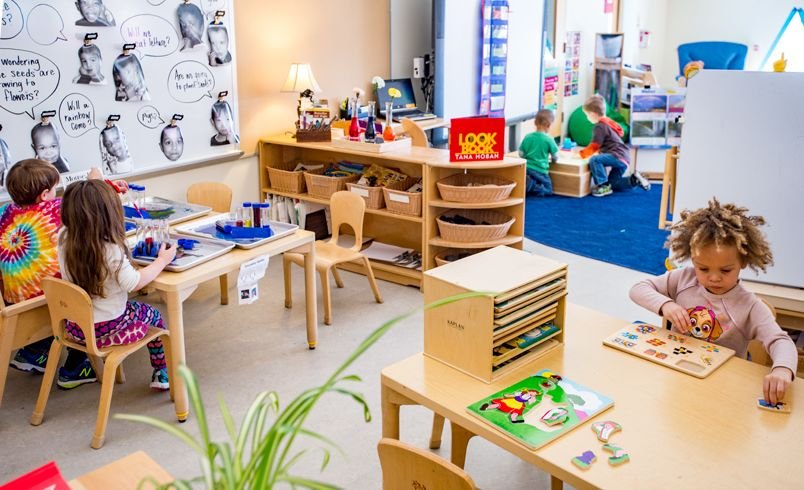
Every parent wants their child to begin their educational journey with confidence and happiness. However, selecting a preschool involves more than comparing classrooms or reviewing activity schedules. The most meaningful consideration is whether an environment supports a child’s overall development.
When searching for the best preschool near me, parents should focus on learning quality, emotional well-being, safety, and communication.
Understanding these factors makes it easier to choose a preschool that matches a child’s personality and developmental needs.
What Makes a Preschool Suitable for Young Children?
A strong early childhood environment supports intellectual, physical, emotional, and social growth.
Children need opportunities to explore, ask questions, build friendships, and express themselves.
An effective preschool balances guided learning with free play, allowing children to develop essential abilities naturally.
A Warm and Supportive Atmosphere
Young children learn best when they feel comfortable with their surroundings.
Educators who communicate patiently, recognize emotions, and encourage participation help create a sense of belonging.
A positive classroom atmosphere also makes the transition from home to preschool easier.
Five Important Factors to Consider Before Choosing
1. Experienced and Attentive Educators
Teachers influence how children experience their first structured learning environment.
Parents should observe whether educators listen carefully, encourage curiosity, and respond respectfully to different learning needs.
Effective teaching involves understanding each child’s developmental stage rather than relying only on planned activities.
2. Play-Based Learning Opportunities
Play provides a natural pathway to discovery.
Building blocks encourage problem-solving, storytelling develops language, and imaginative activities strengthen creativity.
Movement games and outdoor experiences also support physical development.
3. Safety and Cleanliness
A safe preschool environment should have appropriate supervision, hygienic facilities, and child-friendly furniture.
Parents can ask about emergency procedures, visitor access, illness policies, and daily cleaning practices.
Clear safety routines help families feel more confident about their decisions.
4. Balanced Daily Activities
Young children benefit from a predictable routine that includes active play, quiet moments, creative exploration, and social interaction.
A balanced schedule prevents unnecessary pressure while providing sufficient stimulation.
5. Parent-Teacher Communication
Regular communication helps parents understand their child’s experiences and progress.
Updates about social interactions, emerging skills, emotional adjustment, and participation can strengthen cooperation between families and educators.
Why Early Childhood Education Matters
Preschool introduces children to experiences that prepare them for future learning.
They practice following simple instructions, expressing ideas, recognizing patterns, and working with others.
These abilities develop gradually through repeated, enjoyable experiences.
Developing Confidence Through Everyday Achievements
Completing a puzzle, participating in a conversation, or independently organizing belongings may seem like small accomplishments.
For young children, however, these moments represent meaningful developmental progress.
Positive encouragement motivates them to approach unfamiliar challenges.
Questions Parents Should Ask During a Preschool Visit
A classroom visit can reveal details that online descriptions cannot communicate.
Parents should consider asking how educators handle separation anxiety, support children with different learning styles, encourage social interaction, and manage classroom routines.
It is also helpful to observe whether children appear engaged and whether educators respond calmly to their needs.
Families evaluating preschool learning opportunities in Sholinganallur can use these observations to make informed comparisons.
Conclusion
The search for the best preschool near me should focus on finding an environment that understands childhood development and respects individual differences.
A suitable preschool encourages curiosity, builds emotional security, and creates meaningful learning experiences.
By prioritizing thoughtful teaching, safe surroundings, and positive relationships, parents can give their children a confident beginning to their educational journey.