

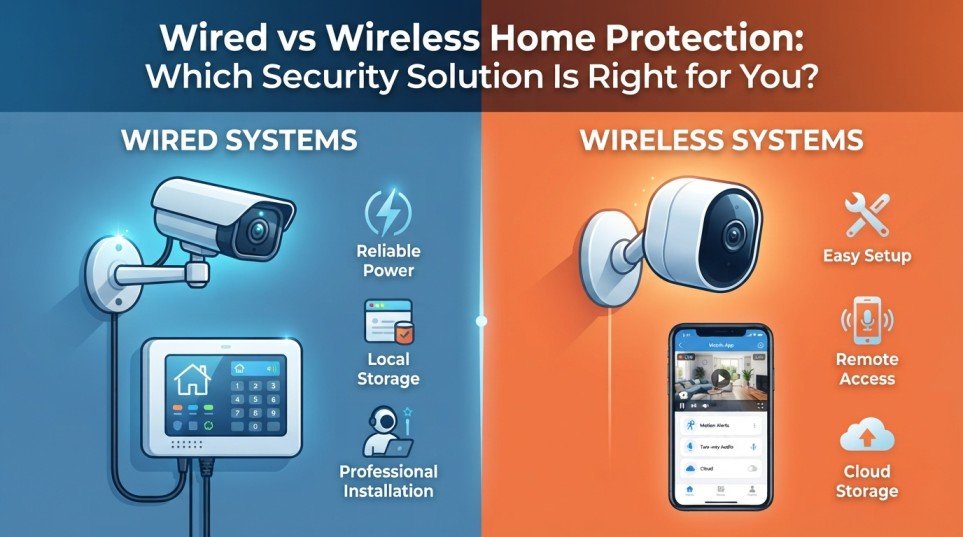
Choosing the right home security system is an important decision for homeowners who want to protect their property and family. With different technologies available, one common consideration is whether to choose a wired or wireless security setup. Both options offer useful features, but their installation requirements, connectivity, maintenance, and flexibility can differ.
Understanding these differences helps homeowners select a solution that matches their property, budget, and everyday security needs.
Understanding Wired Home Security Systems
Wired security systems connect individual components through physical cables. Cameras, sensors, alarms, and control panels communicate through these connections.
One major advantage of wired systems is their stable communication. Since devices do not rely entirely on wireless signals, they can be suitable for larger properties where consistent connectivity is important.
Wired systems are also less affected by wireless interference. Many installations use a dedicated power connection, reducing dependence on individual device batteries.
However, installation can be more complicated. Running cables through walls, ceilings, and other areas may require additional labour. This makes wired systems particularly suitable for properties under construction or undergoing major renovations.
Understanding Wireless Home Security Systems
Wireless security systems use technologies such as Wi-Fi or other wireless communication protocols to connect different devices. They generally require fewer physical cables, making installation more flexible.
Homeowners can often position wireless cameras, motion detectors, and door sensors without extensive wiring work. This can make them a convenient option for existing homes where structural changes are undesirable.
Many wireless systems also support mobile applications, allowing users to receive notifications and monitor selected areas remotely.
However, wireless equipment depends on reliable connectivity. Weak signals, network interruptions, and battery-related issues can affect performance. Regular battery checks and secure network settings are therefore important.
Key Differences Between Wired and Wireless Systems
Both technologies offer residential protection, but several factors can influence the final decision.
Installation requirements: Wired systems generally require more planning and physical installation work. Wireless systems usually offer a simpler setup.
Connectivity: Wired systems provide direct physical connections, while wireless devices depend on suitable signal coverage.
Flexibility: Wireless equipment is often easier to relocate or expand. Wired systems may require additional cabling when new devices are introduced.
Maintenance: Wired systems may need less battery-related maintenance. Wireless systems require periodic battery checks and network monitoring.
Property suitability: Wired systems can work well in new constructions, while wireless systems may suit existing homes where extensive wiring is difficult.
Which Security Solution Should You Choose?
The right choice depends on your property’s layout and specific requirements.
A wired system may be suitable if you are building a new home, renovating an existing property, or need multiple permanently installed security devices.
A wireless system may be more practical if you want flexible installation, minimal structural changes, or equipment that can be relocated when necessary.
Some homeowners may also benefit from a hybrid setup that combines wired and wireless components. This approach can provide greater flexibility while maintaining reliable connections for essential equipment.
Why Professional Installation Matters
Regardless of the technology selected, correct installation is essential for dependable performance. Poor camera positioning, incorrect sensor placement, and weak network coverage can reduce the effectiveness of a security system.
Professional alarm installation helps ensure that equipment is positioned correctly, connected properly, and configured according to the property’s requirements.
Sound Effects provides home security solutions to help homeowners explore suitable protection options. An experienced team can assess individual requirements and recommend equipment that supports practical, reliable residential security.
Making the Right Long-Term Investment
Wired and wireless security systems both offer valuable advantages. The best option depends on installation conditions, connectivity requirements, maintenance preferences, and future expansion plans.
By evaluating these factors before investing, homeowners can choose a security solution that provides dependable protection without unnecessary complexity.