

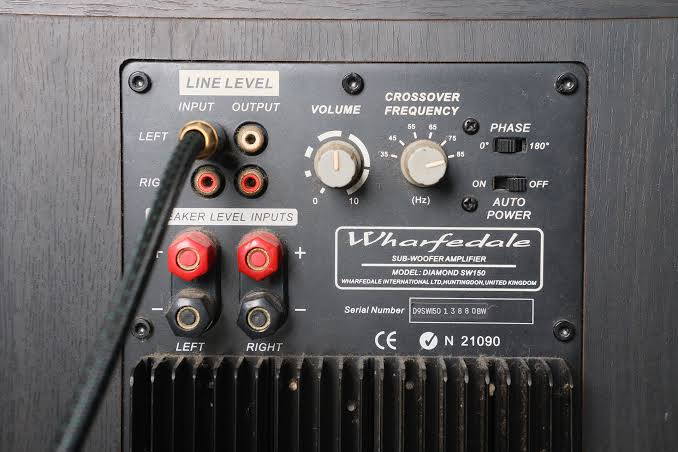
Adding bass to a sound system sounds simple, yet the equipment for it comes in several forms. Some subwoofer amplifiers are single channel units. Some are 2.1 channel amplifiers that drive two speakers and a subwoofer together. Others are integrated boxes with a different design again. Knowing which one fits your system saves money and avoids frustration. This guide compares the main types, using the range on the Fosi Audio subwoofer amplifier collection page.
Why a subwoofer needs its own amplifier
Low frequencies take a lot of power to reproduce. A subwoofer driver is large and moves a lot of air, so it needs an amplifier with enough current to control it. A small stereo amplifier built for ordinary speakers may not manage this well. A dedicated subwoofer amplifier is designed to do the job with the right power and settings.
The mono type
A mono subwoofer amplifier has a single channel. It sends power to one subwoofer. The collection lists three of these.
The M03 is described for passive subwoofers, with figures of 150 W RMS at 4 ohms and 120 W at 8 ohms, and switchable PBTL and SUB modes. The M04 is a compact 100 W unit for passive home speakers and passive subwoofers. The M01 BT is a Bluetooth mono amplifier with a maximum output of 300 W and Bluetooth and RCA inputs.
The mono type is a good choice when you already have a stereo amplifier for your main speakers and only want to add bass.
The 2.1 type
A 2.1 channel amplifier drives a left speaker, a right speaker and a subwoofer, all from one box. The collection lists the BT30D, a Bluetooth 2.1 amplifier rated at 50 W by 2 for the stereo outputs plus a 100 W subwoofer output. The page describes it as suited to compact home audio systems that need Bluetooth and dedicated bass control, with an adjustable subwoofer cutoff from 40 to 300 Hz.
A cutoff, also called a crossover frequency, decides which frequencies are sent to the subwoofer and which go to the main speakers. A higher cutoff sends more of the sound range to the subwoofer. Adjusting it lets you blend the subwoofer with your main speakers. If your main speakers are small, you may want a higher cutoff so the subwoofer covers more. If they are larger and reach lower, a lower cutoff may blend better.
The 2.1 type is convenient for compact systems, because one amplifier handles everything. The drawback is that you cannot upgrade the stereo and subwoofer parts separately.
The integrated type
The collection also lists the TP 02, an integrated Class D amplifier with up to 220 W by 1 at 4 ohms. The listing identifies the TDA7498E chip in its web address, but the page does not describe its use in detail, so confirm the exact specification on the product page before relying on it.
Passive and active partners
All of these amplifiers are meant for passive subwoofers. If you own an active subwoofer, it already has an amplifier inside, and you do not need another. Check which type you have before buying.
How to decide
Start with your existing system. If you already have a stereo amplifier you like, choose a mono unit and add it. If you are building a compact system from scratch, a 2.1 channel unit may be simpler. If you need only a specific job, such as driving a bass unit from a separate source, an integrated model may fit.
Then check power and impedance. The subwoofer’s rated power and impedance must suit the amplifier. As a rule, choose an amplifier that offers a bit more power than the driver’s rating on average, but not enough to risk damage at full volume.
Finally, check inputs. If you want wireless control, Bluetooth models like the M01 BT and BT30D may suit. If you prefer wired connections only, look for RCA or other analog inputs.
Setting it up
Connect the source to the amplifier, then the amplifier to the subwoofer using speaker cable. Switch everything off before wiring. Start with the volume low and the cutoff set mid range, then adjust gradually. Play a spoken recording and listen for a natural blend between the subwoofer and the other speakers. If the low end sounds boomy, reduce the level or move the subwoofer. Corners of a room tend to increase bass, so placement matters.
Care and safety
Give the amplifier room to breathe. Keep it dry. Never connect or disconnect cables while it is on. Keep the level reasonable, because very low frequencies can cause fatigue or discomfort when played loudly for long periods.
A short summary
Choose a mono amplifier to add bass to an existing system, a 2.1 amplifier for an all in one compact system, and an integrated model for special uses. Match the power and impedance carefully, check the inputs and read the product page for exact figures. Where two pages give different figures for the same model, ask the seller to confirm. A good match will give your system strong, controlled bass.