

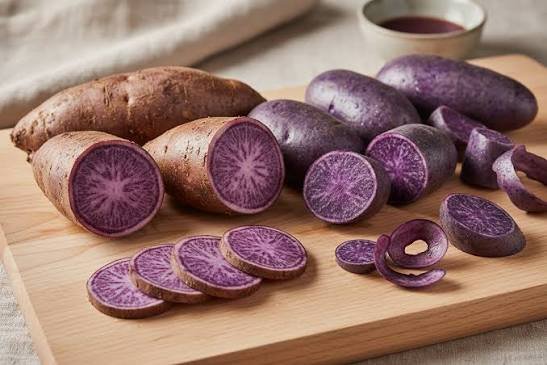
Ube is a purple yam that has become increasingly popular for its striking color, distinctive flavor, and interesting nutritional profile. Originally associated with Southeast Asian cuisine, particularly Filipino cooking, this colorful tuber is now appearing in smoothies, desserts, breakfast bowls, and health-conscious recipes around the world. Its appeal goes beyond appearance. Ube provides carbohydrates, dietary fiber, and naturally occurring plant compounds that make it an interesting addition to a varied diet.
Unlike some colorful foods that rely on artificial ingredients, genuine purple ube gets its characteristic appearance from natural pigments. Its mildly sweet, earthy flavor works beautifully in both traditional preparations and modern recipes. For many people, discovering ube is like opening a new chapter in everyday cooking. However, its vibrant color should not be mistaken for proof of extraordinary health benefits. Understanding what ube actually contains is essential before assigning it a special place in your nutritional routine.
Whether you enjoy freshly cooked purple yam or prefer convenient ingredients such as organic ube, the most important considerations are the quality of the product, its ingredients, and the way it is prepared. Ube can be part of an enjoyable, balanced eating pattern without requiring exaggerated promises about its effects. Its origins, nutritional properties, antioxidant pigments, and versatility explain why this traditional ingredient continues to attract attention from food enthusiasts and nutrition-conscious consumers.
Where does ube come from?
Ube, scientifically known as Dioscorea alata, is a species of yam cultivated in tropical regions. Although it is particularly associated with the Philippines, the plant has a much wider history across Southeast Asia and other tropical areas. It belongs to the Dioscoreaceae family and produces underground tubers that can develop an impressive size under favorable growing conditions.
In Filipino cuisine, ube has occupied an important culinary position for generations. One of its best-known preparations is ube halaya, a sweet purple yam jam traditionally made with cooked yam, milk, and sugar. This preparation is commonly used in cakes, pastries, and other desserts. Ube is also associated with halo-halo, a popular Filipino dessert combining shaved ice, sweet ingredients, and various toppings.
The growing international interest in purple foods has introduced ube to new audiences. Its recognizable appearance makes it particularly attractive in beverages and desserts. Yet its cultural significance deserves just as much attention as its visual appeal. Ube is not a recently invented superfood. It is a traditional food with a long culinary history.
Although ube is frequently confused with taro or purple sweet potato, these ingredients come from different botanical species. Taro belongs to the Araceae family, while sweet potatoes belong to the Convolvulaceae family. Their flavors, textures, and nutritional compositions can also differ.
Authentic purple yam usually has a starchy texture when cooked, with a subtle sweetness that may develop nutty or vanilla-like notes. The intensity of its purple flesh varies by variety and growing conditions. Some tubers are deeply violet, while others have lighter coloration.
What nutrients does ube contain?
Ube is primarily a carbohydrate-rich tuber, making it a source of dietary energy. Like potatoes and other starchy vegetables, it contains complex carbohydrates that provide fuel for everyday activities. Its exact nutritional composition varies according to the cultivar, maturity, growing environment, and cooking method.
One of the most interesting aspects of ube is its dietary fiber. Fiber contributes to normal bowel function and can help support a satisfying eating experience. The amount retained in a meal depends on processing. A minimally processed, cooked tuber generally differs from a refined powder or sweetened dessert.
Ube also contains various micronutrients, potentially including potassium, vitamin C, and certain B vitamins. Their concentrations are not uniform across all varieties or products. Cooking can reduce some heat-sensitive vitamins, particularly vitamin C, while minerals are generally more stable.
Potassium contributes to normal muscle and nerve function and helps maintain fluid balance. However, it would be misleading to describe every ube product as an excellent potassium source without checking its actual nutritional composition.
In terms of calories, plain cooked ube should be distinguished from commercial products containing substantial amounts of sugar, cream, or fat. A serving of cooked purple yam can fit comfortably into a balanced meal, whereas a rich ube dessert may contain considerably more energy.
For people monitoring ube nutritional value, portion size matters. The healthiest approach is to consider the entire meal rather than focusing on the tuber alone. Combining ube with vegetables, protein, and sources of unsaturated fat can create a more complete nutritional balance.
The potential health benefits of purple yam
The health benefits of ube are linked mainly to its contribution of carbohydrates, fiber, micronutrients, and naturally occurring plant pigments. These characteristics make it nutritionally interesting, but they do not establish ube as a treatment for any medical condition.
Its purple coloration is partly associated with anthocyanins, a family of pigments also found in foods such as blueberries, blackberries, and purple cabbage. Anthocyanins have attracted scientific interest because of their antioxidant activity in laboratory experiments.
Antioxidants are substances capable of interacting with certain reactive molecules involved in oxidative processes. However, antioxidant activity measured in a laboratory does not automatically translate into measurable disease prevention in humans. Research specifically examining the long-term health effects of eating ube remains limited.
Ube may also support digestive health through its fiber content. Fiber helps maintain normal intestinal transit, particularly when combined with adequate water intake. Eating a variety of fiber-containing foods, including vegetables, fruits, legumes, and whole grains, remains more important than relying on a single ingredient.
Another practical benefit is satiety. Starchy foods containing fiber can contribute to fullness, especially when eaten as part of a balanced meal. Plain ube may therefore be useful as an alternative to other carbohydrate sources. Nevertheless, there is insufficient clinical evidence to claim that it directly accelerates weight loss.
People interested in ube and blood sugar levels should remember that purple yam still contains digestible carbohydrates. Its effect on glucose depends on portion size, preparation, individual metabolism, and the foods consumed alongside it. Purple pigmentation does not make a sweetened ube dessert suitable for unrestricted consumption by someone managing diabetes.
How can you incorporate ube into a healthy diet?
Ube can be prepared in several ways, making it a versatile ingredient for both sweet and savory meals. Fresh purple yam should be properly cooked before eating. Boiling, steaming, and baking are practical preparation methods that soften the flesh and make it easier to digest.
For a simple breakfast, cooked ube can be mashed and combined with plain yogurt, fruit, and nuts. This combination supplies carbohydrates alongside protein and fats. Its natural color also makes breakfast bowls visually appealing without requiring artificial food coloring.
Ube powder is another convenient option, although products differ significantly. Some powders contain dehydrated purple yam, while others are sweetened mixes containing flavorings or additional ingredients. Reading the label is particularly important when choosing an ingredient for everyday nutritional use.
A small quantity of genuine ube powder can be mixed into porridge, pancake batter, smoothies, or homemade baked goods. Hydration and preparation requirements depend on the product. Pure dehydrated yam powder may need cooking, whereas certain ready-to-use powders are processed differently.
Traditional Filipino desserts remain an enjoyable way to experience the ingredient. Nevertheless, foods such as ube ice cream, cakes, and sweetened halaya often contain added sugar. They can be enjoyed occasionally without being presented as equivalent to plain cooked yam.
For those seeking healthy ube recipes, replacing part of a conventional starchy ingredient with cooked purple yam is an accessible starting point. Its flavor pairs well with coconut, cinnamon, banana, and dairy or fortified plant-based alternatives.
Storage also deserves attention. Whole fresh yams should be kept under suitable cool, dry, ventilated conditions, while cooked ube should be refrigerated promptly. Commercial powders should be stored according to packaging instructions, protected from moisture and contamination.
Ube, taro, and purple sweet potato: understanding the differences
Despite their similar uses, ube, taro, and purple sweet potato are botanically different foods. Ube is a yam, taro comes from Colocasia esculenta, and purple sweet potatoes belong to Ipomoea batatas. Their colors can overlap, which explains why they are sometimes confused in shops and online recipes.
Ube generally has a mildly sweet flavor and a soft, starchy texture when properly cooked. Taro often tastes more neutral and earthy, with a creamy consistency. Purple sweet potatoes tend to be naturally sweet, although their taste varies between varieties.
From a nutritional perspective, all three can provide carbohydrates and certain micronutrients. Their fiber contents and vitamin profiles differ, and no single option is automatically superior in every dietary situation. Purple sweet potatoes are also associated with anthocyanin pigments, meaning ube is not the only naturally purple tuber with antioxidant compounds.
When shopping, look for the scientific name or clear ingredient identification if accuracy matters. Some products marketed as ube-flavored contain little actual yam and rely on added flavoring or coloring.
Choosing authentic ube allows consumers to appreciate its traditional flavor and nutritional characteristics. The distinction is particularly relevant for people comparing ingredient quality rather than simply looking for a purple-colored dessert.