

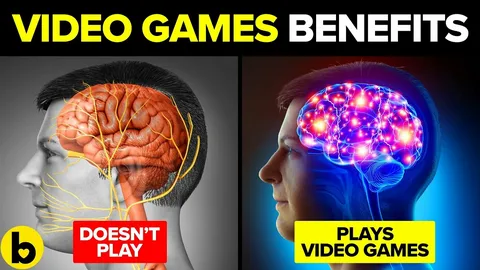
Have you ever played a video game and noticed that you became faster at making decisions, solving problems, or remembering details? Video games are not just a way to have fun. When played in the right way, some games can also help you practise important thinking skills.
From solving puzzles to planning your next move, games often challenge your brain in different ways. They can help you practise memory, attention, problem-solving, and quick thinking. However, not every game offers the same benefits, and playing for too long can affect sleep, study time, and daily life.
In this article, we will explore how video games may improve memory, focus, and cognitive skills, which types of games are worth trying, and how to enjoy gaming in a healthy way.
1. How Video Games Can Improve Memory
Memory helps us store information and use it when we need it. It allows us to remember lessons, follow instructions, and learn new skills.
Many video games ask players to remember locations, rules, patterns, and important details. This gives the brain a chance to practise remembering information.
Remembering Patterns and Details
Puzzle games often require players to remember shapes, colours, numbers, and patterns. For example, a matching game asks you to remember where certain cards are hidden.
As you play, you practise storing information and recalling it at the right time. Some strategy games also require you to remember enemy movements, maps, and useful resources.
Using Working Memory
Working memory is the ability to hold and use information for a short time. You use it when solving a maths problem or following several steps to complete a task.
In many games, players must remember their goal, watch what is happening, and decide what to do next. These activities can help practise working memory.
However, improvement in a game does not always mean that your memory will improve in every part of life. The results depend on the game, the player, and the skills being tested.
2. How Gaming Helps You Practise Focus
Focus means paying attention to something without getting distracted. It is useful when studying, reading, playing sports, or completing homework.
Many video games require players to watch the screen carefully and react to important changes.
Staying Alert During Gameplay
Action games often include moving objects, changing scenes, and sudden events. Players must notice important details while ignoring less useful information.
This can help them practise visual attention and quick responses. Some research suggests that certain action games may improve specific attention skills, although the results vary between games and players.
Learning to Follow Instructions
Many games provide missions, goals, and step-by-step tasks. Players must understand instructions before they can move forward.
For example, a player may need to collect items, unlock a door, and reach a safe place. Missing one step can delay progress.
This type of gameplay encourages players to pay attention to details. Still, gaming should not replace study habits or other activities that support concentration.
3. Video Games Can Build Problem-Solving Skills
Have you ever been stuck on a difficult game level and tried several ways to complete it? That is an example of problem-solving.
Problem-solving means finding a way to deal with a challenge. Video games often give players problems that need careful thought rather than simple answers.
Learning Through Trial and Error
When a player fails a level, they can review what went wrong and try a different approach.
For example, a puzzle game may require you to move objects in the correct order. If your first attempt fails, you can change your plan and try again.
This process can encourage patience, flexible thinking, and learning from mistakes.
Making Better Decisions
Strategy games often require players to manage limited resources, plan ahead, and choose between different options.
A player might need to decide whether to save money, improve a character, or prepare for a future challenge. Each choice can affect the result.
These games give players a chance to practise decision-making in a virtual setting. The skills may be useful in other situations, but real-life improvement is not guaranteed.
4. Different Types of Games and Their Benefits
Not all video games train the same skills. Choosing a game that matches your goals can make your gaming time more useful.
Puzzle Games
Puzzle games include matching challenges, number games, and logic problems. They encourage players to recognise patterns, remember details, and think carefully.
They can be a good choice for people who enjoy solving problems at their own pace.
Strategy Games
Strategy games ask players to plan ahead and manage resources. They may involve building a town, leading a team, or preparing for a challenge.
These games can encourage planning, logical thinking, and decision-making.
Action Games
Action games often require quick reactions and attention to moving objects. Some studies have found that certain action games can improve particular visual attention skills.
However, faster reactions do not automatically mean better memory or stronger thinking skills in every situation.
Educational Games
Educational games combine learning with play. They may help players practise spelling, maths, vocabulary, science, or other school subjects.
For students, these games can make practice more enjoyable when the content matches what they need to learn.
5. Can Free Game Downloads Support Brain Training?
You do not need to spend a lot of money to enjoy games that challenge your brain. Many puzzle, strategy, and educational games offer free versions.
A Free Game Download can be a simple way to explore different game types and find one that suits your interests. Before downloading anything, check that the source is trustworthy and that the game works on your device.
Here are some useful tips:
- Choose games that require thinking, planning, or remembering.
- Read the game description before installing it.
- Check reviews and age ratings.
- Avoid suspicious websites and unknown files.
- Be careful with games that ask for unnecessary personal information.
- Check whether the game includes advertisements or paid features.
You can explore gaming resources on NEWGAMESZONE while keeping safety and responsible gaming in mind. Always make sure that downloads are legitimate and that you understand the game’s requirements.
Remember, the goal is to enjoy yourself while giving your mind a healthy challenge.
6. How to Play Video Games in a Healthy Way
Video games can be enjoyable, but balance is important. Spending too much time playing may reduce the time available for homework, exercise, sleep, and family.
You can make gaming healthier with a few simple habits.
Set a Time Limit
Decide how long you will play before starting a game. For example, you might finish your homework first and then enjoy a short gaming session.
The right amount of gaming depends on your age, schedule, and responsibilities.
Take Regular Breaks
Look away from the screen, stand up, stretch, and drink some water. Short breaks can help reduce eye strain and keep you comfortable.
Keep Learning Outside Games
Read books, solve maths problems, play outdoor sports, and spend time with friends. These activities also support learning and healthy brain development.
Get Enough Sleep
Sleep is important for memory and learning. Staying up late to complete one more level can make it harder to focus the next day.
Try to finish gaming early enough to follow a regular sleep schedule.
7. What Does Research Say About Gaming and Brain Skills?
Scientific research suggests that some video games can improve specific skills, such as visual attention, reaction speed, and certain types of spatial thinking.
However, the benefits depend on several factors, including the type of game, how often someone plays, and which skill researchers measure.
It is also important to understand the difference between getting better at a game and improving general intelligence. A person may become excellent at solving puzzles in a particular game without showing the same level of improvement in school or daily tasks.
That is why gaming should be viewed as one possible way to practise certain skills, not a replacement for reading, exercise, good sleep, or formal education.
Conclusion
Video games can offer more than entertainment. Puzzle games may help you practise memory, action games can challenge visual attention, and strategy games encourage planning and problem-solving.
Still, the benefits are not the same for every game or player. The best approach is to choose suitable games, play in moderation, and keep a healthy balance between gaming, learning, exercise, and rest.
So, the next time you start a game, choose one that makes you think, learn from your mistakes, and enjoy the challenge. With the right habits, gaming can be a fun part of a balanced lifestyle.