

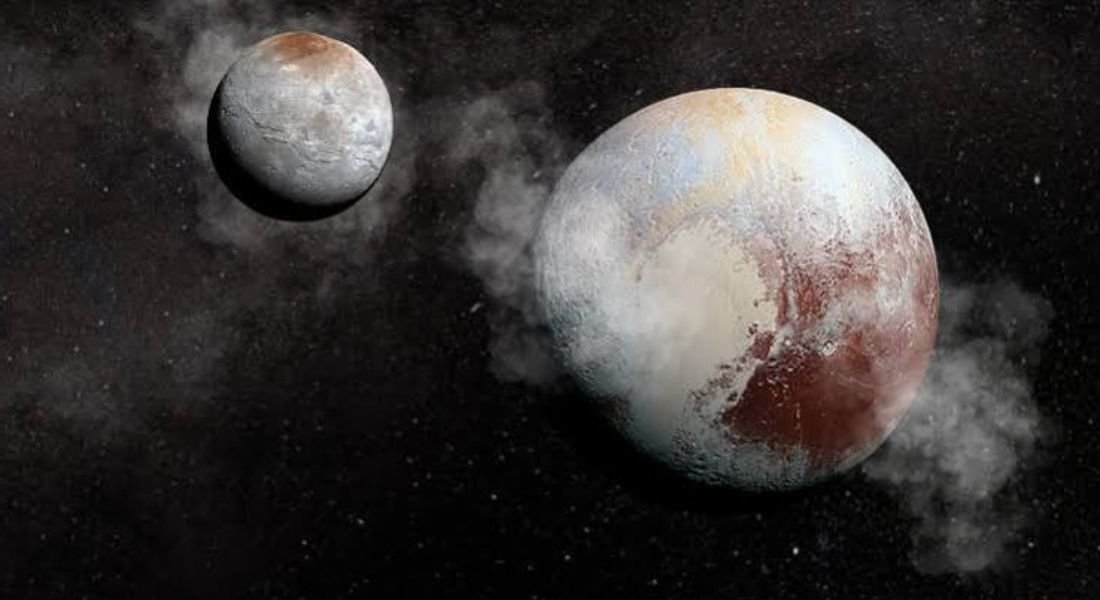
An iconic icy world nestled in the chilly depths of the outer solar system captured human imagination almost a century ago. Discovered in the early twentieth century, this distant body was celebrated for decades as the traditional ninth planet before transforming our fundamental understanding of planetary science. Positioned far beyond Neptune within the vast ring of icy debris known as the Kuiper Belt, this distant object continues to intrigue astronomers and space enthusiasts alike. Modern space missions have revealed that this small world is surprisingly dynamic, possessing complex geology, a nitrogen atmosphere, and multiple orbiting moons. Exploring Pluto offers deep insights into how our solar system formed over four billion years ago.
The Discovery of a New World by Clyde Tombaugh
The story began in February 1930 when a young American astronomer named Clyde Tombaugh made a historic observation at the Lowell Observatory in Flagstaff, Arizona. Scientists had spent decades searching for a hypothetical “Planet X” that was believed to be disturbing the orbits of Uranus and Neptune. Tombaugh utilized a specialized tool called a blink comparator to painstakingly compare astronomical photographic plates taken nights apart. He noticed a tiny point of light moving against the static background of distant stars. This faint, moving dot was soon announced to the world as Pluto, marking a major milestone in twentieth-century observational astronomy.
Naming the Distant Object: Mythological Origins
After Clyde Tombaugh identified the elusive object, the Lowell Observatory received over one thousand naming suggestions from around the world. The winning entry was proposed by Venetia Burney, an eleven-year-old schoolgirl from Oxford, England. Venetia was deeply interested in classical mythology and suggested naming the cold, dark world Pluto, after the Roman god of the underworld. Her grandfather forwarded the suggestion to members of the observatory staff, who unanimously voted in favor of the proposal. The name officially became public in May 1930, honoring the dark, remote nature of this newly discovered solar system body.
Where is Pluto Located? Understanding the Kuiper Belt
The world resides in a vast region of the outer solar system known as the Kuiper Belt, a ring of icy bodies stretching beyond the orbit of Neptune. This distant realm contains thousands of small, frozen remnants left over from the early formation of the major planets. On average, Pluto orbits the Sun at a staggering distance of 3.9 billion miles (5.9 billion kilometers), which is roughly 39 Astronomical Units (AU) away from Earth. Light from the Sun takes over five hours to reach its frigid surface, leaving the planetoid bathed in perpetual cosmic twilight.
The Unique Orbit and Rotation of the Dwarf Planet
Unlike the major planets, which follow nearly circular paths on a flat orbital plane, Pluto features a highly elliptical and tilted orbit. It takes approximately 248 Earth years for the body to complete a single trip around the Sun. Its orbit is inclined at an angle of 17 degrees relative to the rest of the solar system. Because of its stretched orbital path, it occasionally comes closer to the Sun than Neptune. The distant world also exhibits an extreme axial tilt of 120 degrees, causing it to rotate virtually on its side every 6.4 Earth days.
Physical Characteristics: Size, Mass, and Surface Gravity
The distant body is a relatively tiny world compared to the inner terrestrial planets and gas giants. It has a diameter of roughly 1,477 miles (2,376 kilometers), making Pluto smaller than Earth’s Moon. Its mass is only about 0.2 percent that of Earth, resulting in very weak surface gravity. A person weighing 150 pounds on Earth would weigh only about 10 pounds on its surface. Despite these small physical measurements, the body possesses enough mass to pull itself into a nearly spherical shape, satisfying one of the key physical criteria for planetary classification.
Composition and Internal Structure
Scientific data collected over decades indicates that the celestial body is composed of a mixture of rock and ice. Astronomers estimate that Pluto consists of roughly 70 percent rock and 30 percent water ice by volume. Deep within the interior, a dense rocky core is likely surrounded by a thick mantle of frozen water. Some planetary scientists suspect that radioactive decay inside the core generates enough internal heat to maintain a liquid ocean beneath the icy crust. The surface itself is coated in frozen volatiles, primarily composed of nitrogen, methane, and carbon monoxide ices.
The Unexpected Atmosphere of the Frozen World
Despite its intense cold, Pluto maintains a thin, tenuous atmosphere. This fragile gas envelope consists mostly of nitrogen, with small amounts of methane and carbon monoxide. The atmosphere is directly linked to the world’s orbital distance from the Sun. As the dwarf planet moves closer to the Sun during its orbit, surface ices sublime directly into gas, causing the atmosphere to expand. When it travels farther away into deep space, the gases cool and freeze back onto the surface as frost, causing the atmospheric layer to periodically collapse.
Surface Features: High Mountains and Icy Plains
Images captured by modern spacecraft revealed a surprisingly diverse landscape across the body. The surface features towering mountain ranges made of water ice that reach heights of up to 11,000 feet (3,500 meters), comparable to the Rocky Mountains on Earth. Interspersed between these icy peaks are smooth, craterless plains that suggest ongoing geological activity. Dark, heavily cratered regions sit right next to bright, smooth terrain, demonstrating that Pluto has undergone complex surface processes throughout its long history rather than remaining a dead, frozen rock.
Sputnik Planitia: The Heart of the Planet

The most famous landmark on the world is a massive, bright feature officially named Tombaugh Regio, widely known as the “Heart of Pluto”. The western lobe of this heart-shaped structure is a vast frozen plain called Sputnik Planitia. Spanning over 600 miles (1,000 kilometers), this basin is composed entirely of nitrogen and methane ice. Notably, the plain completely lacks impact craters, indicating that it is geologically young—likely less than 100 million years old. Thermal convection slowly circulates the frozen nitrogen from below, continuously updating the surface.
The Satellite System: Charon and the Small Moons
The icy realm is part of a complex satellite system comprising five known moons. The largest moon, Charon, was discovered in 1978 by astronomer James Christy. Charon is so large—roughly half the size of Pluto—that the two bodies orbit a shared center of mass located outside the main planet’s surface, creating a double dwarf planet system. In addition to Charon, astronomers using the Hubble Space Telescope discovered four tiny, irregularly shaped moons named Nix, Hydra, Kerberos, and Styx between 2005 and 2012.
Why the IAU Reclassified Pluto as a Dwarf Planet
In August 2006, the International Astronomical Union (IAU) updated the formal definition of a planet during a historic conference in Prague. To be classified as a major planet, a celestial body must meet three conditions: it must orbit the Sun, possess sufficient mass to achieve a round shape, and clear its orbital neighborhood of other debris. While Pluto satisfies the first two criteria, it fails the third because its mass is far smaller than the combined mass of the other objects in the Kuiper Belt. Consequently, the IAU reclassified it as a dwarf planet.
The Great Planet Debate: Public and Scientific Reaction
The reclassification sparked an intense global debate among scientists, educators, and the general public. Many people who grew up learning about nine planets felt a strong nostalgic connection to the tiny world. Several prominent planetary scientists publicly criticized the IAU decision regarding Pluto. Opponents argued that the clearing-the-neighborhood rule was vague and biased against objects located far from the Sun. Despite ongoing debates across classrooms and universities, the dwarf planet label remains the official scientific designation used by astronomical bodies worldwide.
NASA’s New Horizons Mission: A Historic Encounter
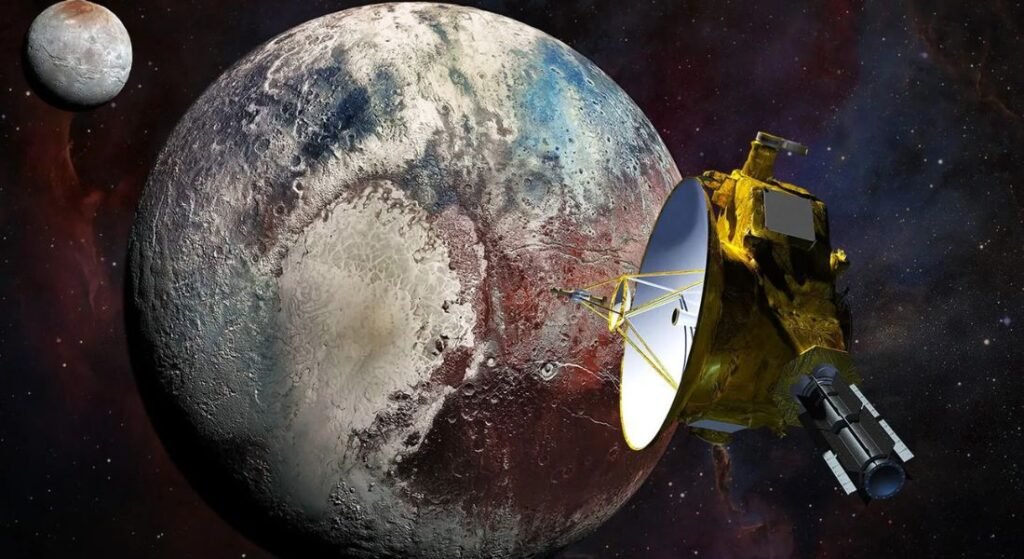
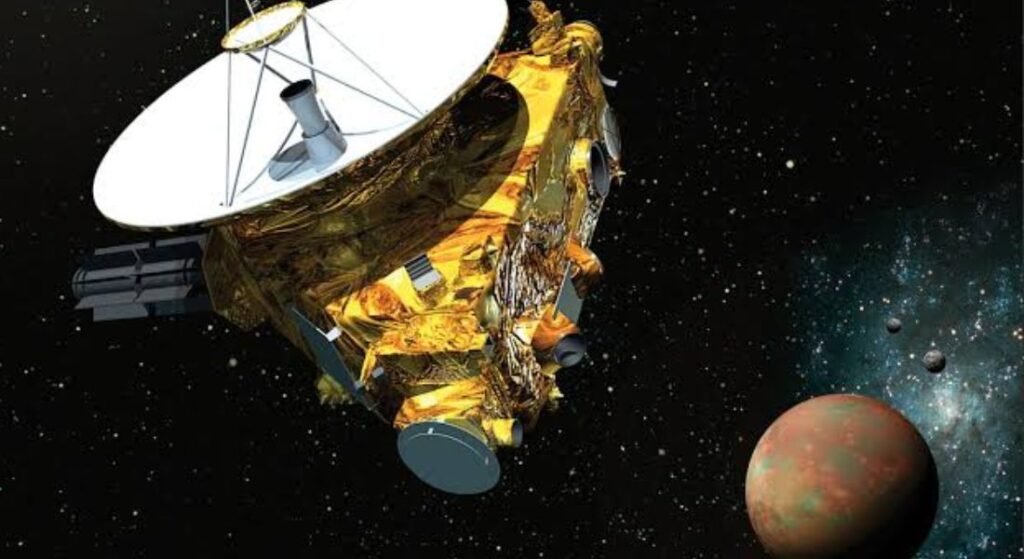
Human understanding of the outer solar system was forever changed by NASA’s New Horizons spacecraft. Launched in January 2006, the piano-sized probe traveled over 3 billion miles across space for nearly a decade. On July 14, 2015, New Horizons executed a historic flyby, passing within 7,750 miles (12,500 kilometers) of Pluto. The probe gathered high-resolution images, atmospheric spectra, and geological data, completely revolutionizing our picture of this distant world from a blurry telescope speck into a vibrant, geologically active body.
Geologic Activity and Cryovolcanism
Data returned by New Horizons revealed strong evidence of ongoing geological processes on the frozen planet. Scientists observed signs of cryovolcanism, or ice volcanoes, where slurries of water ice, ammonia, and methane erupt onto the surface instead of molten rock. Features such as Wright Mons appear to be massive cryovolcanoes that erupted in the relatively recent geological past. These findings proved that Pluto can retain enough internal decay heat to drive active geology, challenging long-held assumptions about how cold outer worlds evolve over time.
Surface Chemistry and the Red Haze
The dwarf planet displays a striking reddish-brown coloration across broad swathes of its terrain. Scientists determined that this distinct color on Pluto is produced by complex organic compounds called tholins. Tholins form when ultraviolet light from the Sun breaks apart methane and nitrogen molecules in the thin atmosphere. These fragmented chemical pieces recombine into complex organic molecules that rain down onto the surface, staining the nitrogen ice. This complex atmospheric chemistry creates layered haze bands that extend dozens of miles above the ground.
Climate and Seasonal Variations
Because of its extreme elliptical orbit and high axial tilt, the icy world experiences severe seasonal changes over its 248-year orbital period. During its decades-long winter, large regions remain in continuous darkness, causing atmospheric gases to freeze directly onto the terrain. Conversely, during the long summer months, increased sunlight warms the surface of Pluto, driving nitrogen and methane back into the air. These extreme climate cycles cause global surface pressures to fluctuate dramatically over time, dynamically reshaping the landscape across generations.
Future Exploration of the Distant Frontier
Although no active space missions are currently en route to the Kuiper Belt, planetary scientists frequently discuss potential return missions. Researchers have proposed concepts for a specialized orbiter that could enter orbit around Pluto to study its seasonal changes over multiple years. Other conceptual designs include landers or atmospheric probes capable of directly sampling the nitrogen plains. Studying this icy world provides vital clues about the chemical building blocks of our early solar system and helps astronomers evaluate dwarf planets orbiting distant stars.
Conclusion
The icy world remains one of the most fascinating objects in our solar system. From its unexpected discovery by Clyde Tombaugh in 1930 to its historic flyby by NASA’s New Horizons in 2015, Pluto has consistently challenged scientific expectations. Though reclassified as a dwarf planet by the IAU in 2006, its complex geology, nitrogen glaciers, towering ice mountains, and dynamic atmosphere prove that it is far more than a cold, inert rock. As human knowledge of the outer Kuiper Belt expands, this distant landmark will always stand as a gateway to understanding space.
Frequently Asked Questions (FAQs)
1. Is Pluto still considered a planet?
No, it was reclassified as a dwarf planet by the International Astronomical Union (IAU) in 2006. While it orbits the Sun and has a round shape, it has not cleared its orbital neighborhood of other debris in the Kuiper Belt.
2. How cold is the surface on this distant world?
The surface temperature on Pluto drops as low as -380 degrees Fahrenheit (-230 degrees Celsius). It is one of the coldest places in our solar system due to its vast distance from the Sun.
3. How long does it take to travel there?
NASA’s New Horizons spacecraft, which was one of the fastest spacecraft ever launched, took 9.5 years to reach the dwarf planet after traveling over 3 billion miles.
4. Does it have liquid water?
While the surface features frozen water ice mountains, scientists suspect there may be a warm, liquid ocean buried deep beneath the icy crust of Pluto, kept liquid by internal decay heat.
5. Why is the largest moon, Charon, so special?
Charon is about half the size of Pluto, making it extremely large relative to its host body. The two objects orbit a mutual center of gravity in space, causing them to behave like a double dwarf planet system.
6. Can humans live on this outer world?
No, the environment is uninhabitable for humans due to extreme freezing temperatures, a lack of breathable oxygen, low surface gravity, and cosmic radiation.