


Emotional immaturity is a developmental gap where an adult exhibits a childlike or reactive inability to manage stress, regulate feelings, or take accountability for their actions. According to the American Psychological Association Dictionary of Psychology, it reflects a tendency to express emotions without restraint or in a way that is grossly disproportionate to the actual situation. When an adult lacks emotional development, they navigate adult responsibilities using childhood coping mechanisms. This psychological dynamic creates profound friction in romantic partnerships, workplaces, and families. Understanding how this behavioral framework develops allows individuals to identify destructive patterns, establish healthy boundaries, and foster personal growth.
What Is Emotional Immaturity in Adults?
The Core Definition of Emotional Growth Gaps
At its core, emotional immaturity represents an arrest or delay in psychological development. While physical aging occurs automatically, emotional growth requires intentional self-reflection, social learning, and psychological integration. An emotionally immature adult may hold a successful job, maintain an active social life, and manage complex intellectual tasks. However, when confronted with personal conflict, emotional distress, or sudden life changes, their coping mechanisms revert to basic instinctual responses like denial, aggression, or withdrawal. They lack the internal machinery required to process complex psychological states calmly.
Distinguishing Emotional Age from Chronological Age
Chronological age measures the passage of time, while emotional age reflects psychological adaptability. A person can be forty years old chronologically but operate at an emotional age of six when faced with criticism. This gap between age and maturity creates significant confusion for friends and family members. Observing an adult display explosive tantrums or total stonewalling during minor disagreements highlights this developmental disparity. Recognizing that chronological maturity does not guarantee psychological depth is the first step toward addressing relational challenges effectively.
Key Psychological Causes of Emotional Immaturity
Childhood Trauma and Arrested Development
The roots of emotional immaturity frequently trail back to adverse childhood experiences. When a child experiences severe trauma, emotional abuse, or unpredictable chronic stress, their brain prioritizes survival over complex psychological development. Neurological research indicates that persistent early trauma alters the growth of the prefrontal cortex, which is responsible for impulse control and emotional regulation. Consequently, the individual becomes frozen in the defensive coping strategies they used during youth. As adults, these individuals instinctively view neutral situations as existential threats.
The Impact of Parent Styles and Early Environment
Parenting styles heavily influence how children learn to process internal states. Overprotective parenting shields children from normal distress, preventing them from developing natural resilience and problem-solving skills. Conversely, emotionally unavailable or neglectful parents fail to model proper empathy and self-regulation. Prominent psychologist Dr. Lindsay Gibson, author of Adult Children of Emotionally Immature Parents, notes that children raised by self-preoccupied parents often absorb the message that their own emotional needs are burdensome. These environments produce adults who either suppress emotions or project them outward reactively.
Common Signs and Symptoms of an Emotionally Immature Person
Inability to Regulate Intense Feelings
One primary indicator of emotional immaturity is a severe struggle with emotional regulation. Emotionally immature adults struggle to process frustration, sadness, or anxiety quietly. Instead, their internal distress spills over into dramatic emotional outbursts, sulking, or intense physical agitation. They experience mood swings that feel random and overwhelming to those nearby. Because they lack internal self-soothing mechanisms, they rely on immediate environmental changes or external validation to restore their personal comfort.
Chronic Defensiveness and Refusal of Accountability
Taking personal responsibility requires a solid foundation of self-esteem. For an emotionally immature individual, admitting a mistake feels like a devastating blow to their personal identity. Consequently, they deploy defensive tactics whenever faced with constructive feedback. They reframe narratives, make excuses, or shift blame onto partner, colleagues, or luck. Instead of reflecting on their actions, they argue fiercely to protect their fragile self-image.
Poor Impulse Control and Immediate Gratification
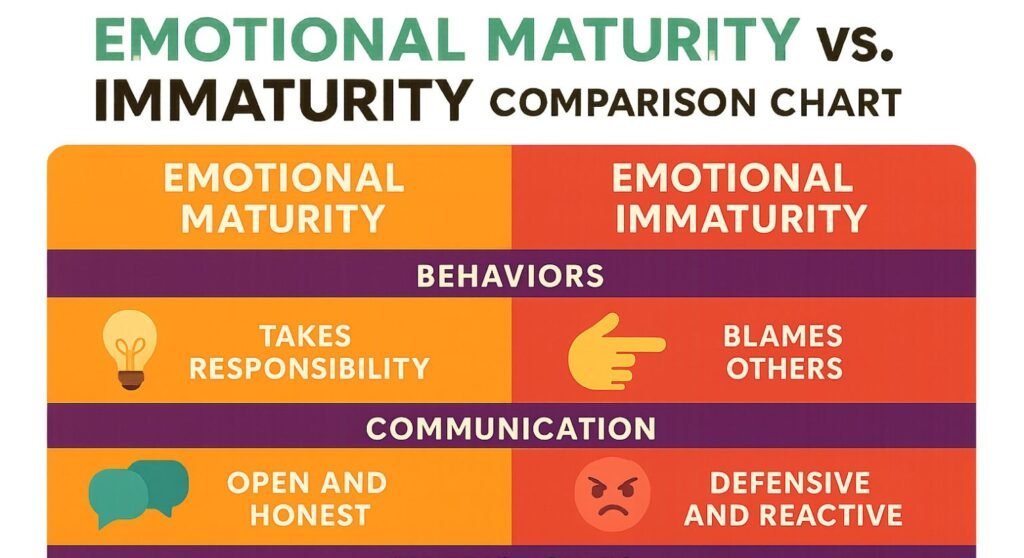
Impulsivity is a hallmark of youthful cognitive development that often persists in emotional immaturity. Emotionally immature adults struggle to delay gratification for long-term rewards. This behavior manifests as reckless financial spending, sudden career decisions without fallback plans, or volatile outbursts during minor inconveniences. They act primarily on immediate desires rather than deliberate logic. This short-sighted orientation repeatedly undermines their personal relationships, career progression, and long-term financial stability.
How Emotional Immaturity Affects Relationships
The Dynamic of Walking on Eggshells
Living or working with an emotionally immature person creates an atmosphere of hypervigilance. Family members and partners constantly monitor the individual’s mood, altering their own speech and behavior to avoid triggering an emotional explosion. This environment forces loved ones to suppress their own emotional needs. Over time, this dynamic creates chronic psychological fatigue, resentment, and a profound loss of genuine connection within the relationship.
Unbalanced Caretaking and Parent-Child Dynamics
In romantic relationships, emotional immaturity distorts the equal partnership into a pseudo-parenting dynamic. The mature partner assumes responsibility for household management, emotional regulation, and crisis management, while the immature partner acts like a dependent child. This dynamic strips away mutual respect and physical intimacy, leaving the caretaking partner feeling isolated, overburdened, and emotionally unfulfilled.
Identifying Different Types of Emotionally Immature Individuals
The Emotional Type
The emotional type operates almost entirely based on feelings. Their internal state dictates the household climate, swinging between deep despair, intense anger, and anxious attachment. They view loved ones as sources of soothing and become deeply upset when others cannot stabilize their internal distress.
The Defensive and Driven Types
Defensive types view any differing opinion as an attack, building walls of hostility to avoid vulnerability. Driven types use intellectual achievement, career success, or rigid schedules to mask their lack of emotional depth. While driven individuals look mature on the outside, they dismiss feelings as irrational and struggle with genuine emotional closeness.
The Passive and Rejecting Types
Passive types follow the path of least resistance, avoiding conflict by agreeing outwardly while quietly neglecting responsibilities. Rejecting types remain emotionally distant, pushing others away through harsh criticism, withdrawal, or overt coldness whenever emotional closeness is required.
The Path to Cultivating Emotional Maturity
Developing Self-Awareness and Mindfulness
Building maturity begins with self-observation. Individuals must learn to recognize physical warning signs of emotional escalation—such as a racing heart or tight jaw—before reacting outwardly. Mindfulness practice helps create space between an emotional stimulus and the resulting action.
Practicing Active Accountability and Empathy

Maturity requires accepting full ownership of personal choices and mistakes. Replacing defensiveness with curious self-reflection allows individuals to acknowledge harm without spiraling into toxic self-shame. Concurrently, developing empathy requires listening to others’ experiences without interjecting defenses or centering oneself in the conversation.
Seeking Professional Therapy and Support
Unwinding years of developmental arrest often requires professional guidance. Modalities like Cognitive Behavioral Therapy (CBT) and Dialectical Behavior Therapy (DBT) offer actionable tools for emotional regulation and distress tolerance. Therapy provides a safe environment to explore past trauma and build healthy relational habits.
Conclusion
Emotional dysregulation is a complex psychological challenge rooted in past trauma, environment, and undeveloped emotional skills. Left unaddressed, it strains adult relationships, stalls personal growth, and perpetuates cycles of conflict. However, emotional growth remains entirely achievable at any stage of life. By practicing self-reflection, taking personal accountability, setting clear boundaries, and seeking professional support, individuals can bridge their developmental gaps and build deeply fulfilling relationships.
Frequently Asked Questions (FAQs)
1. What is the main cause of emotional immaturity in adults?
It primarily stems from childhood trauma, parental neglect, overprotective parenting, or growing up with emotionally unavailable caregivers. These early environments prevent individuals from developing normal emotional regulation and healthy coping skills.
2. Can an emotionally immature adult change?
Yes, adults can build emotional maturity if they possess genuine self-awareness and a willingness to change. Progress requires long-term dedication, practice, and often professional guidance through therapy.
3. How do you handle an emotionally immature partner?
Set clear personal boundaries, avoid taking their defensive outbursts personally, and decline to act as their emotional caretaker. Encourage them to seek professional therapy while prioritizing your own emotional well-being.
4. Is emotional immaturity considered a mental health disorder?
No, it is not a formal mental health diagnosis in clinical manuals like the DSM-5. Instead, it is a psychological descriptive term for specific behavioral patterns, developmental delays, and personality traits.
5. How does emotional immaturity differ from narcissism?
While both traits feature low empathy and high self-centeredness, narcissists actively manipulate situations to maintain grandiosity and power. Emotionally immature individuals act primarily out of undeveloped emotional skills, fear, and impulsive self-defense.
6. What are the signs that I might be emotionally immature?
Key indicators include frequently blaming others for personal mistakes, struggling to handle constructive feedback, throwing explosive tantrums under stress, and struggling to listen empathetically during conflict.