

The global economy is undergoing a massive shift, making modern entrepreneurship more accessible yet uniquely competitive. Entering the commercial landscape today requires a solid blend of agility, digital mastery, and consumer awareness. If you are researching how to start a small business in 2026, you are embarking on a journey filled with unprecedented opportunities. Advanced artificial intelligence tools, hyper-localized supply chains, and evolving consumer preferences have lowered the barrier to entry for aspiring founders. However, launch strategies that succeeded five years ago no longer guarantee victory. Successful entrepreneurs must build adaptable frameworks designed for long-term survival, financial resilience, and sustainable profit margins.
Starting an enterprise in September 2026 offers unique advantages for prospective founders who understand current market dynamics. Consumers prioritize eco-friendly practices, rapid digital response times, and highly personalized service offerings over generic corporate solutions. By following a structured roadmap, you can transform your raw passion into a profitable, compliant venture. This exhaustive guide explores every critical phase of modern business development, offering detailed strategic insights to convert your entrepreneurial vision into operational reality.
Understanding the Business Landscape in 2026

The commercial ecosystem in 2026 is defined by hyper-automation, remote-first operational flexibility, and localized consumer trust. Global markets have stabilized following years of supply chain recalibrations, creating fertile ground for specialized boutique enterprises. Entrepreneurs are leveraging light operational footprints to outpace legacy corporations through rapid product cycles and direct customer engagement.
To navigate this environment, new business owners must realize that digital integration is no longer optional. Modern consumers demand instant omni-channel access, ethical sourcing guarantees, and personalized interactions. Recognizing these core market shifts allows modern founders to position their startups for steady, predictable scaling from day one.
Validating Your Small Business Idea
Every successful commercial enterprise begins with an idea, but sustainability depends on thorough market validation. Far too many entrepreneurs invest substantial capital into unproven concepts without verifying real demand. Validating your business concept involves deep customer research, competitor sentiment analysis, and testing minimum viable products.
In 2026, validation relies heavily on digital audience testing, niche online communities, and pre-order validation campaigns. You must confirm that your target audience faces a genuine problem and possesses the financial willingness to pay for your specific solution before making major financial commitments.
Conducting Targeted Market Research

Comprehensive market research provides the foundation for accurate financial forecasting and effective marketing campaigns. Modern market research goes beyond basic demographic charts, focusing on granular consumer behaviors, search intent patterns, and emotional buying triggers across diverse channels.
Analyze competitor pricing structures, direct service offerings, and recurring customer reviews. Pinpointing gaps in existing market offerings highlights immediate opportunities for differentiation. Documenting market dynamics ensures your upcoming venture fulfills clear commercial needs rather than relying on unsupported optimism.
Developing a Comprehensive Business Plan
A structured business plan serves as your operational blueprint and remains essential when securing bank loans, investor backing, or government grants. Your plan must clearly define your value proposition, customer acquisition strategy, operational workflows, and three-year financial projections.
Modern business plans should emphasize cash flow flexibility, technology adaptation schedules, and robust risk mitigation scenarios. Presenting clear milestones alongside conservative revenue estimates establishes immediate credibility with financial institutions and strategic equity partners.
Choosing the Ideal Business Structure
Selecting the appropriate legal entity dictates your tax obligations, personal liability risks, and long-term fundraising capabilities. Founders generally choose between Sole Proprietorships, Partnerships, Limited Liability Companies (LLCs), or Corporations, depending on operational complexity.
For most entrepreneurs exploring how to start a small business in 2026, forming an LLC provides the optimal balance between personal liability protection and simplified tax structures. Consulting a qualified legal professional ensures your corporate structure aligns perfectly with your projected growth trajectory.
Registering Your Business Name and Entity
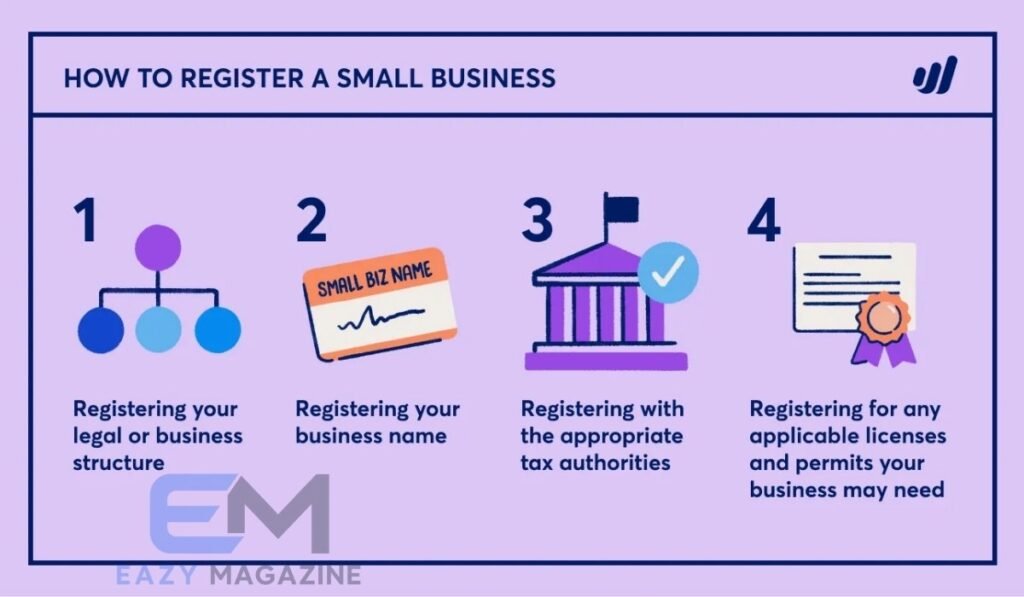
Securing your legal business identity requires registering your corporate name with relevant state or national business registries. Your business name should be memorable, easy to spell, and free from existing trademark restrictions or domain name conflicts.
Once your entity name is approved, obtain an official Tax Identification Number (EIN) or localized business registry number. This identifier enables you to hire employees, open commercial bank accounts, and maintain compliance with regional regulatory mandates.
Navigating Licensing, Permits, and Regulations
Operating a fully compliant commercial venture requires obtaining specific federal, state, and local licenses tailored to your sector. Regulatory compliance includes health permits, zoning clearances, professional practice licenses, and general commercial operational permits.
Regulatory standards in 2026 place strict emphasis on consumer data privacy regulations, environmental waste management, and digital transaction security. Conducting early regulatory audits prevents unexpected operational shutdowns, costly legal disputes, or severe financial penalties.
Funding Options for New Small Businesses
Securing capital remains a primary milestone for early-stage entrepreneurs. Startup funding models have expanded beyond traditional bank financing to include specialized crowdfunding portals, venture debt funds, angel investor syndicates, and micro-grants.
Evaluate whether self-funding, personal savings, debt financing, or equity investment aligns with your long-term ownership goals. Maintaining clean credit records and structured financial plans vastly increases your probability of securing favorable lending rates from capital providers.
Setting Up Your Financial Systems
Establishing clear financial boundaries between personal assets and corporate funds is a non-negotiable step for long-term legal protection. Open dedicated commercial checking accounts, business credit facilities, and digital merchant payment portals immediately after corporate registration.
Automated cloud accounting software simplifies real-time revenue tracking, expense categorization, invoicing, and tax preparation. Implementing disciplined bookkeeping routines from launch prevents administrative bottlenecks during peak quarter-end tax filings.
Establishing Your Physical or Virtual Headquarters
Determining your operational location depends on your business model, customer base, and physical delivery requirements. Brick-and-mortar retail stores require high-foot-traffic leasing locations, whereas digital service providers operate efficiently via remote-first or co-working setups.
Modern hybrid models leverage virtual business addresses for official corporate correspondence while reducing overhead fixed costs. Prioritize commercial flexibility in long-term lease negotiations to accommodate prospective team expansions or rapid operational adjustments.
Building Your Brand Identity and Online Presence
Your brand identity communicates your core values, quality standards, and distinct market positioning to prospective customers. A strong identity includes professional visual design assets, cohesive color typography, clear messaging frameworks, and authentic storytelling.
In 2026, a business website serves as the primary engine for consumer trust and lead generation. Secure an intuitive domain name, deploy mobile-responsive layouts, and optimize platform speed to deliver exceptional digital user experiences from day one.
Implementing Strategic Digital Marketing
Attracting paying customers requires an integrated digital marketing strategy encompassing search engine optimization, content marketing, tailored newsletter communications, and hyper-targeted paid advertising campaigns.
Prioritize organic search strategies to lower long-term customer acquisition costs. Delivering helpful, authoritative content tailored to prospective buyer search queries builds enduring authority while driving qualified incoming inquiries directly to your core sales funnels.
Leveraging Modern Social Media Channels
Social media platforms offer powerful direct-to-consumer communication channels when approached with consistency and strategic intent. Concentrate efforts on platforms where your ideal prospective buyers actively seek recommendations and industry insights.
Short-form video content, community engagement initiatives, and authentic founder stories build strong customer affinity. Avoid spreading team resources across too many channels; master two primary platforms before expanding into secondary promotional networks.
Integrating AI Tools to Optimize Operations
Artificial intelligence tools have reshaped operational efficiency for lean entrepreneurial ventures. Implementing scalable AI tools across customer support, inventory management, content creation, and data analytics dramatically reduces operational overhead costs.
Integrating automated chatbots handles initial sales inquiries around the clock, while intelligent data dashboards highlight real-time sales trends. Smart technological integration allows small startup teams to operate with the leverage and output of larger legacy enterprises.
Hiring and Building a Sustainable Team
Scaling commercial operations eventually requires delegating core responsibilities to qualified, reliable team members. Determine whether your initial hiring needs require full-time staff, part-time specialists, or outsourced freelance contractors.
Establish clear job descriptions, competitive compensation packages, and thorough onboarding workflows to attract top-tier talent. Building a transparent, supportive workplace culture fosters high employee retention rates and consistent service execution.
Managing Supply Chain and Inventory Realities
Resilient supply chain management protects small businesses against inventory shortages, shipping delays, and unexpected margin compressions. Establish direct relationships with primary and secondary component vendors to safeguard operational continuity.
Deploy real-time inventory management software to maintain lean stocking levels without risking item stockouts. Establishing strategic supplier relationships ensures priority order processing during seasonal peak demand cycles.
Providing Exceptional Customer Experiences
Customer acquisition creates initial revenue, but long-term customer retention builds profitable, sustainable commercial enterprises. Providing transparent communication, rapid response times, and personalized post-purchase care converts first-time buyers into loyal brand advocates.
Implement systematic feedback loops via post-service surveys and online reviews to identify operational friction points. Addressing customer service challenges swiftly demonstrates corporate integrity while protecting your brand’s market reputation.
Scaling and Adapting for Future Growth
Once your core business reaches stable profitability, shift strategic focus toward sustainable long-term scaling initiatives. Growth strategies may include launching complementary product lines, entering geographic markets, or acquiring compatible niche competitors.
Regularly review core performance metrics, profit margins, and consumer sentiment trends to guide expansion decisions. Maintaining operational flexibility ensures your company adapts seamlessly as broader economic conditions and technological standards evolve.
Conclusion
Mastering how to start a small business in 2026 requires a disciplined approach, thorough market research, sound financial management, and continuous adaptation to digital innovation. By executing from concept validation to advanced AI integration, aspiring entrepreneurs can build resilient ventures poised for long-termsuccess. Stay customer-focused, monitor financial metrics closely, and maintain operational flexibility as you navigate your entrepreneurial journey.
Frequently Asked Questions (FAQs)
Q1: What is the most important step when starting a small business in 2026?
The single most critical step is validating your business idea through direct market research before committing capital. Confirming that real prospective customers face a specific problem and are willing to pay for your solution minimizes financial risk and lays the foundation for long-term profitability.
Q2: How much capital do I need to start a small business?
Startup capital requirements vary widely based on your chosen business model. Digital service agencies or consulting practices can launch for under $1,000, while physical brick-and-mortar retail stores or manufacturing units often require $30,000 to $100,000 or more for initial leasing, inventory, and equipment.
Q3: Should I register my business as an LLC or a Sole Proprietorship?
For most entrepreneurs, forming an LLC is recommended because it separates personal assets from business liabilities. A Sole Proprietorship is simpler to establish initially, but exposes your personal savings and property to corporate debts, legal claims, and unexpected commercial lawsuits.
Q4: How can AI tools help my small business succeed?
AI tools streamline daily operations by automating routine tasks such as customer support, automated email marketing, inventory tracking, and content creation. Leveraging modern automation allows small teams to reduce overhead costs and maintain high operational efficiency.
Q5: Is it necessary to have a physical location for my business?
No, having a physical location is not required for many modern enterprises. Millions of successful companies operate entirely online, through remote co-working spaces, or using virtual corporate addresses. Choose your footprint based on customer preference and delivery logistics.
Q6: How long does it typically take for a new business to turn a profit?
Most small businesses reach profitability within 12 to 24 months of continuous operation. Reaching profitability depends heavily on your industry margins, overhead management, pricing strategy, and the speed at which you build a stable customer base.

1 Comment
Pingback: Pallet Rack Los Angeles: Ultimate Guide to Warehouse Storage & Permitting